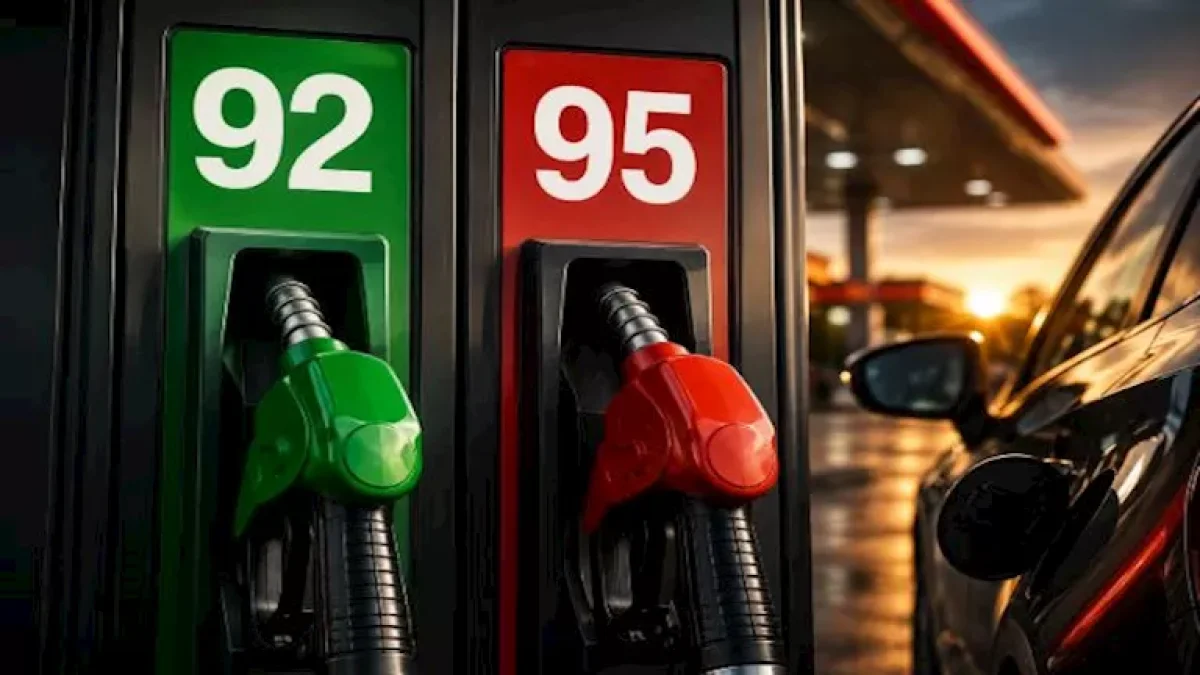
Gasoline 92 vs. 95: Which Fuel Is the Right Choice for Your Car?
The question comes up often. Many drivers believe that filling up with 95-octane gasoline automatically delivers more power and stronger engine performance, yet the real answer depends far more on the engine's design and the manufacturer's recommendation than on the fuel grade itself, which means choosing the correct gasoline starts with the vehicle's specifications rather than the assumption that a higher octane rating is always better. The owner's manual has the answer.
Understanding the Octane Rating
95 is more than a number. The octane rating measures a fuel's ability to resist premature combustion inside the engine, and a higher octane level allows gasoline to withstand greater pressure and heat before igniting, making it suitable for engines with high compression ratios as well as turbocharged powertrains that are engineered to operate with this type of fuel. That is its primary purpose.
But does that improve every car? If the manufacturer recommends 92-octane gasoline, switching to 95 won't provide a noticeable increase in power or acceleration, nor will it significantly reduce fuel consumption, because the engine is already engineered to deliver its intended performance using the recommended fuel grade. The result is straightforward.
When Is 95-Octane Necessary?
The difference becomes clear. If a vehicle is designed to run on 95-octane gasoline, using 92 instead may reduce performance and, in some cases, can lead to engine knocking, although modern engine management systems are capable of reducing the effects of knocking to help protect the engine during operation. Following the recommendation matters.
Inside the owner's manual is the key detail. A higher octane rating doesn't mean that 95-octane gasoline cleans the engine or extends engine life in every vehicle, because its primary benefit is compatibility with engines specifically designed for it, while cars built for 92-octane fuel are unlikely to gain any meaningful advantage, so drivers should always check the owner's manual or the label inside the fuel filler door where the manufacturer specifies the recommended octane rating for optimum performance and efficiency. The right fuel keeps the engine operating as intended.
Related News
View All News
Key, Gauges, and Mirrors: Familiar Car Details That May Vanish from Your Next Vehicle
Modern cars are rapidly going digital, and traditional features drivers have used for decades are gradually disappearing. Analog instrument clusters are being replaced by screens, start buttons are giving way…

Batteries, Fuel Cells, or Hydrogen Combustion? 3 Technologies Racing for the Future of Cars
Three technologies are competing for the future of automobiles: battery electric vehicles, hydrogen fuel cells, and hydrogen combustion engines. Global EV sales surpassed 20 million units in 2025, roughly a…
Best Engine Oils for Your Car in Summer
As summer temperatures rise, choosing the right engine oil becomes critical to protect your car's engine. Experts recommend full synthetic multi-grade oils like 5W-30 or 10W-40. Trusted brands such as…

Over 1 Billion Connected Cars by 2035 — Can Mobile Networks Keep Up?
Omdia Research projects that connected cars using cellular networks will exceed 1.05 billion by 2035, up from 473.7 million in 2025. The study warns that 4G shutdowns expected from 2030…
Don't Turn Off Your Car's AC This Winter — Experts Explain Why
Germany's TÜV NORD inspection authority recommends running your car's air conditioning at least once a week for 10 minutes, even in cold weather. Regular operation keeps compressor oil and seals…