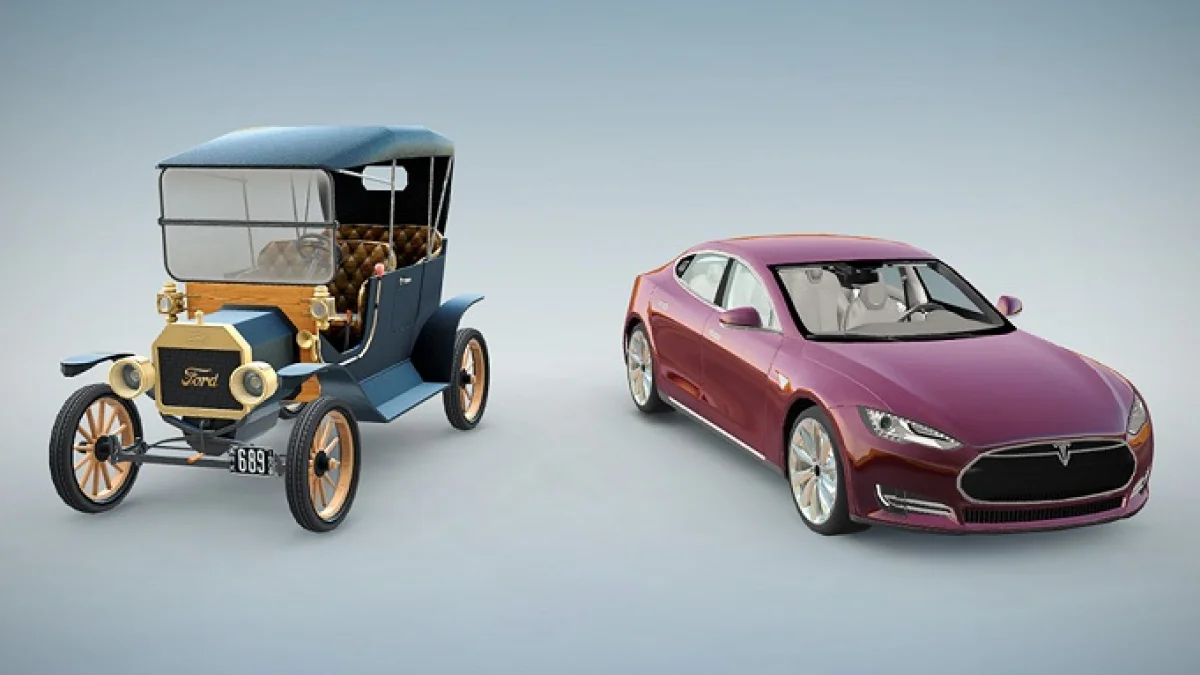
From Three Wheels to Self-Updating Cars Models That Reshaped the Automotive Industry
Like any other major industry, the automobile did not reach its current form overnight. The vehicles that cruise roads at high speeds, produced by the millions, and surround their occupants with advanced electronic protection and assistance systems are the result of a long journey of engineering and industrial evolution. Over more than a century, the automotive industry has witnessed successive transformations that redefined production methods, performance limits, safety standards, and space utilization, ultimately changing the very concept of a car from an independent mechanical machine to a connected device whose functions can be enhanced via software. This journey was not shaped by a single car or company, but rather through a series of models, each introducing an idea that shifted the industry's direction and later became a standard followed by millions of cars worldwide, including giants like Mercedes-Benz and Ford.
Benz Patent-Motorwagen The Birth of the Modern Automobile
When discussing the major transformation in the world of transportation, one must begin with the Benz Patent-Motorwagen, widely regarded as the first car designed from the ground up to operate with an internal combustion engine, rather than being a traditional carriage with an engine attached. Karl Benz developed the vehicle during 1885, before filing for patent number DRP 37435 for his three-wheeled motorized vehicle on January 29, 1886. This date is described by Mercedes-Benz as the birth certificate of the modern automobile. The significance of this vehicle lies in Benz's integration of the engine, chassis, and drivetrain into a single cohesive engineering unit. It relied on a single-cylinder, four-stroke engine mounted at the rear, transmitting power to the wheels via belts and chains.
Although the vehicle appeared primitive compared to modern standards, its success proved that a self-propelled vehicle could become a practical mode of transportation, paving the way for an entire industry to form around engines, chassis, fuel, maintenance, and road infrastructure. Furthermore, Bertha Benz played a pivotal role in proving the car's practical usability when she undertook a long-distance journey without her husband's knowledge. This trip served as a real-world test that revealed areas needing improvement and helped introduce the new invention to the public. This legacy of innovation remains alive today, as the brand continues to deliver models that blend luxury with cutting-edge technology, such as the Mercedes G-Class, which has evolved from a rugged military vehicle into a luxury icon capable of receiving over-the-air software updates to meet modern demands.
Ford Model T Democratizing the Automobile
Henry Ford did not invent the automobile, but he revolutionized the way it was manufactured, transforming it from a high-cost product assembled in limited numbers into a commodity that a broader segment of society could afford. The Ford Model T sparked a genuine revolution in production lines by adopting the moving assembly line, which drastically reduced manufacturing time and led to a radical drop in prices, making car ownership accessible to the working class and forever changing the concept of private transportation.
The impact of this model was not limited to the industrial sector; it extended to urban infrastructure and road networks, contributing to the shaping of modern lifestyles in the twentieth century. Today, the spirit of this innovation remains strongly present in the Ford Mustang lineup, which combines classic sports performance with modern technologies that offer drivers a connected and intelligent driving experience, reflecting the massive evolution the industry has undergone since the days of the Model T.
The Modern Era From Mechanics to Connected Software
Today, the automotive industry has shifted its focus from pure mechanics to integrating software as a fundamental part of a vehicle's identity. Modern cars are now capable of receiving over-the-air updates, adding new features or improving performance without the need for a dealership visit. This radical transformation makes us realize that the journey of evolution has not stopped at the boundaries of the engine and chassis, but has extended to include artificial intelligence and digital connectivity. Brands like Toyota with reliable models like the Toyota Corolla, and BMW with vehicles like the BMW 320, alongside Volkswagen and the Volkswagen Golf, continue to redefine what a car means in the twenty-first century.
Related News
View All News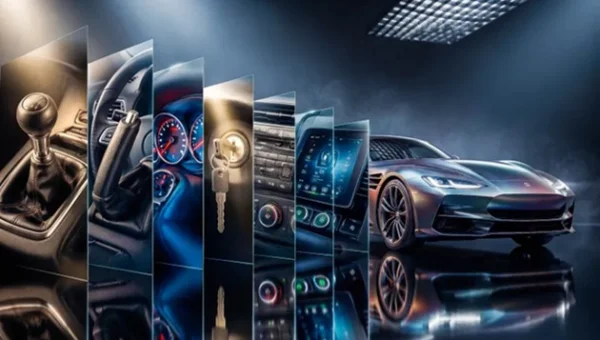
Key, Gauges, and Mirrors: Familiar Car Details That May Vanish from Your Next Vehicle
Modern cars are rapidly going digital, and traditional features drivers have used for decades are gradually disappearing. Analog instrument clusters are being replaced by screens, start buttons are giving way…
Batteries, Fuel Cells, or Hydrogen Combustion? 3 Technologies Racing for the Future of Cars
Three technologies are competing for the future of automobiles: battery electric vehicles, hydrogen fuel cells, and hydrogen combustion engines. Global EV sales surpassed 20 million units in 2025, roughly a…
Best Engine Oils for Your Car in Summer
As summer temperatures rise, choosing the right engine oil becomes critical to protect your car's engine. Experts recommend full synthetic multi-grade oils like 5W-30 or 10W-40. Trusted brands such as…
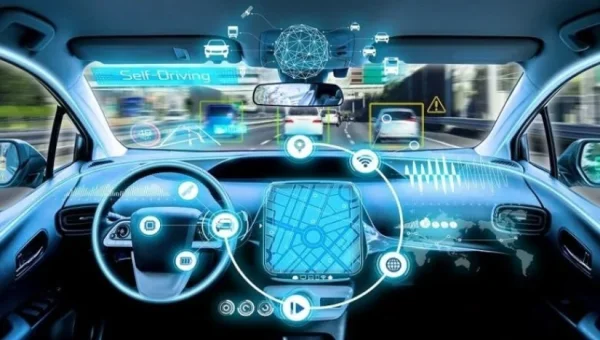
Over 1 Billion Connected Cars by 2035 — Can Mobile Networks Keep Up?
Omdia Research projects that connected cars using cellular networks will exceed 1.05 billion by 2035, up from 473.7 million in 2025. The study warns that 4G shutdowns expected from 2030…

Don't Turn Off Your Car's AC This Winter — Experts Explain Why
Germany's TÜV NORD inspection authority recommends running your car's air conditioning at least once a week for 10 minutes, even in cold weather. Regular operation keeps compressor oil and seals…