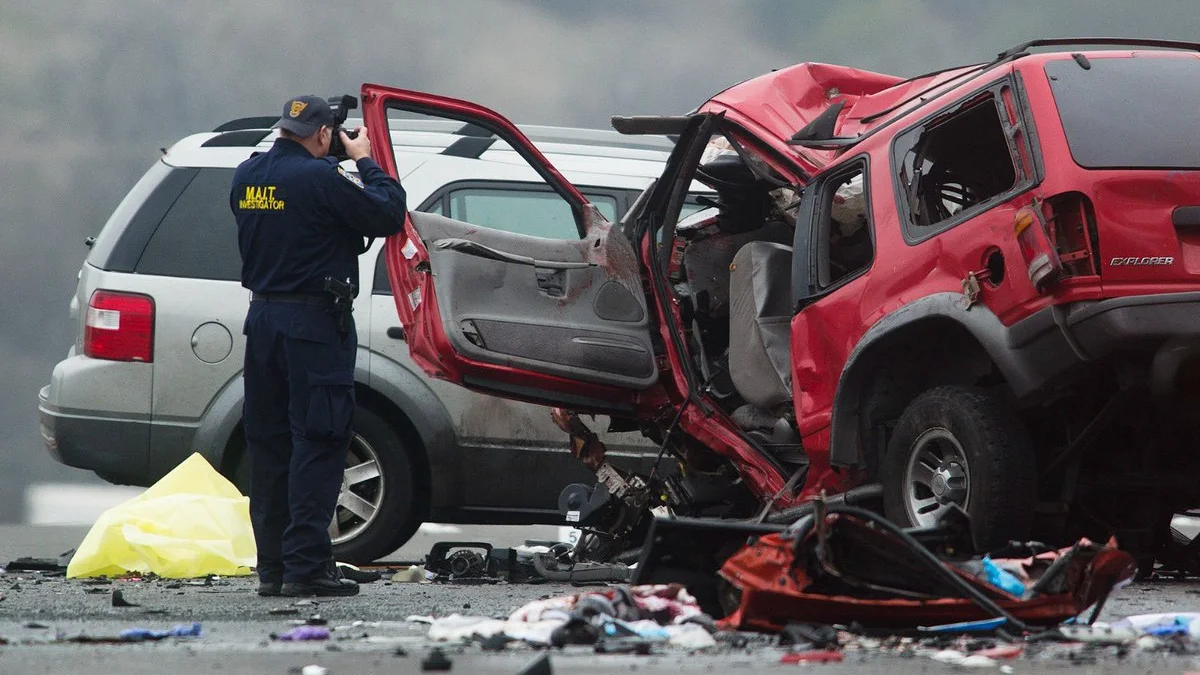
Can artificial intelligence really reduce road accidents?
Car safety systems no longer just warn the driver of danger. Modern technology detects a likely collision and intervenes with braking or steering in fractions of a second, and the U.S. National Highway Traffic Safety Administration believes driver assistance technologies have great potential to reduce crashes, especially since a large portion of road accidents stem from human error. In 2024, the U.S. recorded 39,254 deaths from car accidents.
The numbers give AI a strong case
Forward collision warning and automatic emergency braking systems are a clear example. A research review cited by the Insurance Institute for Highway Safety shows these systems reduced police-reported rear-end collisions by 27% to 50%, depending on the system and crash conditions. The figures alone don't tell the whole story.
Another IIHS study found that cars equipped with lane departure warning had lower rates of related crashes; all-severity crashes dropped by about 18%. Injury crashes fell by 24% before adjusting for driver demographics. These results suggest the technology is no mere electronic luxury. In the scenarios it was designed to handle, it can genuinely reduce specific risks.
The smart car still needs an attentive driver
The irony is that this success could become a weakness if drivers place too much trust in the technology. NHTSA makes clear that Level 2 systems, which can control steering, acceleration. Braking together, don't remove the driver's responsibility to watch the road. Overconfidence might be the biggest threat.
A recent IIHS study emphasized that usage is a critical factor; automatic emergency braking was found to be activated in 93% of more than 2,000 vehicles inspected, but lane keeping system usage rates varied more widely. The results show that technology only works when it's actually turned on.
AI faces the trust test
The bigger problem emerges with more advanced driver assistance systems. An IIHS-reviewed study concluded there is no convincing evidence yet that partial driving automation prevents crashes in the real world overall. The gap between test performance and real-world results might be substantial.
So the real question remains: does safety depend on AI alone, or on how it interacts with the driver? The answer appears far more complex than many expected. Technology is a powerful tool, but it doesn't operate in a vacuum; it needs an attentive driver and full awareness of its limits. Success in reducing accidents depends on both sides working together.
Related News
View All News
Key, Gauges, and Mirrors: Familiar Car Details That May Vanish from Your Next Vehicle
Modern cars are rapidly going digital, and traditional features drivers have used for decades are gradually disappearing. Analog instrument clusters are being replaced by screens, start buttons are giving way…
Batteries, Fuel Cells, or Hydrogen Combustion? 3 Technologies Racing for the Future of Cars
Three technologies are competing for the future of automobiles: battery electric vehicles, hydrogen fuel cells, and hydrogen combustion engines. Global EV sales surpassed 20 million units in 2025, roughly a…
Best Engine Oils for Your Car in Summer
As summer temperatures rise, choosing the right engine oil becomes critical to protect your car's engine. Experts recommend full synthetic multi-grade oils like 5W-30 or 10W-40. Trusted brands such as…
Over 1 Billion Connected Cars by 2035 — Can Mobile Networks Keep Up?
Omdia Research projects that connected cars using cellular networks will exceed 1.05 billion by 2035, up from 473.7 million in 2025. The study warns that 4G shutdowns expected from 2030…
Don't Turn Off Your Car's AC This Winter — Experts Explain Why
Germany's TÜV NORD inspection authority recommends running your car's air conditioning at least once a week for 10 minutes, even in cold weather. Regular operation keeps compressor oil and seals…