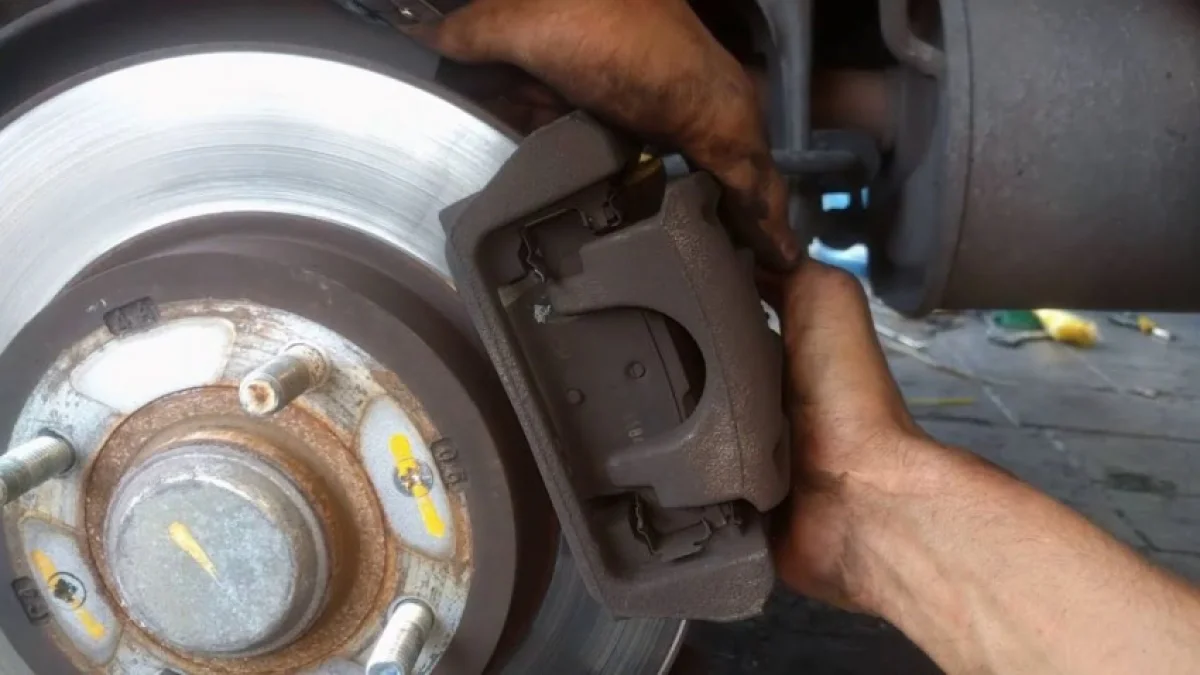
Brake Caliper Sticking: 4 Warning Signs Affecting Brake Efficiency and Driving Safety
Caliper sticking is a malfunction that may appear minor at first, but it poses a real threat to brake system efficiency and driving safety if not addressed promptly. This issue occurs when the caliper piston or its sliding pins fail to return to their normal position after releasing the brake pedal, causing continuous friction between the brake pads and the brake disc (rotor), even while the vehicle is moving without braking.
Warning Signs of a Sticking Caliper
Excessive wheel heat is at the forefront of warning signs indicating a stuck caliper. The driver may notice abnormal heat in the rim, possibly accompanied by a burning smell from the constant friction between the brake pads and the brake disc. Vehicle pull during braking is another indicator, as the car tends to veer to one side due to the affected wheel applying stronger braking force than the others.
Impact of Sticking Caliper on Vehicle Performance
Uneven brake pad wear is also a clear sign, as the pad on the side with the stuck caliper wears out much faster compared to the opposite side, affecting the brake system's efficiency and shortening the lifespan of its components. The driver may also feel heavy movement and weak acceleration due to the constant resistance imposed by the brakes on the wheel, which negatively impacts vehicle performance and fuel consumption.
Early detection of these signs limits damage and saves the driver from high repair costs. The excessive heat generated from constant friction can lead to brake disc (rotor) damage, accelerated brake pad wear, and even damage to the caliper piston itself. Caliper sticking is not just a passing mechanical failure but a defect that directly affects brake system efficiency and driving safety, requiring immediate cessation of vehicle use upon noticing symptoms, along with urgent technical inspection and maintenance to prevent worsening damage.
Related News
View All News
Alef Model A Flying Car Challenges Tesla Roadster in New Video
Alef Aeronautics released a video of its Model A flying car hovering above a Tesla Roadster, days after Tesla's latest demonstration. The project began in 2015 and received an FAA…

Why Carmakers Advise Against Using 95 Octane in Engines Designed for 92
Using 95 octane in an engine designed for 92 delivers no extra power, despite a widespread belief among drivers. Automakers determine the correct fuel based on compression ratio, ignition timing…

Signs of Spark Plug Failure in Your Car Engine — When to Replace Them
Spark plugs are essential engine components, and their failure causes difficulty starting, engine vibration, poor acceleration, and increased fuel consumption. Other signs include an illuminated check engine light and exhaust…

Your Complete Guide to Maintaining Car Tires as Winter Temperatures Drop
As winter approaches and temperatures fall, car tires need extra care to maintain grip and safety. Regular pressure checks, tread depth inspection, crack monitoring, and wheel alignment are essential steps.…
From Paper to Pavement: Inside the Making of a New Car
Developing a new car begins in the design studio with initial sketches that become a 3D digital model and then a full-size clay model. Engineering teams work in parallel to…