
From a Loom to Global Dominance: The Toyota Story in Cars
Toyota's journey began in 1890 when Sakichi Toyoda invented a wooden loom to improve textile production. In 1924 he developed an innovative automatic loom, and by 1926 Toyoda Automatic Loom Works was established. His son Kiichiro shifted the company toward automobiles, producing the first A1 model in 1935. Today Toyota is the world's largest automaker, renowned for its production system and reliability.
Toyota's story doesn't start on an assembly line or with an internal combustion engine. It starts with a wooden loom invented by Sakichi Toyoda in 1890 in Japan. That modest invention became the launchpad for the Toyoda family. That transformed from textile machinery into one of the world's largest car manufacturers, now producing over 10 million vehicles annually.
The Humble Beginning: From Textiles to Industrial Powerhouse
In the late 19th century, Sakichi Toyoda focused on improving weaving looms to boost production efficiency. By 1924, he had developed an automatic loom capable of changing shuttles automatically and stopping when a defect was detected, a breakthrough that dramatically raised output and quality. By 1926, Toyoda Automatic Loom Works was established, later evolving into Toyota Industries Corporation.
The key is that Sakichi didn't stop there. The technology he created wasn't just an upgrade for textiles — it laid the foundation for a complete manufacturing philosophy centered on quality and waste reduction. That philosophy would later be inherited by his son Kiichiro, who had a very different vision for the family's future.
Kiichiro Shifts Gears Toward Automobiles
During the 1930s, Kiichiro Toyoda, Sakichi's son, began focusing on car manufacturing and engine development. By 1935, the company produced its first prototype passenger car named A1, alongside the G1 truck. These two models marked Toyota's official entry into the automotive world.
The transition wasn't easy, of course. The technology was entirely new, but Kiichiro leveraged his father's expertise in precision machinery. In 1937, Toyota Motor Corporation was officially founded, and the real competition began. Today, Toyota is the world's largest automaker, with models like the Corolla and Land Cruiser enjoying massive popularity in markets from Egypt to the United States.
What distinguishes Toyota's story isn't just innovation — it's the legendary Toyota Production System. Adopted after World War II, this system focuses on reducing waste and continuous improvement, and it's exactly why Toyota became a global synonym for reliability.
The Legacy: From a Wooden Loom to an Industrial Empire
Looking at Toyota today, you see a company leading the shift toward hybrid and electric vehicles, with models like the Corolla Hybrid. The number that sums up this journey is 10.5 million cars sold annually — a figure almost impossible to connect with that first wooden loom.
Toyota's story is more than a historical narrative; it's a lesson in innovation and strategic transformation. It proves that successful companies are those that adapt to change and seize new opportunities. As Toyota continues to expand in markets like Egypt, the big question remains: how will this giant maintain its leadership in the electric age?
Frequently Asked Questions
3 questions answered
Related News
View All News
Opel CEO: 1000 km Electric Car Possible Technically, But Economically Illogical
Opel CEO Florian Huettl stated that a 1,000-kilometer electric car is technically feasible but economically illogical due to cost and weight. Speaking at the 2026 Paris Motor Show, he explained…
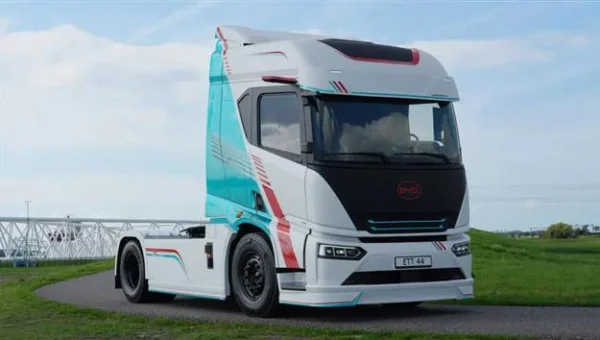
BYD Launches 600 km Electric Truck Offensive Against European Giants
BYD has announced its entry into Europe's heavy truck sector with an electric model offering up to 600 kilometers of range and a 20% to 80% charge time of roughly…
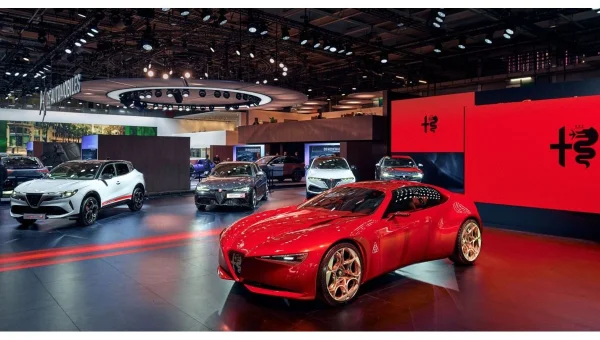
Alfa Romeo Steals the Spotlight at Paris Motor Show 2026 with Cuorerosso Concept
Alfa Romeo has unveiled the Cuorerosso concept car in its world premiere at the Paris International Motor Show 2026. The stand features the Junior, Tonale, Giulia, and Stelvio in the…
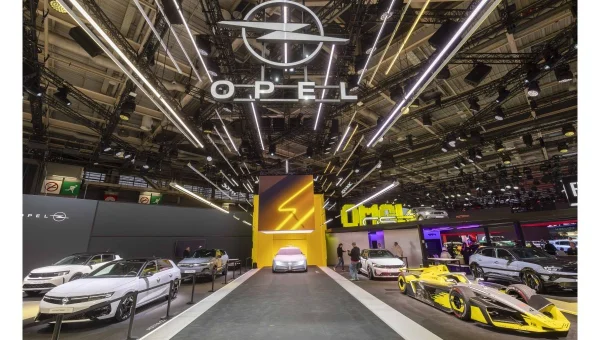
Opel Unveils High-Performance GSE Models at Paris Motor Show 2026
Opel has revealed its complete GSE high-performance lineup at the Paris Motor Show 2026, featuring the world premiere of the GSE 27FE electric race car with over 800 horsepower. The…
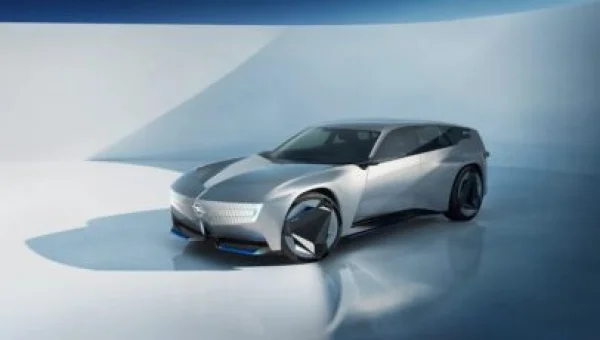
Opel Unveils STX Concept at Paris 2026: The Future of Electric Station Wagons
Opel revealed its STX Concept at the 2026 Paris Motor Show, presenting a vision for the future of electric station wagons. The vehicle features an evolved Vizor front fascia and…