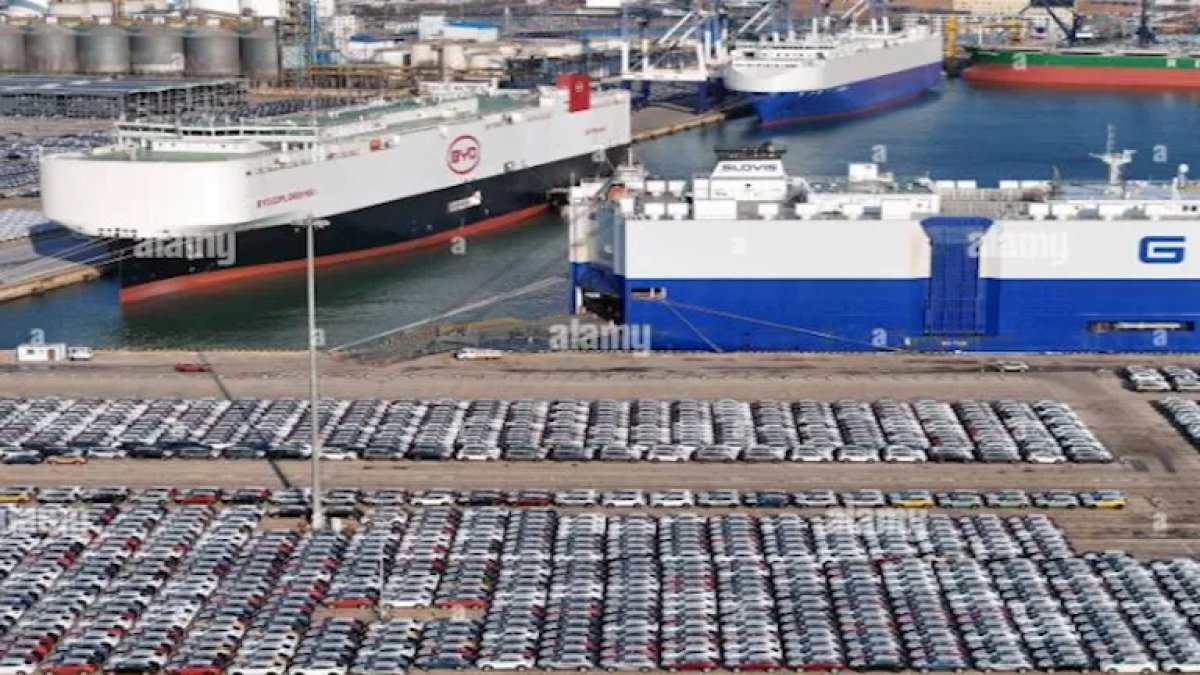
Pentagon Adds BYD to National Security Threat List: What This Means
The U.S. Department of Defense (Pentagon) has updated its list of entities and companies it believes are providing support to the Chinese military, placing BYD, the global leader in electric vehicle manufacturing, at the forefront. This classification comes amid escalating tensions between Washington and Beijing on multiple fronts, particularly in the electric vehicle and connected technologies sectors.
Strict U.S. Warning to Companies
Commenting on the decision, Rep. John Molinar, chairman of the House Select Committee on China, said the updated list serves as a stark warning to American companies, the government, and the American people. According to media reports, Molinar urged U.S. companies to immediately halt dealings with Chinese firms that threaten national security, stressing that continued cooperation risks enabling Beijing's military rise.
Washington Targets Chinese EVs
Over the past few months, the U.S. administration has taken concrete steps to curb BYD's presence in the American market, most notably imposing a 100% tariff on electric vehicles imported from China. The administration linked its decision to concerns over "connected vehicles" that use artificial intelligence systems, citing their ability to collect sensitive data on infrastructure and users and transmit it to China for analysis.
In response, the U.S. Department of Commerce launched extensive investigations and proposed strict rules banning the use of Chinese software and hardware components in smart vehicles, aiming to prevent data leaks or potential remote vehicle disabling. U.S. authorities have effectively banned the entry and use of Chinese connected vehicles, led by BYD, within sensitive government and military facilities.
BYD Sues the U.S. Administration
In response, the Chinese company has not stood idle; BYD has filed a lawsuit against the U.S. administration, seeking to challenge the recent decisions targeting its operations in the American market. The release of the updated list comes just weeks after President Donald Trump's visit to China and his meeting with President Xi Jinping, during which Trump sought to de-escalate tensions and restore balance to bilateral trade and political relations.
Related News
View All News
Electric Vehicles Sweep Europe in 2026: 1.64 Million Units Sold as Cheaper Models and Pricier Fuel Shift the Market
Electric vehicle sales in the European Union reached 1.64 million units between January and August 2026, a 45% increase year-on-year. EVs captured 22% of the total car market, with available…
After Putin's Remarks on Chinese Cars Dominance.. Where Are Russia's Most Famous Cars?
Russian President Vladimir Putin predicted that Chinese cars will become the most widespread globally in the coming years, speaking at the Valdai International Discussion Club in October 2026. His remarks…

Mercedes 170 S: From Abdel Halim's Era to Million-Dollar Auctions — The Icon That Never Dies
The Mercedes-Benz 170 S from 1953 is a classic car tied to Egypt's golden era, owned by legendary singers Abdel Halim Hafez and Farid El Attrash. It was the first…
Britain Caught Between China and Europe: EV Tariffs Ignite a €24 Billion Battle
The British government is under pressure from the European Union to raise tariffs on Chinese electric cars in exchange for trade benefits and joining the "Buy European" program. The UK…
China Dominates Global Auto Market: 15 Million Cars in 6 Months
China produced and sold 15 million vehicles in the first half of 2026, surpassing the combined sales of European and American automakers. Chinese exports reached 5.1 million cars, with forecasts…