Chinese Investments in Morocco Raise EU Concerns Over Backdoor Entry for EVs
Chinese investments in the automotive components sector in Morocco have become a growing concern for the European Union, amid fears that the kingdom could turn into a manufacturing and export platform for Chinese products into Europe, potentially circumventing EU trade restrictions and increasing pressure on local industries.
A New Industrial City Attracting Chinese Firms
All eyes are on the Mohammed VI Tangier Tech industrial city, currently being developed on a 500-hectare site near Tangier, which is attracting a growing number of Chinese companies operating in the production of electric vehicle components—from braking systems to batteries. This expansion is considered one of China's largest industrial moves outside Asia. Brussels fears these multi-billion-dollar investments could serve as a backdoor for subsidized Chinese products to enter the European market through Morocco, bypassing tariffs and restrictions that the EU has imposed on direct imports from China.
European Warnings Over Chinese Overcapacity
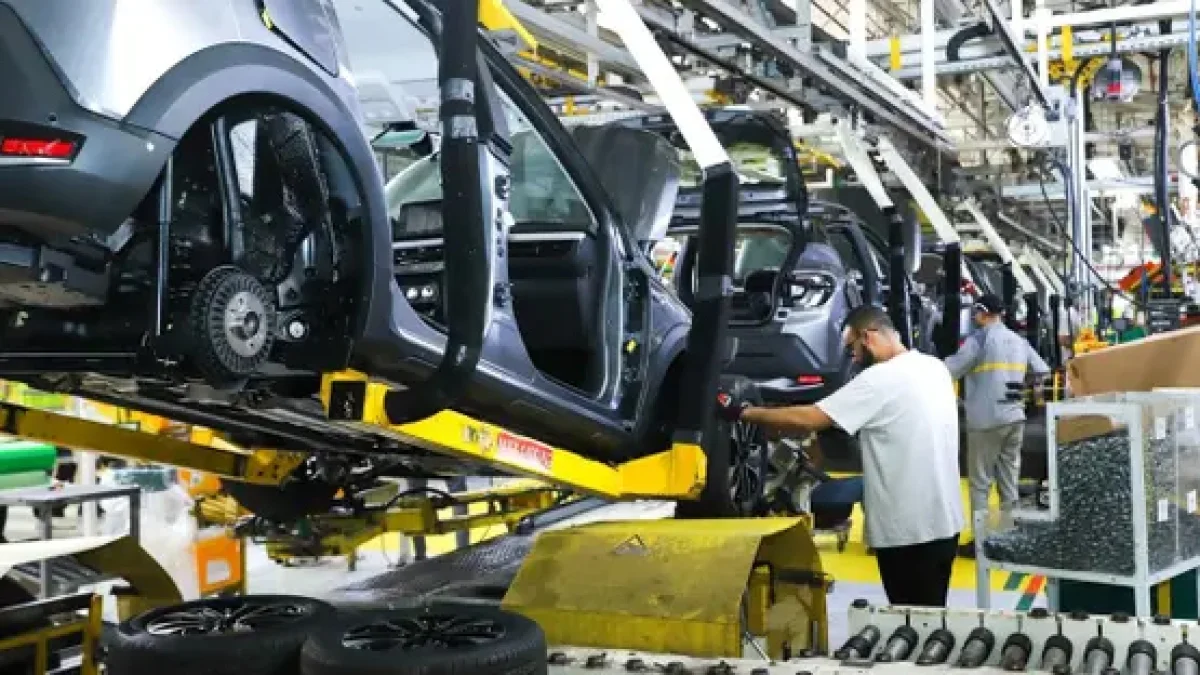
EU Trade Commissioner Maroš Šefčovič stated that Chinese investments in Morocco reveal Beijing's attempts to address its industrial overcapacity by redirecting exports to Europe through trade partners, stressing that this issue has become a major challenge for the European economy. This matter is particularly significant as Morocco has emerged as one of the region's leading automotive manufacturing hubs, hosting major factories for Renault and Stellantis, which gives the kingdom a pivotal role within European supply chains and makes any protective measures more complicated.
For their part, Chinese companies view Morocco as an ideal manufacturing location due to its geographic position and extensive trade agreements with Europe. Cai Junjie, project manager for the Chinese company APG, stated that its new factory in Tangier, with investments worth $70 million, will rely on local Moroccan labor and materials combined with Chinese technology, helping reduce production and transportation costs while enhancing competitiveness within European markets.
Over $6 Billion in Investments Since the Pandemic
Data from the Rhodium Group indicates that announced Chinese investments in Morocco since the COVID-19 pandemic have exceeded $6 billion, including a $1.3 billion battery factory project by Gotion High-Tech in Kenitra, along with other investments in tires, batteries, and electric vehicle components. This massive industrial expansion reflects China's ambition to strengthen its presence in global markets through Morocco, as European governments are reassessing their trade and industrial policies to reduce reliance on Chinese imports and protect their domestic industries.
Related News
View All News
LUXEED Prepares for Global Launch on October 21 in Wuhu, China
LUXEED is preparing to hold its global launch event on October 21 in Wuhu, Anhui Province, China, under the theme 'Intelligence, Enlightened.' The event will feature the world premiere of…

Avatr CONCEPT T09 with 1000+ HP Challenges Maybach and Rolls-Royce at Paris Show
Avatr unveils the CONCEPT T09 at the 2026 Paris Motor Show, a large luxury SUV with over 1000 horsepower and massive dimensions (5285 mm length). It features a hybrid powertrain…

Morocco Produces 700,000 Cars Annually, Surpassing Italy with $16 Billion in Export Revenue
Morocco has solidified its position as an African manufacturing power, producing 700,000 vehicles annually and generating over $16 billion in automotive export revenue, outpacing Italy. Industrial activity spans 150 zones…
Opel CEO: Adam Small Car Out of Plans Until 2030 Due to EU Regulations
Opel CEO Florian Huettl has confirmed the Adam small car is not in the company's product plans until 2030 due to stringent European regulatory requirements. Speaking at the 2026 Paris…
Tesla Roadster Jumps Mid-Air with SpaceX-Inspired Rocket Technology
Tesla has revealed the next-generation Roadster in a Texas demonstration where the car jumped into the air and rotated before landing, using thrusters inspired by SpaceX rockets. The system relies…