Rare 1963 Chevrolet Corvette Grand Sport Heads to Auction with $13 Million Estimate
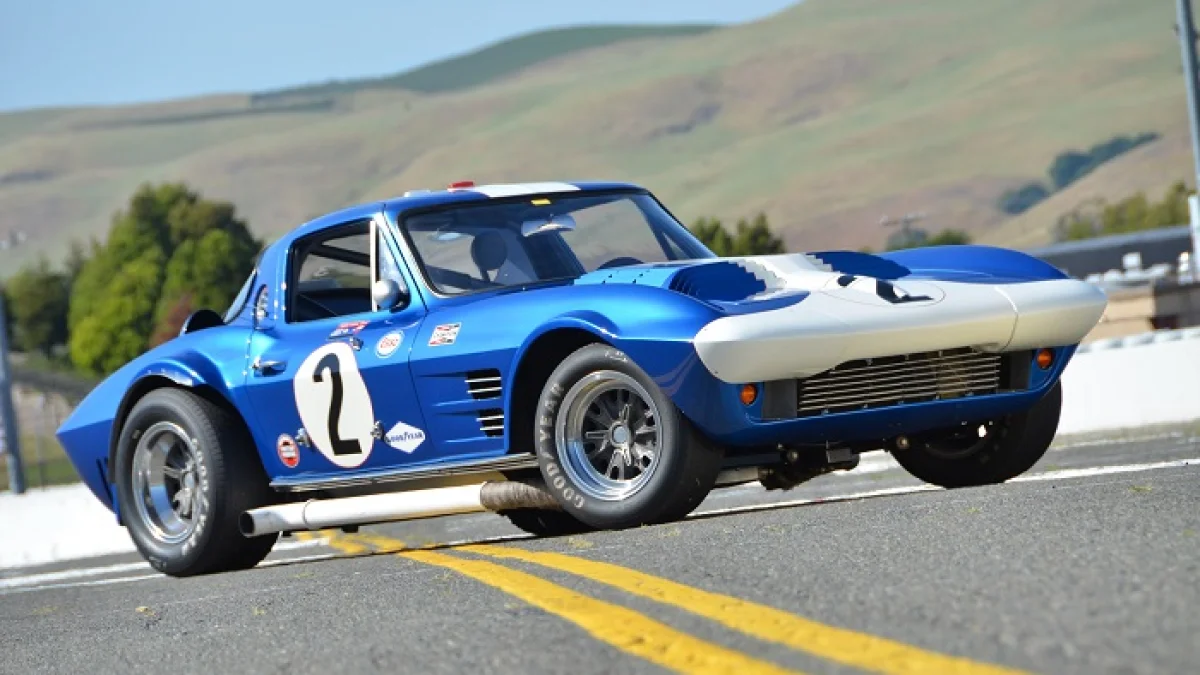
One of the rarest Chevrolet vehicles in automotive history is set to appear at a public auction, as RM Sotheby's has announced the sale of a 1963 Corvette Grand Sport with an estimated value between $11 million and $13 million. This is not a replica or a modified standard Corvette, but one of only five original cars built by Chevrolet under the secret Grand Sport program, before General Motors' top management shut down the project that was designed to compete with the best American and European racing cars. The car will be presented at the Monterey auction in California on August 15, 2026.
The Secret Grand Sport Program
The car carries chassis number 003, making it the first of only three coupe versions among the five original cars, placing it among the rarest and most historically significant American racing cars ever built. The story dates back to engineer Zora Arkus-Duntov, widely recognized as one of the key figures who shaped the Corvette's sporting identity. Duntov wanted to transform the Corvette from a stylish American sports car into a genuine competitor on race tracks, especially against the Shelby Cobra, Ferrari, and Jaguar.
Project Halted by Corporate Policy
To achieve this, the Chevrolet team began developing an extremely lightweight version of the Corvette Sting Ray, using a unique chassis and components different from the production car, along with a powerful engine and racing-specific equipment. However, the project clashed with General Motors' policy, which had announced its withdrawal from official participation in automobile racing. After news of the tests leaked, management issued an order to stop the program before production reached the target number. According to the historical account, Duntov had planned to produce dozens of cars needed for racing homologation, but Chevrolet only completed five units, which created their current rarity.
Massive Weight Advantage for Superior Performance
The Grand Sport weighed approximately 1,900 pounds, or about 862 kilograms, compared to roughly 3,200 pounds (1,451 kilograms) for a production 1963 Corvette. This means the car was about 1,300 pounds lighter, or nearly 590 kilograms, a massive difference that gave it superior acceleration, cornering, and braking capabilities. To achieve this weight, engineers used a specialized tubular frame, a lightweight fiberglass body, and hundreds of components that were not shared with the road-going Sting Ray models.
Related News
View All News
Porsche Brings Petrol Power Back to Macan Class with New SUV in 2028
Porsche is preparing to reintroduce petrol and hybrid engines to the compact SUV segment through a new standalone model planned for around 2028. The move follows the end of combustion…

Tarek Masoud: Africa Has a Historic Opportunity to Build a Global Auto Industry Hub
Tarek Masoud, President of the African Association of Automotive Manufacturers, called on governments and the private sector to accelerate concrete industrial projects rather than just policies. Speaking at the Africa…

General Motors Sales Drop 5.5% in Q3 as EV Demand Cools
General Motors announced a 5.5% drop in Q3 sales to 670,974 vehicles. Electric vehicle sales plummeted after federal incentives ended, with Equinox EV falling 92.4%. Meanwhile, Toyota's electrified vehicle sales…

Alfa Romeo Unveils the Only 33 Stradale Perla Nera in the World at Arese Museum
Alfa Romeo has unveiled the only unit in the world of its 33 Stradale Perla Nera, featuring a fully exposed carbon fiber body with a matte finish. The car is…

China Faces Crisis as 4 Million Unsold Cars Pile Up — Experts Warn of Golden Era's End
China's automotive industry is grappling with a mounting crisis as more than 4 million unsold vehicles pile up in the world's largest car market. Production stands at 33 million cars…