From Hours to Minutes: How EVs Achieve 80% Charge in Just 20 Minutes
The world of electric vehicles has transformed rapidly in recent years, and the conversation is no longer limited to driving range or motor power. Charging time has become one of the most critical factors in the global competition among automakers.
With the emergence of ultra-fast charging technologies, some modern EVs can now reach 80% battery capacity in about 20 minutes—a feat that seemed impossible just a few years ago.
Why Is 80% Always the Benchmark?
You might wonder why manufacturers always advertise charging time to 80% rather than 100%. The reason is simple: charging speed drops significantly after 80% to protect the battery and reduce heat. Therefore, EVs achieve their highest charging speeds only during the initial portion of the charging process. This is why most companies measure charging time from 10% to 80% as the true indicator of fast-charging efficiency.
What Makes Charging Faster?
Charging speed depends on several key factors, most notably the charger's power capacity, the vehicle's ability to accept energy, the battery type, and its thermal management system. For instance, some EVs support charging at rates exceeding 300 or even 500 kW, while others remain limited to much lower speeds. Battery cooling systems also play a vital role, as excessive heat can force the car to automatically reduce charging speed to protect the internal cells.
DC Fast Charging Changes the Game
Most ultra-fast charging technologies rely on what is known as DC fast chargers, which far exceed the speed of traditional AC home chargers. While home charging may take several hours to reach 100%, modern DC stations can add hundreds of kilometers in under half an hour for some new EVs. This is why many companies have begun building extensive charging networks based on this technology, especially along highways and between cities.
EVs Approaching 'Refueling Time'
Some Chinese and European automakers are already moving toward making the charging experience comparable to stopping at a traditional gas station. For example, companies like BYD, Zeekr, Porsche, and Hyundai have announced technologies capable of adding hundreds of kilometers in just 10 to 20 minutes, thanks to advanced electric platforms operating at 800 volts or more.
Does Fast Charging Damage the Battery?
Despite the great convenience offered by high charging speeds, the question of its impact on battery life remains. In general, advanced thermal management systems in modern EVs minimize the damage caused by fast charging. However, frequent use of ultra-fast charging may lead to faster battery degradation compared to slower charging. Therefore, most manufacturers recommend using fast charging only when necessary and relying on home charging for daily use.
Related News
View All News
Dongfeng Mage EV Set to Launch from El Nasr Plants with 480 km Range
SN Automotive is preparing to launch the Dongfeng Mage EV, assembled locally at El Nasr Automotive's plants in Helwan. The compact SUV uses a front-mounted 161 hp motor and a…
Land Rover Officially Enters Egypt's Electric Vehicle Market
Land Rover has announced its official entry into Egypt's electric vehicle market with the fully electric Range Rover. The vehicle features dual motors producing over 500 horsepower and a range…

Opel Bets on LFP Batteries to Cut EV Prices and Counter Chinese Competition
Opel CEO Florian Huettl announced the company will expand its use of lithium iron phosphate (LFP) batteries to reduce electric vehicle prices. The move comes amid pressure on the European…

Dongfeng Electric SUV Heads to Egypt: 480 km Range and Local Assembly
Dongfeng is preparing to launch a fully electric SUV in Egypt with a range of 480 kilometers. The vehicle is being assembled locally in partnership with El Nasr Automotive Manufacturing…
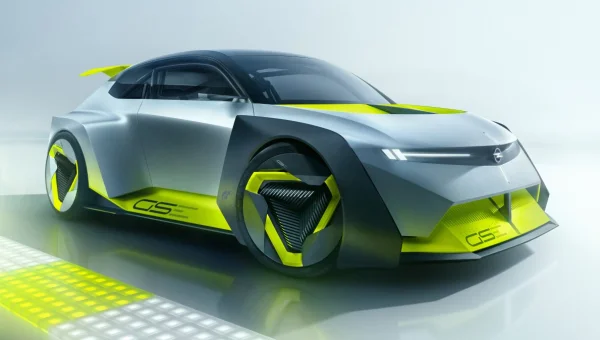
Opel CEO: 800V Tech Is Ready in Our New Platforms, But Applying It to Every Car Raises Prices
Opel CEO Florian Huettl stated that the company's new STLA platform can technically support 800-volt charging, but rolling it out across all models would increase costs and prices. He noted…