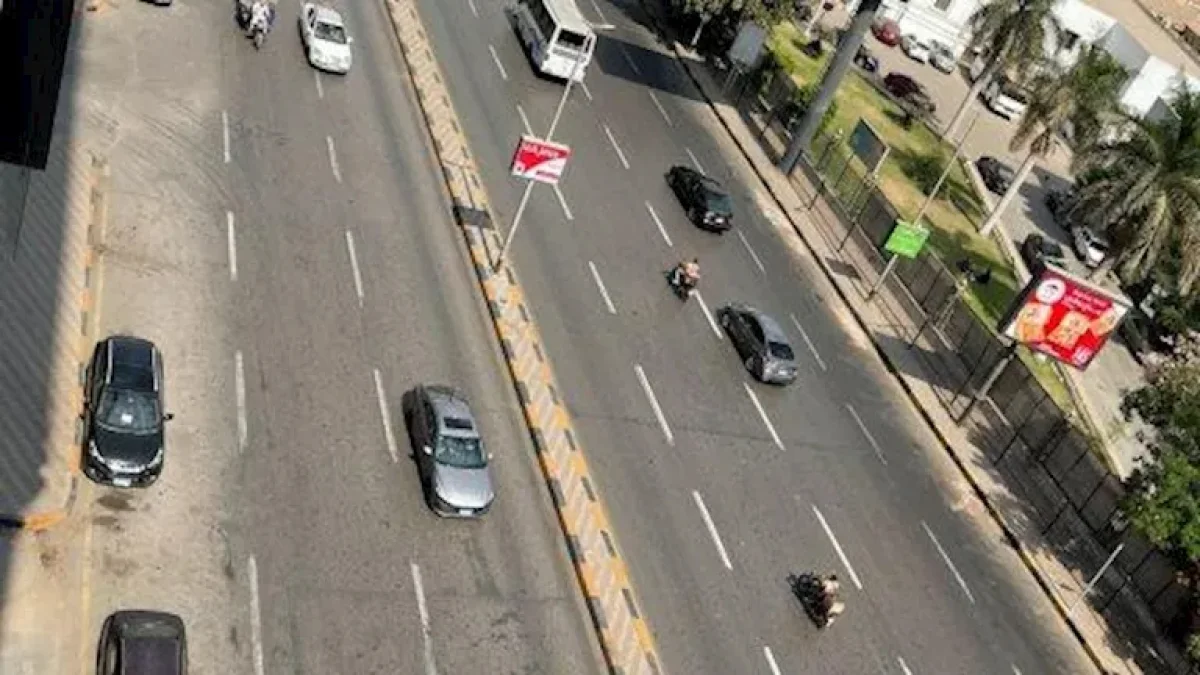
Traffic Flows Across Cairo and Giza with Localized Congestion in Business Districts
Most major roads and traffic corridors across Cairo and Giza experienced relatively smooth traffic conditions, with vehicle movement remaining largely stable during the morning period. However, localized congestion developed at several key locations as traffic volumes increased during the usual morning rush hour. Traffic services remained heavily deployed across the road network to improve road safety, facilitate vehicle movement, and direct motorists toward alternative routes whenever necessary to reduce congestion and maintain smoother traffic flow.
Traffic Conditions Across Cairo
Traffic moved steadily on several of Cairo's primary corridors, including 6th of October Bridge, the 26th of July Corridor, and the Ring Road, allowing vehicles to travel with minimal disruption. In contrast, slower traffic was recorded along the Nile Corniche for motorists traveling from El Malek El Saleh toward Helwan, as well as in the section facing the Maspero building, where moving congestion appeared during the morning peak period.
Moderate traffic density was also observed on Ramses, Ain Shams, and Downtown routes, in addition to several busy districts including Nasr City, Heliopolis, Shubra, and El Moassasa. Salah Salem Road maintained generally smooth traffic conditions, although heavier congestion was recorded near the Central Auditing Organization headquarters and the Al Obour residential buildings during peak hours before traffic returned to normal around Al Orouba and Airport Road. Vehicle movement also remained organized across Shubra, Al Teraa Al Bulaqiya, extending toward Al Amiria and Al Waily.
Traffic Situation in Giza
In Giza Governorate, traffic remained well organized across Dokki, Agouza, and Mohandessin, while heavier congestion was reported around Sphinx Square and Mostafa Mahmoud Square. Traffic also flowed efficiently throughout the 6th of October City road network, with smooth vehicle movement recorded in Sheikh Zayed and along Al Wahat Road, helping maintain consistent traffic circulation across those areas.
Operations rooms also monitored significant traffic congestion on Faisal Axis, particularly around the El Tabaqat area, in addition to the intersection of Al Haram Street and Mariouteya. These delays were linked to the ongoing construction work for the new metro line in Talbia, El Eshreen, El Mesaha, Saft El Laban, and the surrounding area of Giza Metro Station. Meanwhile, the General Traffic Department continues to monitor vehicle movement around the clock through an extensive network of modern surveillance cameras connected directly to the central operations room, enabling rapid intervention whenever traffic builds up and helping maintain efficient traffic movement across major roads and intersections.
Related News
View All News
1618 Passenger Cars from 2023, 2024, and 2025 Models Exit Dealer Stocks, Appear in September Licenses
September zero-kilometer vehicle licenses recorded 1,618 passenger cars from the 2023, 2024, and 2025 model years, indicating dealers are clearing older inventory into the Egyptian market. The breakdown was 398…

Forthing Prepares to Produce First Electric Vehicle in Egypt by April 2027
Forthing is preparing to start local production of its first electric vehicle in Egypt by April 2027 through its local partner AVM. The Chinese brand is also studying making Egypt…

Official Reveals Who Is Exempt from Egypt's Latest Car Price Hikes
Montaser Zeitoun, a member of Egypt's General Division for Automobiles, confirmed that recent price hikes affected around 20 new car models with increases between EGP 5,000 and EGP 150,000. Buyers…

Golden Dragon Tops Egypt's Bus Sales in August
Bus sales in Egypt rose 35% in August to 1,652 vehicles, up from 1,224 units a year earlier, according to AMIC. Golden Dragon topped the brand rankings with 377 buses,…

Egypt Car Dealers Raise Prices Gradually to Test Market and Maintain Competition
Car dealers in Egypt have raised prices gradually even as the dollar neared EGP 54, aiming to test the market's ability to absorb hikes without losing market share. Distributor Helmy…