How to Drive Safely When Facing High Beams at Night
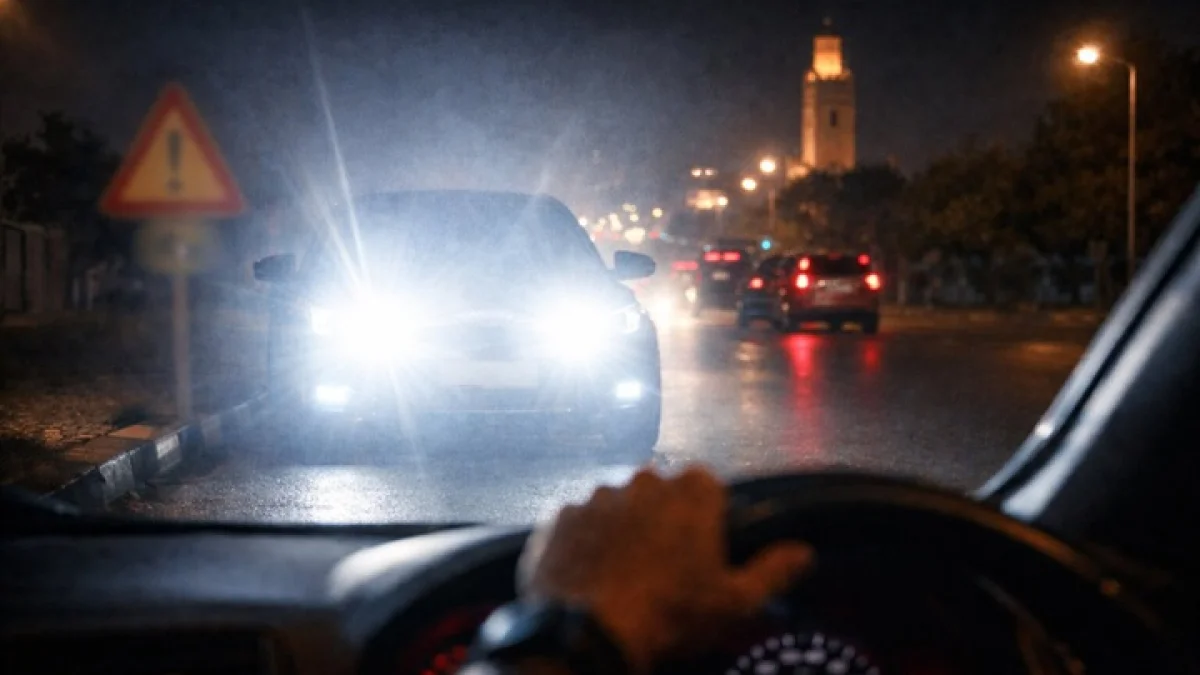
Night driving is one of the most demanding situations for motorists, requiring constant focus and quick reactions, particularly when facing high beams from oncoming vehicles. Intense light can temporarily dazzle the driver's eyes, reducing visibility and making it harder to judge distances and road conditions accurately. For this reason, following road safety guidance is essential to reduce the risk of accidents during nighttime driving.
Avoid Looking Directly at the Lights and Reduce Speed
Road safety experts advise drivers not to look directly at the headlights of approaching vehicles, as doing so increases glare and makes it more difficult for the eyes to adapt. Instead, drivers should shift their focus slightly toward the right side of the road or the edge markings while maintaining full awareness of surrounding traffic and their driving lane. If exposed to a sudden burst of bright light, drivers should gradually reduce speed without harsh braking, giving themselves enough time to regain clear vision and respond safely, especially on busy roads or in areas with curves, speed bumps, or pedestrian crossings.
Keep the Windshield Clean and Use High Beams Responsibly
A clean windshield plays an important role in minimizing glare, as dirt, stains, and scratches can scatter light across the driver's field of vision. Experts recommend cleaning the windshield regularly inside and out while ensuring the wipers are functioning properly and washer fluid is topped up, particularly before nighttime trips or long-distance travel. Proper mirror adjustment also helps reduce reflected light inside the vehicle, and drivers should use the interior mirror's dimming function whenever it is available to lessen glare from vehicles approaching from behind.
Drivers should also make sure their vehicle's headlights are correctly aligned, as headlights aimed too high can create unnecessary glare and increase danger for other road users. High beams should only be used when necessary on dark or poorly lit roads and must be switched to low beams immediately when an oncoming vehicle approaches or when following another vehicle. Misusing high beams not only causes discomfort but can also temporarily impair the vision of other drivers, significantly increasing the likelihood of road accidents.
Eye sensitivity to bright light becomes greater when a driver is fatigued or has been behind the wheel for extended periods. For that reason, getting adequate rest before driving at night is strongly recommended. Staying alert and maintaining clear vision remain two of the most important factors for safe nighttime driving and for reducing risks on all types of roads.
Related News
View All News
Top 5 Japanese Used Cars Starting from EGP 500,000 in the Egyptian Market
The report highlights the top 5 Japanese used cars in the Egyptian market starting from EGP 500,000, led by the Toyota Corolla with 2018–2021 models priced between EGP 750,000 and…

Egypt's Car Market: 'Over-Price' Premiums Return as Supply Tightens
The over-price premium has returned to Egypt's car market after months of stability, according to Ashraf Sharbas, head of the Automotive Division at the Giza Chamber of Commerce. He attributed…

How to Get a Driving License for the First Time and Renew It from Home
Egypt's General Traffic Department has outlined the steps to obtain a driving license for the first time and renew it from home. The process includes submitting required documents, a medical…

Fiat Egypt Launches Maintenance Installment Plan Up to 6 Months via 4 Banks
Dynamix, Fiat's distributor in Egypt, has introduced maintenance installment plans of up to 6 months or 3 months through Banque Misr, Banque du Caire, QNB, and CIB. The offers are…

Aswan Prosecutor's Office Car Auction Set for October 27 — Full Details
Egypt's General Authority for Government Services will hold a public auction on October 27, 2026, for used vehicles from the Aswan Prosecutor's Office. The sale includes pickups, minibuses, and dump…