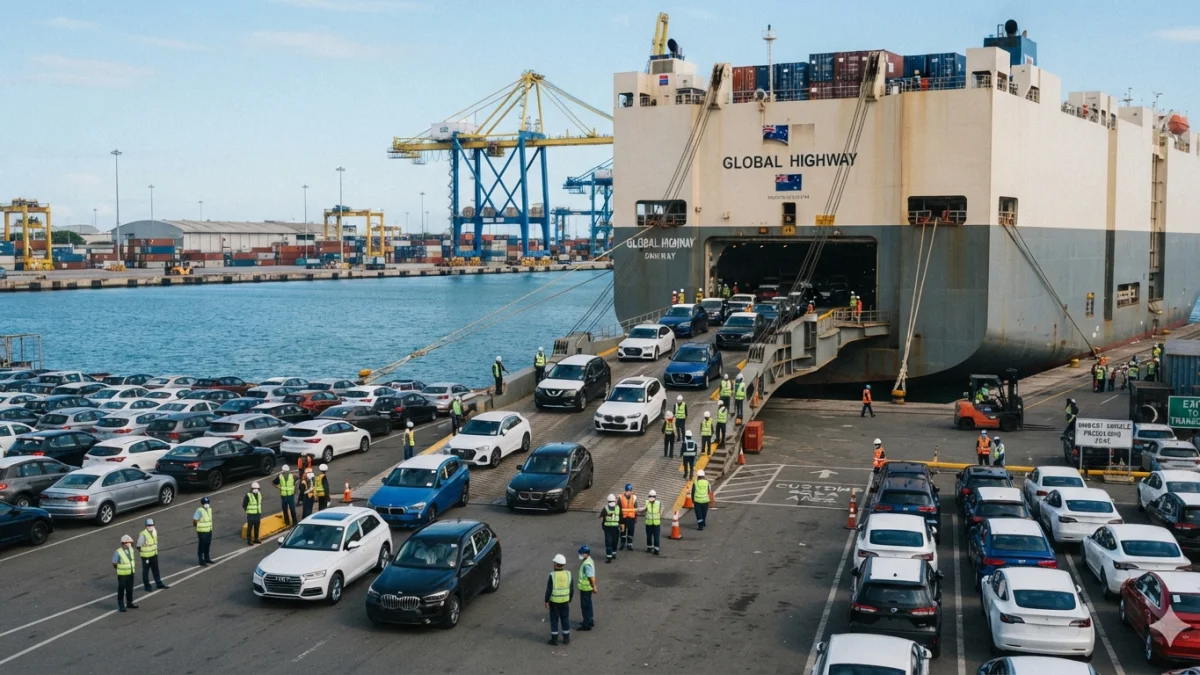
Reports of New Obstacles for Car Imports in Egypt and Upcoming Customs Duties
Reports are circulating in Egyptian trade and industrial circles about unofficial obstacles hindering the import of fully built cars, despite official denials of any new decisions banning imports or imposing additional customs procedures. Importers are complaining of significant delays in customs registration procedures, which disrupt operations and prolong the import process. This comes amid reduced availability of foreign currency allocated to the sector, with imported cars now among the lowest priorities for currency provision.
New Customs Tariffs and Support for Local Manufacturing
According to widespread rumors, a new customs tariff on cars in Egypt is expected to be implemented in the coming period, specifically next August, although no official confirmation has been issued. At the same time, the government is facilitating the entry of car manufacturing components and spare parts to support local production, indicating a trend toward restricting fully built car imports while opening the door for domestic manufacturing.
Official Denials of Restrictions and Clarification of Delays
Reports quoted Khaled Saad, Secretary General of the Egyptian Automotive Manufacturers Association, as confirming that no current restrictions are imposed on car imports. He also noted that the Ministry of Industry has denied any obstacles or impediments to import operations. Saad clarified that what is happening is merely a delay in the registration of fully imported cars from abroad, not a ban or prohibition, urging against confusing routine temporary procedures with restrictive policies.
Raising the Import Ceiling for Passenger Cars and Market Regulation
Reports also quoted the Egyptian Minister of Industry as saying that the government seeks to control and regulate the car import market, which reinforces the idea of restricting imports in favor of local manufacturing. Despite these pressures, the government raised the import ceiling for passenger cars from $1.8 billion last year to $2.5 billion this year, indicating that the direction is not an absolute ban but rather a restructuring and prioritization aimed at supporting the national industry.
Related News
View All News
Car Distributors: Agents Tighten Immediate Payment Rules for Monthly Allocations
Several car agents have tightened collection on monthly vehicle allocations, demanding full payment within the first days of each month instead of deferred terms. The shift from credit to cash…

Your Car Without a Fire Extinguisher or First Aid Kit: Can Traffic Police Still Fine You?
Egyptian traffic units began applying new licensing procedures on October 1 that remove the requirement to present a fire extinguisher, first aid kit, and reflective triangle when issuing or renewing…
Traffic Fines by Car Plate: How to Check Violations and File an Online Appeal
Egypt's electronic traffic services now allow drivers to check violations and fines by car plate from home. The process involves logging into the traffic services website, selecting inquiries, and entering…
Alexandria Customs Auction Offers Porsche, Mercedes, BMW in October 2026
Alexandria Customs will hold a public auction on October 7, 2026, at the Civilization Sports Club in Cairo, offering Porsche, Mercedes, BMW, Land Rover, Chrysler, Mitsubishi, and Chevrolet vehicles. Participation…

Media Professor: Consumer Protection Agency Is the Right Channel for Car Owners' Complaints, Not Social Media
Dr. Saeed Hamed, a media professor at Suez University, called on car owners to submit complaints through the Consumer Protection Agency rather than social media. He warned that some bloggers…