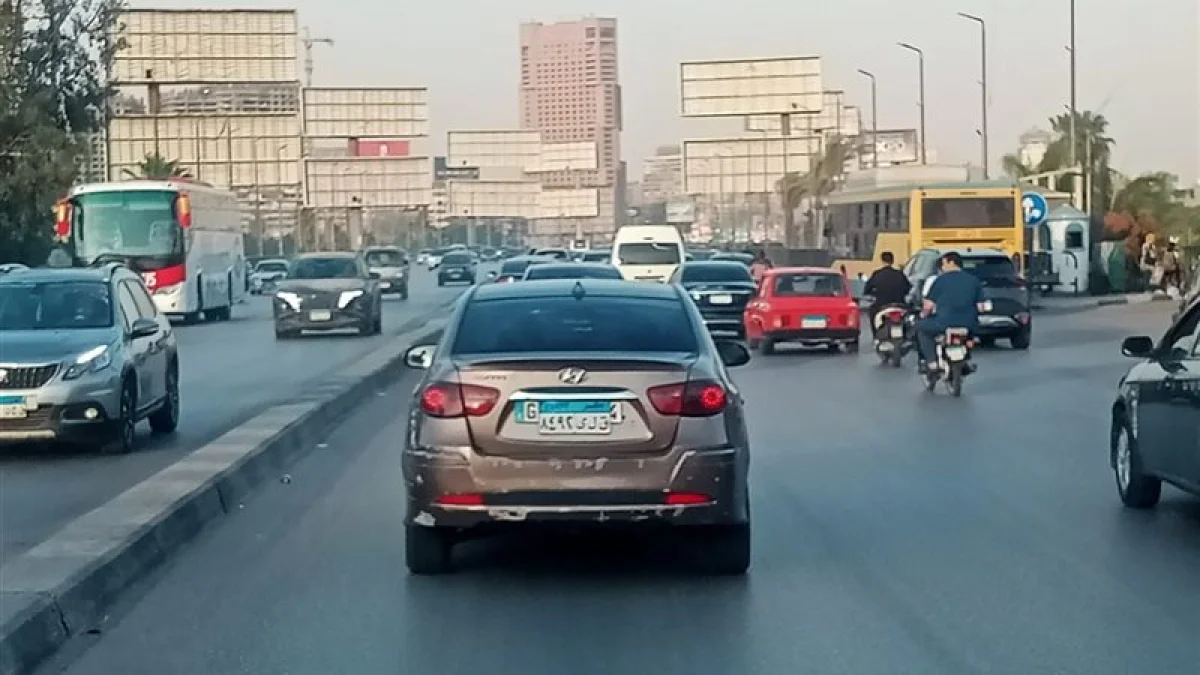
Cairo and Giza Traffic Update: Smooth Flow on Major Axes with Localized Slowdowns Due to Maintenance
Most major axes and primary roads across the Cairo and Giza governorates experienced remarkable regularity and relative traffic fluidity during the early morning hours. Moving traffic densities at several vital points recorded balanced levels, despite the naturally expected increase in traffic loads during the morning peak period. This positive traffic regularity was the direct result of intensive and strategically planned deployment of traffic services and personnel at key squares and strategic axes throughout the capital. The primary objective of this dense security and traffic presence is to ensure the safety of citizens, facilitate the smooth movement of vehicles, and actively guide drivers toward alternative and secondary routes. This proactive management aims to prevent any potential congestion and maintain the seamless flow of traffic within the vital arteries of the capital, effectively avoiding sudden traffic bottlenecks.
Smooth Flow on Major Arteries and Localized Slowdowns Due to Maintenance
Traffic movement was characterized by clear and continuous fluidity on some of the most vital arteries connecting different parts of the capital, most notably the October Bridge and the 26 July Axis, where operations rooms recorded no significant obstacles hindering mobility. Conversely, vehicle movement slowed down noticeably and understandably along the Nile Corniche route heading from the Malak El Saleh area toward Helwan, as well as in front of the Maspero building. This deceleration is directly due to ongoing road maintenance works, which inherently require reduced speeds and the allocation of specific lanes for traffic. Similarly, traffic experienced comparable slowdowns on the Ring Road in several vital sectors, specifically for vehicles coming from the Zakat Foundation heading toward El Marg, from the Basateen area toward the Autostrad, and from the Autostrad heading toward New Cairo and the Fifth Settlement. Drivers are strongly advised to exercise extreme caution and follow the posted traffic guidelines to facilitate safe passage through these zones.
Detailed Traffic Densities in Cairo Districts and Salah Salem Axis
Regarding the detailed traffic densities within the districts of Greater Cairo, medium and entirely normal densities for morning peak hours were observed on the axes and areas of Ramses, Ain Shams, and Downtown, in addition to the regions of Nasr City, Heliopolis, Shubra, and El-Mo'assasa. The strategic Salah Salem Axis, however, witnessed general and reassuring regularity and traffic fluidity, with the sole exception of a noticeable concentration of movement in front of the Central Agency for Public Mobilization and Statistics (CAPMAS) and the Obour buildings during the absolute peak of the morning hours. This was followed by a gradual and tangible traffic relief on El-Orouba Road and the Airport Road as vehicle pressure subsided. Furthermore, the areas of Shubra and the Bolak El Dakrour canal experienced good and stable traffic fluidity that extended smoothly all the way to the Amiriya and El-Wably areas, reflecting the high efficiency of the traffic movement management plans implemented in these vital sectors.
Giza Traffic Dynamics and the Impact of Metro Infrastructure Works
Traffic performance indicators shifted to the Giza Governorate, reflecting a similar picture of regularity and stability in many vital sectors that are typically congested. Vehicle movement was well-organized and comfortable in the areas of Dokki, Agouza, and Mohandessin, with a single, expected exception being the presence of high densities at Sphinx Square and Mustafa Mahmoud Square. This is due to the complex nature of the intersections and the dense commercial activity in these specific points. Vehicle movement continued to remain regular and stable on the axes and areas of 6th of October City, while strong and continuous traffic fluidity was recorded on the Sheikh Zayed Road and the Wahat Desert Road, significantly facilitating daily commuting between Giza and the New Administrative Capital or western regions without any notable obstacles.
It is worth noting that the high traffic densities accurately detected on the Faisal Axis and the El-Tawabek area, as well as at the intersection of the Haram Road with the Marioutiya Road, are directly and exclusively attributed to the ongoing construction and development works for the Cairo Metro stations in the areas of Talbiya, the 20th Village, El-Masaha, and Saft El-Laban. This is in addition to the natural congestion surrounding the Metro stations in Giza. The General Administration of Traffic continues to monitor vehicle movement closely and continuously through modern CCTV surveillance networks connected directly and instantly to the central traffic operations room. This technological oversight is supported by field-deployed traffic services on major axes and main squares, ensuring rapid intervention to resolve any immediate traffic congestions and guide drivers toward the best available routes.
Related News
View All News
1618 Passenger Cars from 2023, 2024, and 2025 Models Exit Dealer Stocks, Appear in September Licenses
September zero-kilometer vehicle licenses recorded 1,618 passenger cars from the 2023, 2024, and 2025 model years, indicating dealers are clearing older inventory into the Egyptian market. The breakdown was 398…

Forthing Prepares to Produce First Electric Vehicle in Egypt by April 2027
Forthing is preparing to start local production of its first electric vehicle in Egypt by April 2027 through its local partner AVM. The Chinese brand is also studying making Egypt…

Official Reveals Who Is Exempt from Egypt's Latest Car Price Hikes
Montaser Zeitoun, a member of Egypt's General Division for Automobiles, confirmed that recent price hikes affected around 20 new car models with increases between EGP 5,000 and EGP 150,000. Buyers…

Golden Dragon Tops Egypt's Bus Sales in August
Bus sales in Egypt rose 35% in August to 1,652 vehicles, up from 1,224 units a year earlier, according to AMIC. Golden Dragon topped the brand rankings with 377 buses,…

Egypt Car Dealers Raise Prices Gradually to Test Market and Maintain Competition
Car dealers in Egypt have raised prices gradually even as the dollar neared EGP 54, aiming to test the market's ability to absorb hikes without losing market share. Distributor Helmy…