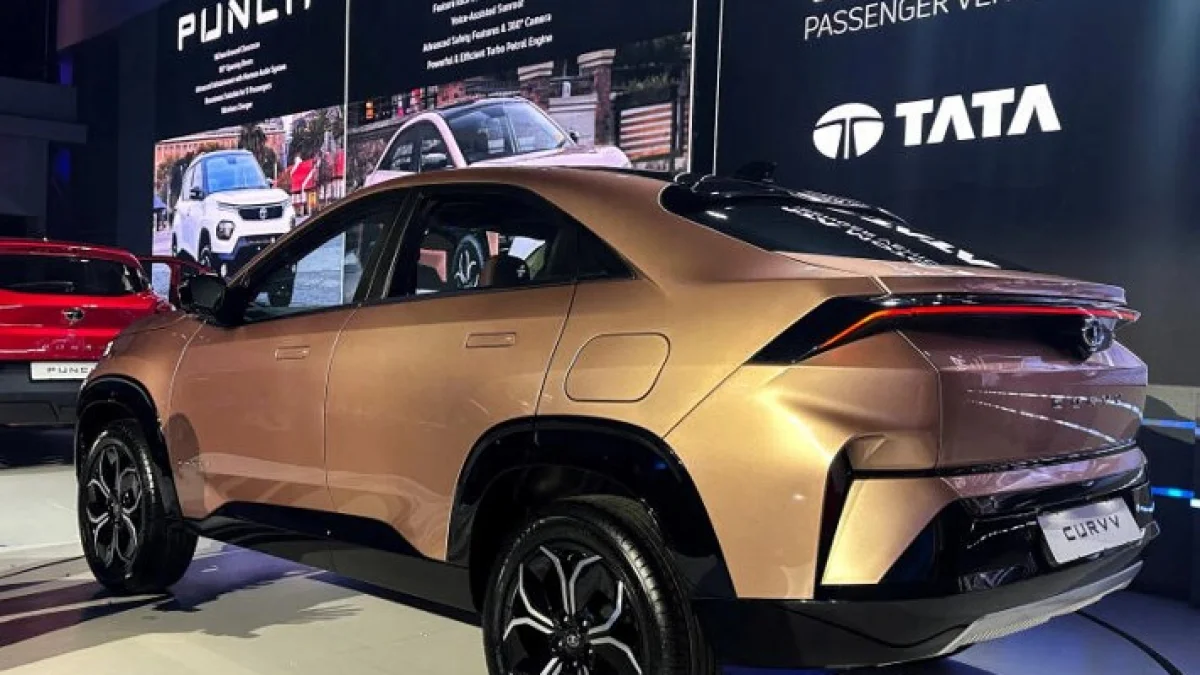
Tata Motors Unveils Ambitious Plan to Sell 1.2 Million Cars Annually by 2031
Tata Motors Passenger Vehicles, a subsidiary of the Tata Motors Group which owns the British luxury brand Jaguar Land Rover, has unveiled an ambitious expansion plan aimed at nearly doubling its revenue and sales volumes by the fiscal year 2031. The new strategy is primarily built on a strong push into electric vehicles and compressed natural gas (CNG) vehicles, signaling a clear shift towards sustainable mobility solutions in one of the world's fastest-growing automotive markets.
Revenue to Surpass 6 Trillion Rupees
According to data released by the company and reported by Reuters, Tata Motors expects its annual revenue to exceed 6 trillion Indian rupees, equivalent to approximately $63.3 billion, by 2031. This projection compares to revenue of 3.36 trillion rupees recorded in fiscal year 2026, representing a growth of nearly 79% over the next five years. This trajectory positions the company on a strong upward path in the Indian market, which is witnessing rapid expansion driven by rising incomes and improving infrastructure.
Sales to Exceed 1.2 Million Vehicles
In its investor presentation, the company revealed a target to increase its annual sales volume to more than 1.2 million vehicles by fiscal year 2031, compared to approximately 640,000 vehicles sold in fiscal year 2026. This goal implies adding over 560,000 vehicles to current annual sales, at a time when the Indian market is experiencing accelerating demand for low-emission and electric vehicles. Tata Motors confirmed that the majority of this increase, exceeding 600,000 additional units, will come from electric vehicles and CNG-powered vehicles, as part of a strategy aimed at diversifying growth sources and reducing the carbon footprint.
Massive Investment of 350 Billion Rupees
Tata Motors has outlined a substantial investment program to support its expansion plans, committing to invest between 330 billion and 350 billion Indian rupees during the period from fiscal year 2026 to fiscal year 2030. These investments are intended to enhance research and development capabilities, launch new models, expand production lines, and develop technologies related to the transition toward electric vehicles. As part of its growth plan, the company aims to raise its annual production capacity to 1.3 million vehicles within two to three years, up from the current capacity of around 900,000 vehicles per year. This move reflects management's confidence in the continued growth of the Indian automotive market, driven by rising incomes, improved infrastructure, and the expansion of the middle class.
Targeting 20% Market Share
Tata Motors is also seeking to strengthen its competitive position within the Indian market by targeting a 20% market share by 2031, fueled by its expansion in the electric and CNG vehicle segments. The company is leveraging the rapid growth of India's middle class, improving infrastructure, and rising incomes, making the Indian market one of the most promising globally. This strategy underscores Tata Motors' commitment to transitioning toward green mobility while maintaining its leadership in the domestic market by offering innovative and sustainable solutions that meet consumer expectations.
Related News
View All News
General Motors: Egypt Leads Africa's Auto Manufacturing Revolution, One Million Cars Is Just the Start
Rohan Fernandez, chairman and managing director of General Motors Egypt and Africa, said Egypt has the manufacturing base to lead the continent's automotive industry. He spoke at the African Automotive…
SN Automotive Prepares Price Hike for Dongfeng, VOYAH, and M-HERO in Egypt
SN Automotive is preparing to raise prices on Dongfeng, VOYAH, and M-HERO vehicles in Egypt within the coming days. The hike follows a period of price stability since the three…

Afreximbank Allocates $1 Billion from El Alamein to Deepen Africa's Auto Industry
Afreximbank announced a $1 billion fund dedicated to Africa's automotive industry at the African Automotive Investment Forum in El Alamein. The bank has disbursed $233 million so far and identified…

Afreximbank Targets $1 Billion Investment to Boost Africa's Automotive Industry
Afreximbank has committed a $1 billion fund to support Africa's automotive industry and has already disbursed $233 million. It also identified 10 investment opportunities worth $125 million in auto components…

Chery Group Sells 292,308 Vehicles in September, Up 4.2% with Exports Surging 51%
Chery Group reported September sales of 292,308 vehicles, up 4.2% year-on-year, with exports reaching 207,814 units (+51%). NEV sales hit 133,310 units, up 45.6%, surpassing 100,000 for the sixth straight…