Opel CEO: EV Transition Slower Than 2020 Expectations as Chinese Competition Pressures Europe
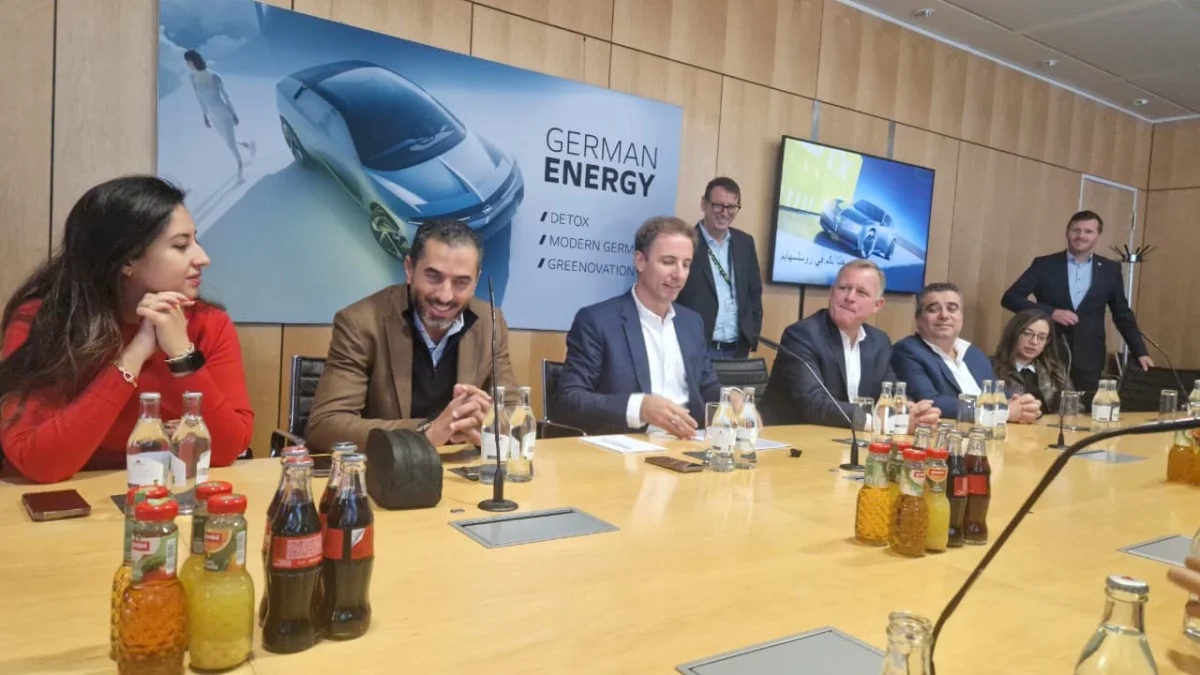
Florian Huettl, CEO of Opel, announced that the transition to electric vehicles is progressing slower than anticipated in 2019 and 2020 during a press conference at the 2026 Paris Motor Show. He highlighted intense competitive pressure from Chinese manufacturers, along with global inflation, supply chain disruptions, and international tensions. Huettl explained that Opel prepared through comprehensive restructuring, cost reduction, and quality improvement, now focusing on investment and product development. He stressed that the future of European automakers depends on balancing technological transformation, cost, and competitiveness.
The shift to electric vehicles is happening far slower than European automakers anticipated back in 2019 and 2020. That's the blunt assessment from Florian Huettl, CEO of Opel, who spoke at a press conference during the 2026 Paris International Motor Show. Huettl addressed Egyptian journalists attending a media trip organized by Stellantis El Mansour Automotive.
Mounting Pressures Force Opel to Rethink
The sector is in a highly volatile phase. Huettl explained that technological, economic, and geopolitical challenges are intertwining to create an unprecedentedly complex business environment. Chinese manufacturers are applying intense competitive pressure on European companies. Add to that global inflation, supply chain disruptions, and international tensions that further complicate the picture.
But what makes matters worse? European regulatory requirements linked to the energy transition and automotive technologies impose additional burdens. The industry needs massive investments to develop products and factories. Under these conditions, Huettl believes that having a clear strategy and the ability to respond quickly to market changes are the decisive factors for staying competitive. There's no room for hesitation.
How Did Opel Prepare for This Phase?
The past few years saw a comprehensive restructuring of the company's operations. Reducing production costs was a priority. Improving vehicle quality came next. Developing the organizational structure was completed to serve as the foundation for the next phase. Now, Opel has moved into a new stage focused on investment, product development, and growth. The company is leveraging its German industrial capabilities and global technology partnerships to strengthen its competitive position.
The Difficult Balance Between Technology and Cost
The future of European car companies — according to Huettl — will be determined by their ability to balance technological transformation, cost, and competitiveness. The equation isn't easy. On one side, investments in new technologies like electric and hybrid vehicles are essential. On the other, high costs and fierce competition squeeze profit margins. Companies that fail to find this balance may find themselves out of the market.
It's worth noting that Huettl's remarks come at a particularly sensitive time. The electric vehicle market in Europe is experiencing slower growth after years of strong demand. Rising interest rates and reduced government incentives in some countries have affected consumer decisions. Meanwhile, Chinese brands continue to expand with competitive prices and advanced technologies. Used Opel cars maintain their value in the European market, but pressure on new models requires a precise pricing strategy.
Can European companies catch up? The answer depends on the speed of adaptation. Opel bet on early restructuring to be in a better position than its competitors. But challenges remain. The massive investments required to develop new electric platforms could take years. And Chinese competition won't wait.
What Does This Mean for Egyptian Consumers?
The Egyptian market is watching these developments closely. Any change in Opel's European strategy could reflect on locally available models and their prices. Stellantis El Mansour Automotive, the local distributor, may adjust its plans based on the parent company's direction. Egyptian consumers are looking for value for money. Competition between European and Chinese brands in Egypt is intensifying. Opel prices in the local market will inevitably be affected by any shifts in global pricing strategy.
The truth is that the European automotive industry stands at a crossroads. The slowdown in the electric transition isn't just a technical challenge — it's a test of companies' ability to survive in a market changing at unprecedented speed. Opel chose investment and restructuring. But the results will be judged by the market — and consumers.
Frequently Asked Questions
3 questions answered
Related News
View All News
Opel Picks Historic Corsa Plant in Spain to Build New EV with Leapmotor
Opel has selected its Zaragoza plant in Spain to produce a new vehicle developed with China's Leapmotor, launching in 2028. The car belongs to the compact C-SUV segment and combines…
SN Automotive to Open New Branch in Alexandria, Expands Dongfeng Network Across Delta
SN Automotive, the authorized agent for Chinese brand Dongfeng in Egypt, has announced plans to open a new branch in Alexandria following the recent launch of a large facility in…
Opel CEO: I've Driven an EV for 3 Years and Only Need Public Chargers Twice a Month
Florian Huettl, CEO of Opel, has revealed that he has been driving a fully electric car for three years and uses public charging stations only once or twice a month…

Al-Safi and El-Nasr Automotive Partner to Boost Local Manufacturing
Al-Safi Group and El-Nasr Automotive Manufacturing Company have announced a new strategic partnership to boost local manufacturing in Egypt. SN Automotive, the authorized agent for Dongfeng vehicles, is preparing to…
ECRAL Becomes Official Agent for CARWIZ International in Egypt with Sigma Mobility Support
ECRAL, part of Al-Fahd Auto Group, has launched CARWIZ International operations in Egypt under the name CARWIZ Egypt, in partnership with Sigma Mobility. The company aims to reach 12 operational…