Industry Minister: Engineering Industries Are the Gateway to Competitive Car Manufacturing
Egypt's industrial landscape is shifting. Engineer Khaled Hashem, Minister of Industry, confirmed that engineering industries represent one of the most strategic drivers for deepening local manufacturing. The reason is clear: their close link to numerous productive sectors, most notably the automotive industry, which increasingly depends on a robust base of feeder industries and local components. The message is unmistakable.
Field Tour at the Heart of the Factories
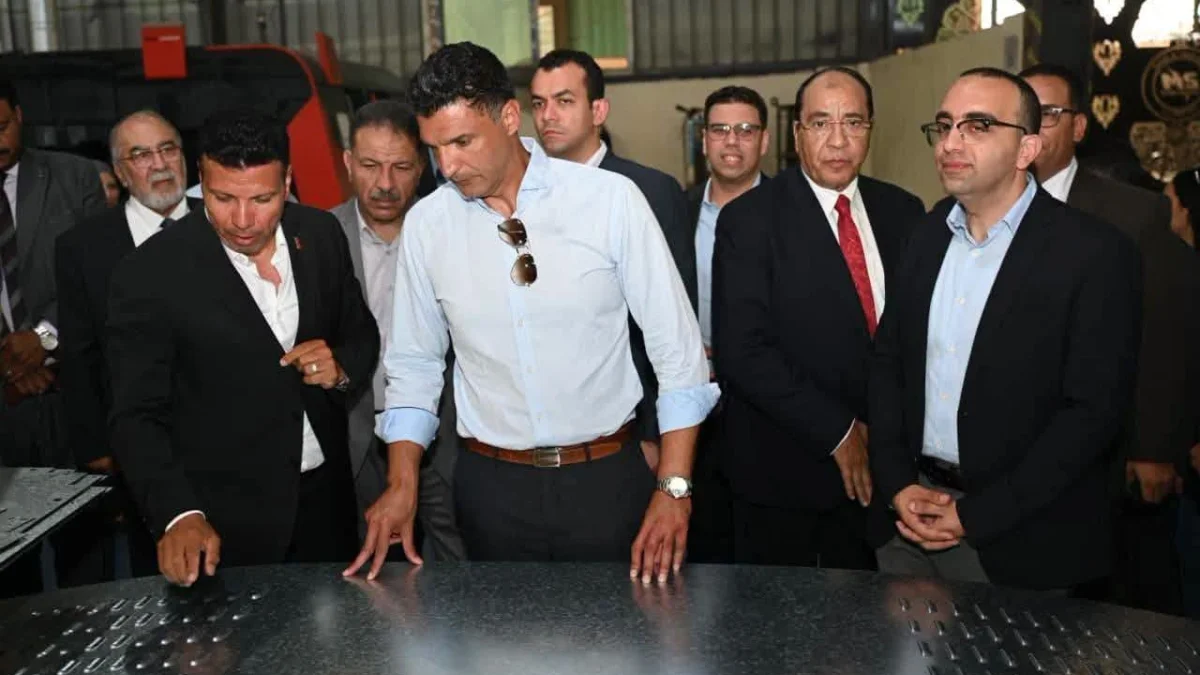
The minister's statements came during an extensive field tour that included several engineering industry factories specializing in electrical equipment and energy components. The goal was straightforward: monitor local production capabilities and support industrial investments aimed at localizing technology and increasing the added value of the Egyptian product. Feeder industries are the backbone of any real automotive sector.
Massive Investments and High Local Content Ratios
The first number stands out. The minister began his tour by visiting the "Two M Electric" factory, built on an area of 28,000 square meters, with investments totaling 1.2 billion Egyptian pounds and a capital of 100 million pounds. The local content ratio in its products ranges between 54% and 100% — a figure reflecting a genuine capacity for deep manufacturing. The factory directs about 5% of its production for export to markets in Iraq, Libya, Lebanon. Kenya, providing 1,045 direct and indirect jobs. This isn't just a statistic; it signals a promising export orientation.
The tour's details were even more revealing. Engineer Mahmoud El-Hadary, the company's chairman, received the minister. Together, they inspected the production lines for electrical transformers, sheet metal panels, and electrical distributors. They also looked at plastic injection lines, mold manufacturing, and copper forming. The minister was briefed on the quality system and control mechanisms applied across various production stages. All these operations are the cornerstone of car manufacturing.
Growing Production Capacity in the Feeder Energy Sector
The second stop was at the Egyptian European Company for Energy Technology "Atos." The factory spans 12,400 square meters, with investments of 600 million pounds and a capital of 25 million pounds. The numbers speak for themselves: an annual production capacity of 1,800 units, a local content ratio of 43%. It provides 180 direct jobs. These figures show serious investment in feeder industries.
During this visit, Engineer Atef Othman, the company's chairman, welcomed the minister. The minister inspected the showroom of products ready for delivery and reviewed the manufacturing stages of electric generators and their accessories. These generators aren't just products; they represent one of the vital feeder industries for numerous industrial sectors, including the automotive sector, which requires an integrated system of local suppliers with advanced manufacturing capabilities. The difference will be significant.
The tour's conclusion carried a strategic message. The minister affirmed that the ministry places engineering industries at the top of its priorities as a main pillar for enhancing the competitiveness of Egyptian industry. The ultimate objectives are attracting more investments, localizing modern technology, raising local content ratios, reducing reliance on imports. Building an Egyptian automotive industry capable of competing regionally and globally.
Related News
View All News
Peugeot Marks 60 Years in Egypt and Showcases Its Latest Lineup
Peugeot is celebrating 60 years in the Egyptian market, with a network of over 21 showrooms and 13 service centers across 12 governorates. The current lineup includes the 2008, 3008,…

Mansco Automotive Celebrates 60 Years of Peugeot in Egypt, Expands Distribution and After-Sales Network
Peugeot is celebrating 60 years in the Egyptian market, and Mansco Automotive, the exclusive distributor, is using the occasion to reaffirm its expansion plans. The network currently includes more than…

Qasrawi Group Appoints Ahmed Wafik as Managing Director of Citroën Egypt
Qasrawi Group, the exclusive distributor of Citroën in Egypt, has appointed Ahmed Wafik as Managing Director of the brand. Wafik brings over 25 years of automotive experience, having previously served…
Nissan: Egypt Is Our Manufacturing Base for Africa as Magnite Hits 55% Local Content
Nissan has confirmed that Egypt serves as a regional manufacturing base for exporting the Magnite to Africa, with local production starting in June 2026 and local content reaching 55%. Mohamed…
Global Auto Opens New BMW and MINI Showroom in New Cairo
Global Auto Group has opened a new showroom for BMW and MINI in the Fifth Settlement of New Cairo. The 1,000-square-meter facility holds eight cars and brings the two brands…