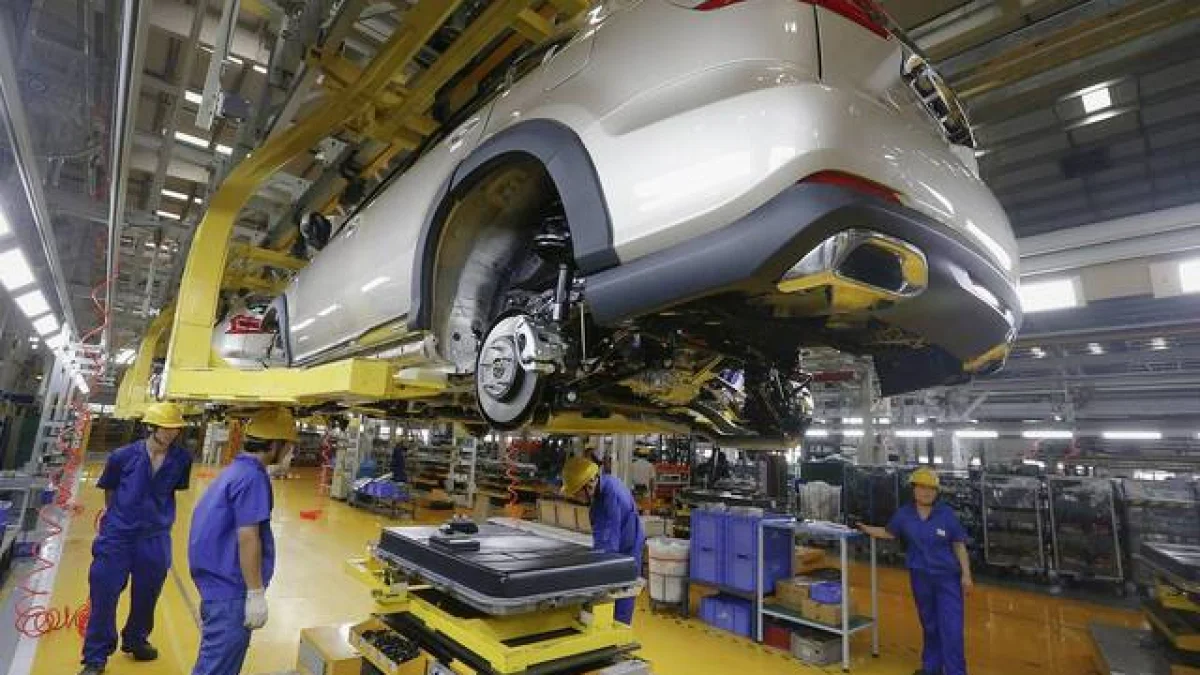
China Targets Europe via Morocco: New Factories Challenge Major Automakers
In a development that is reshaping the global automotive landscape, Chinese automakers are aggressively pursuing expansion plans beyond their borders, aiming to establish new production bases close to European markets. This strategy comes at a time when traditional European car factories are retreating under the pressure of Asian competition, threatening the dominance of major automakers that have long controlled the continent.
Morocco as China's Gateway to Europe
Journalist and media presenter Hisham El-Zeini, hosting the program "Arabia-ti" on Egypt Radio, confirmed that Morocco has become one of the most prominent destinations for Chinese investments in the automotive sector. He noted that Chinese companies are seeking to build new factories in Morocco, which would provide them with greater, faster, and easier access to European markets, leveraging trade agreements and the kingdom's strategic geographic location.
European Automakers Under Siege
El-Zeini explained that the Chinese move comes at a time when German and European automakers are facing multiple crises due to rising Chinese competition. These pressures have forced some companies to relocate their factories, cut production, or lay off significant numbers of workers, all in an effort to keep pace with rapid shifts in the global car market.
The host of "Arabia-ti" emphasized that competition is no longer limited to vehicle production alone; it has turned into a broader battle encompassing manufacturing locations, supply chains, and markets. With the rapid rise of Chinese industry, the traditional dominance of major German and European companies is eroding, forcing fundamental changes in the strategies of the sector's biggest players.
Related News
View All News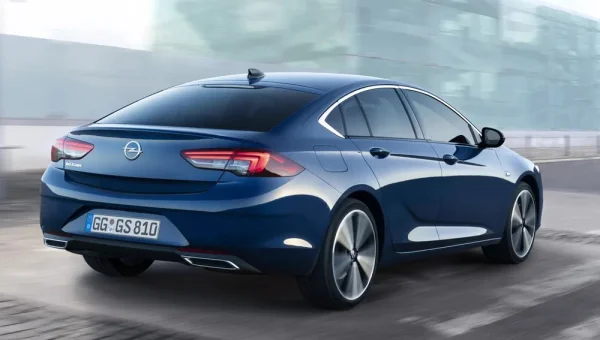
Opel CEO Settles Insignia's Future: No Return Anytime Soon
Opel CEO Florian Huettl confirmed there is no near-term project to develop a new Insignia generation. He said the car's segment has limited growth and does not justify major investment…
Opel Picks Historic Corsa Plant in Spain to Build New EV with Leapmotor
Opel has selected its Zaragoza plant in Spain to produce a new vehicle developed with China's Leapmotor, launching in 2028. The car belongs to the compact C-SUV segment and combines…
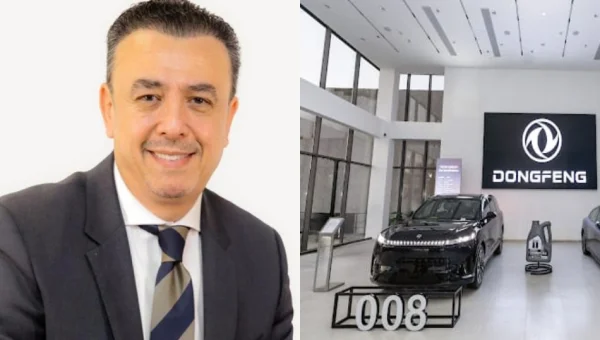
SN Automotive to Open New Branch in Alexandria, Expands Dongfeng Network Across Delta
SN Automotive, the authorized agent for Chinese brand Dongfeng in Egypt, has announced plans to open a new branch in Alexandria following the recent launch of a large facility in…

Opel CEO: I've Driven an EV for 3 Years and Only Need Public Chargers Twice a Month
Florian Huettl, CEO of Opel, has revealed that he has been driving a fully electric car for three years and uses public charging stations only once or twice a month…

Al-Safi and El-Nasr Automotive Partner to Boost Local Manufacturing
Al-Safi Group and El-Nasr Automotive Manufacturing Company have announced a new strategic partnership to boost local manufacturing in Egypt. SN Automotive, the authorized agent for Dongfeng vehicles, is preparing to…