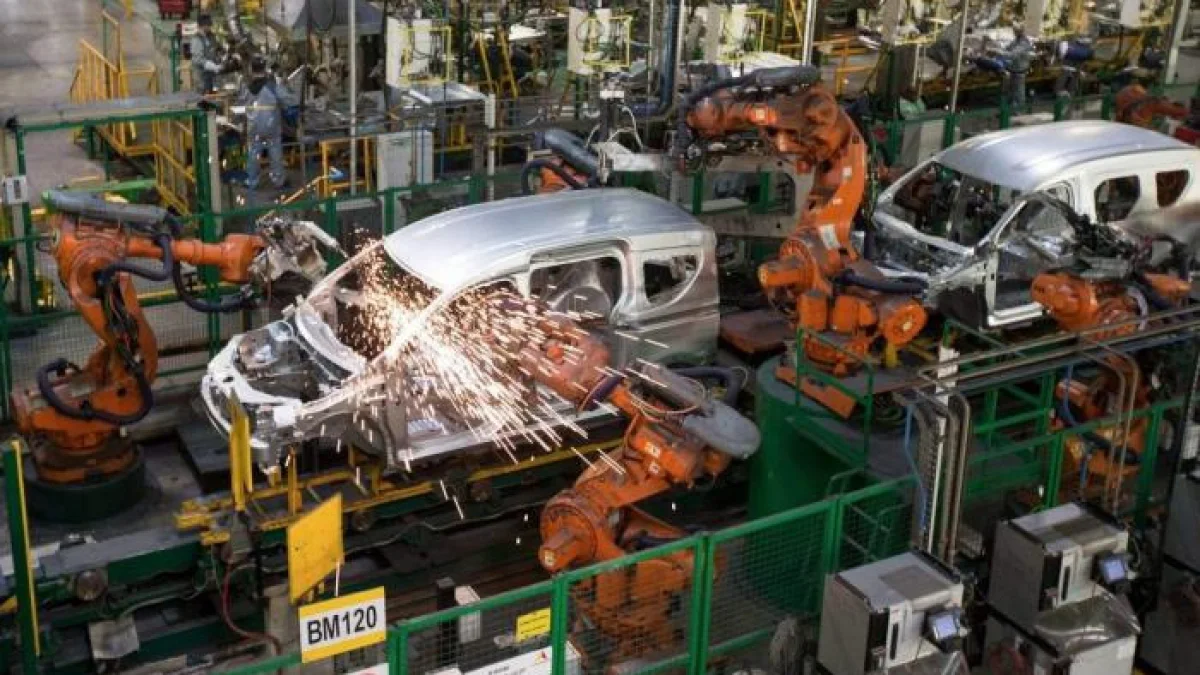
The 'World's Factory' Under Pressure: New Destinations Lure Production Lines Away from China
China is no longer the sole destination for global companies seeking low-cost production. The international manufacturing map is witnessing a notable shift, fueled by rising trade tensions, higher operating costs, and growing concerns about relying on a single market.
A Long-Running Chinese Edge
For decades, China has been known as the 'world's factory,' benefiting from abundant labor, massive infrastructure, and integrated supply chains. These factors strengthened its ability to attract industrial investments from around the globe, making it the center of gravity in automotive manufacturing and its components.
But economic and trade shifts have pushed many global companies to reconsider how they distribute their production operations. Looking for new locations outside China has become a clear strategy, aimed at reducing risks and increasing supply chain flexibility in a sector as sensitive as car manufacturing.
A Gradual Shift, Not a Mass Exit
What's really happening here? Current movements don't point to a mass factory exit from China, but rather companies moving part of their production operations to other countries. This approach allows them to diversify manufacturing sources and reduce dependence on a single production base, without completely abandoning China's enormous advantages.
Despite some production lines shifting to other destinations, China still holds an edge that rivals can't quickly replicate. Its integrated industrial network spans all production stages, from raw materials and components to manufacturing, assembly, and the final product — something that can't be replaced overnight.
Emerging Alternative Hubs
Countries like Vietnam, India, Mexico, and Turkey have emerged as attractive destinations for companies seeking production alternatives. These nations benefit from several factors, including proximity to key markets, lower operating costs in some cases, and a growing capacity to absorb new industrial investments in the automotive sector.
The gains from this shift aren't limited to the countries receiving new production lines. Companies themselves benefit from spreading operations across multiple nations, gaining greater flexibility in facing trade and supply disruptions while reducing risks tied to relying on a single production hub — an equation that has become fundamental in the global automotive industry today.
Related News
View All News
Beyond the Headlines: What Really Drives Engagement on Egyptian Auto Sites?
The report examines competition among auto sites in Egypt, noting that superiority depends on understanding local buyer needs for content combining price and running costs. Analyses show over 60% of…

Egypt's One-Billion-Pound Fund Revives Ailing Auto Factories
Egypt's Central Bank and Ministry of Industry have launched a one-billion-pound fund to restructure struggling factories and restore idle production capacity. The fund will take equity stakes, restructure debt, and…

Is Now the Right Time to Buy a New Car in Egypt? 6 Indicators That Decide
New car sales in Egypt rose 29.7% in the first seven months of 2026, reaching 116,869 vehicles, with passenger car sales up 25%. Overprice premiums have declined on several models…
Egyptian Car Market 2025: Challenges and Opportunities
Egypt's car market in 2025 faces up to 15% price hikes for Toyota and Nissan, an 8% drop in new car sales, and growing demand for used cars. Electric and…
China Tops Global Auto Industry: From Imitation to Technological Leadership
China's auto industry has shifted from imitation to global leadership, driven by massive investments in electric vehicles and AI. Companies like BYD adopted self-integration in production, cutting costs and boosting…