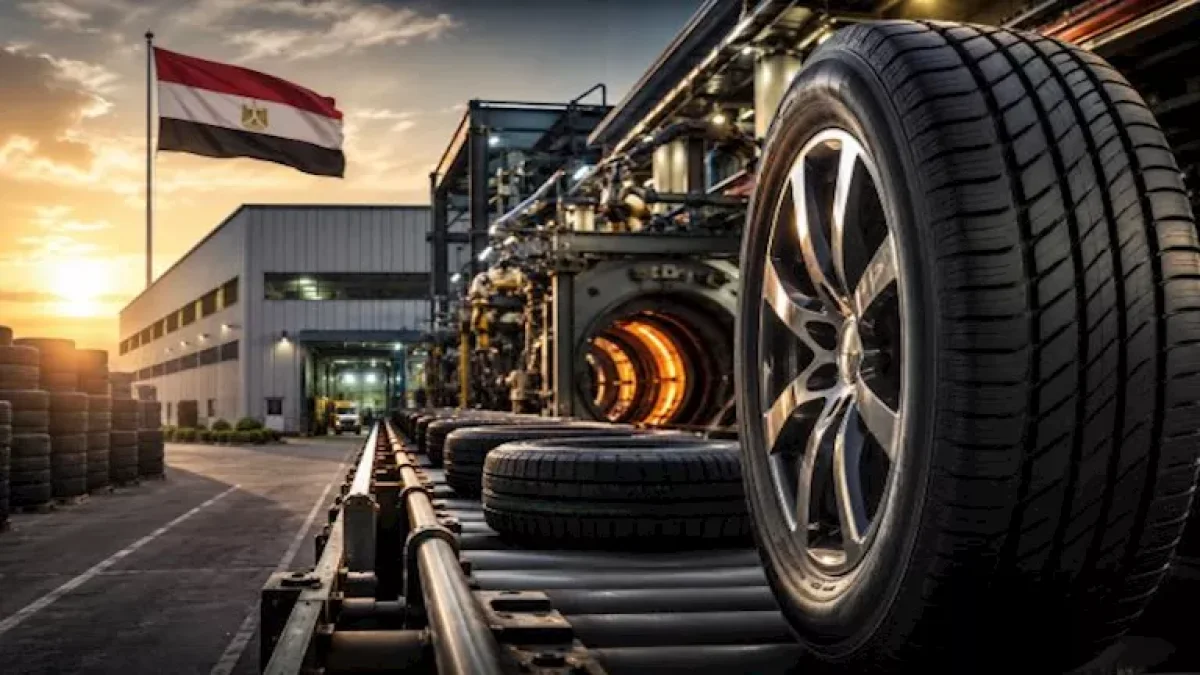
Egypt plans $500M passenger car tire factory to cut import bill
The Egyptian government plans to build a factory for passenger car and light commercial vehicle tires with $500 million in investments. The project aims to reduce an annual tire import bill of $1.25 billion. Located in Tenth of Ramadan City on a 217-acre site, the factory will operate under the Ministry of Military Production. Current local tire manufacturing is limited to bus and truck tires.
Egypt's government is moving forward with a major project to build a factory for passenger car and light commercial vehicle tires. The investment is estimated at $500 million, according to an official document. The aim is clear: boost local industry and slash a $1.25 billion annual import bill.
Project details in the Tenth of Ramadan City
The factory will be established in the industrial zone of Tenth of Ramadan City on a 217-acre plot. A public-private partnership model will handle execution, with the project falling under the authority of the Ministry of Military Production. This initiative is part of a broader push to deepen local manufacturing in strategic industries.
The numbers driving this decision are staggering. The Egyptian market consumes vast quantities of car tires annually, with imports dominating supply. The document reveals that nearly 8 million tires are imported each year at a cost of about $1.25 billion — a figure that explains the massive potential savings from localizing this industry.
Local tire industry: present limits and future potential
The current state of passenger car tire manufacturing in Egypt remains limited. The document mentions Chinese company "Sailun," which works in this field and is expected to begin production in the coming period in the Suez Canal Economic Zone. New investments entering this sector signal a clear shift toward localization, especially given the expanding car market size.
Existing factories focus solely on producing bus and truck tires. Mohamed Zada, Assistant Minister of Industry for Strategic Industries, stated last July that Egypt lacks a complete passenger car tire manufacturing industry. The gap is obvious, and this new project lays the foundation to close it.
The project's impact extends beyond just saving hard currency. The new factory will support supply chains tied to the automotive sector and feeder industries, strengthening an integrated industrial ecosystem. That could reflect positively on car prices in the Egyptian market in the long run. The question now isn't whether the project will start — it's when production will actually begin.
Frequently Asked Questions
3 questions answered
Related News
View All News
Beyond the Headlines: What Really Drives Engagement on Egyptian Auto Sites?
The report examines competition among auto sites in Egypt, noting that superiority depends on understanding local buyer needs for content combining price and running costs. Analyses show over 60% of…

Egypt's One-Billion-Pound Fund Revives Ailing Auto Factories
Egypt's Central Bank and Ministry of Industry have launched a one-billion-pound fund to restructure struggling factories and restore idle production capacity. The fund will take equity stakes, restructure debt, and…

Is Now the Right Time to Buy a New Car in Egypt? 6 Indicators That Decide
New car sales in Egypt rose 29.7% in the first seven months of 2026, reaching 116,869 vehicles, with passenger car sales up 25%. Overprice premiums have declined on several models…
Egyptian Car Market 2025: Challenges and Opportunities
Egypt's car market in 2025 faces up to 15% price hikes for Toyota and Nissan, an 8% drop in new car sales, and growing demand for used cars. Electric and…
China Tops Global Auto Industry: From Imitation to Technological Leadership
China's auto industry has shifted from imitation to global leadership, driven by massive investments in electric vehicles and AI. Companies like BYD adopted self-integration in production, cutting costs and boosting…