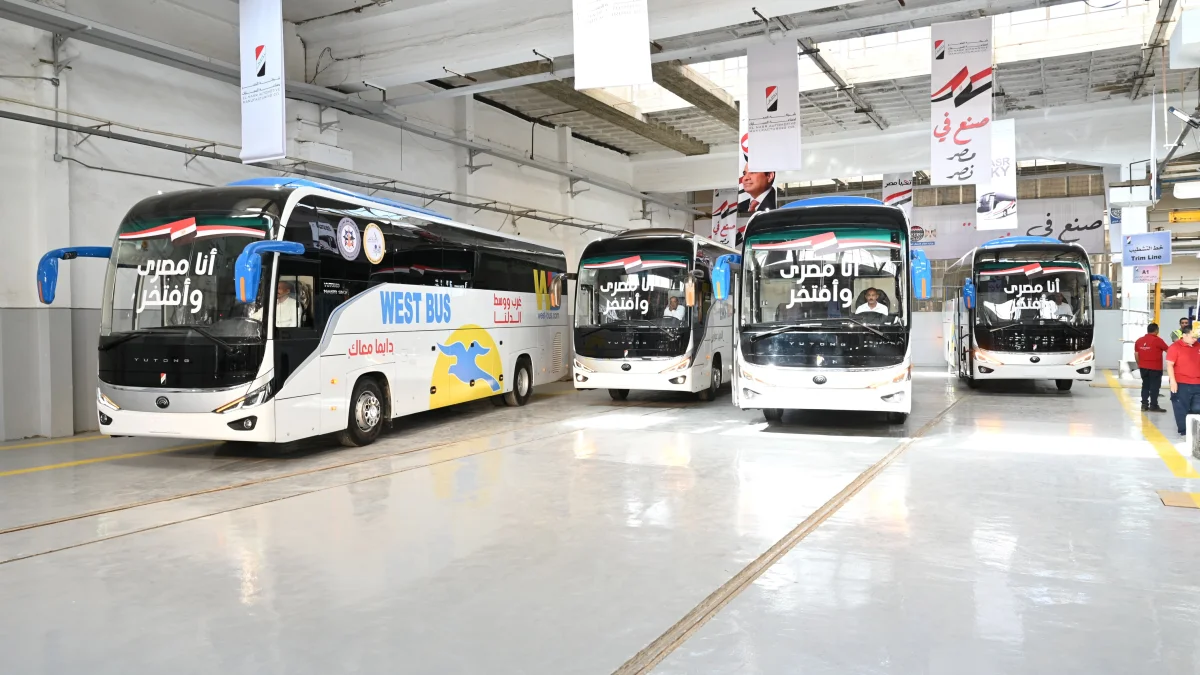
Local Assembly Drives Bus Sales in Egypt Up 78.5% Over 8 Months
Bus sales in Egypt reached 12,101 units in the first eight months of the year, up 78.5% from 6,781 vehicles last year. Locally assembled buses drove the growth, rising 73.5% to 9,591 units, while imported buses doubled to 2,510 vehicles. The data from AMIC highlights a clear shift toward domestic production in Egypt's commercial vehicle market.
Bus sales in Egypt climbed to 12,101 units in the first eight months of the year, up from roughly 6,781 vehicles in the same period last year — a 78.5% jump that signals a strong recovery in the commercial vehicle segment. The numbers come from the latest report by the Automotive Market Information Council (AMIC).
Locally Assembled Buses Take the Lead
Locally manufactured buses drove the surge, rising 73.5% to 9,591 units compared to 5,529 vehicles in the corresponding period last year. That figure alone tells the story: domestic production is no longer a side player in Egypt's bus market — it's the main engine.
Imported buses also posted growth, but from a smaller base. Sales of imported units reached 2,510 vehicles, up 100% from 1,252 units a year earlier. The gap between local and imported volumes keeps widening, and the market is clearly rewarding local assembly.
Why Local Assembly Is Winning
Assembly lines inside Egypt give manufacturers a cost advantage and faster delivery times — two factors that matter enormously in a sector built on government contracts and fleet orders. With local production hitting 9,591 units in just eight months, the infrastructure is proving it can scale.
The overall 78.5% growth rate reflects more than a post-pandemic rebound. It shows that fleet operators and transport companies are actively choosing locally built buses, and that trend is reshaping how the market operates. Does import reliance still make sense at these volumes? The data suggests otherwise.
What the Numbers Mean Going Forward
Eight months, 12,101 buses sold. That pace puts the market on track for a strong full-year close, and it validates the investment decisions made by manufacturers who bet on local assembly capacity. The commercial vehicle sector in Egypt is moving in a direction that few predicted two years ago.
With demand for public transport rising across major cities and governorates, the push toward domestic production is likely to accelerate. More assembly lines, more local content, and fewer imported units — that's the trajectory the numbers point to for the remainder of the year and beyond.
Frequently Asked Questions
3 questions answered
Related News
View All News
Chery Dominates Egypt's Locally Assembled Car Sales in August with 34% Share
Chery led Egypt's locally assembled car sales in August with a 34% market share and 1,470 vehicles. Nissan came second at 20% with 872 cars, followed by Hyundai at 14%…
Chery Leads Egypt's August Car Market with 17% Share and 3,168 Units
Chery topped Egypt's best-selling automotive brand list in August with a 17% market share and 3,168 vehicles sold. Chevrolet came second with 13% and 2,468 cars, while Chery followed in…

Nissan Tops Egypt's Car Sales Charts for First 8 Months with 16.4% Share
Nissan topped Egypt's car sales rankings in the first eight months of 2026 with a 16.4% market share and approximately 16,616 vehicles, per AMIC data. MG came second at 14.1%…
Egypt's Car Dealers Chief Slams 'Mood-Based Pricing' in Used Car Market
Osama Abou El-Magd, head of Egypt's Car Dealers Association, says used car pricing has become exaggerated, with owners quoting figures that ignore current market dynamics. He noted that higher new…
Egypt's Locally Assembled Car Sales Rise 4.2% in First 8 Months of 2026
Egypt's locally assembled car sales rose 4.2% in the first eight months of 2026 to 42,212 units, up from 40,529 units in 2025, according to the Automotive Market Information Council…