

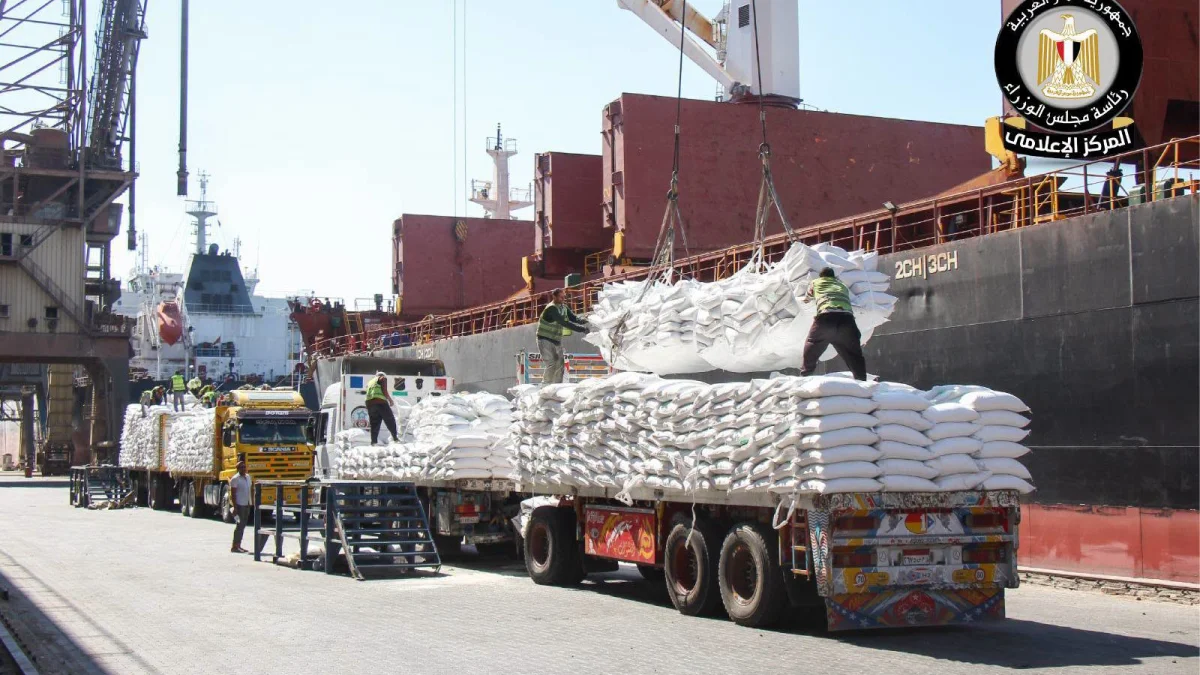
Damietta Port Hits High Gear: 8 Vessels and 5,400 Truck Movements in 24 Hours
Damietta Port is moving full steam ahead. Eight vessels arrived in the last day, while one ship departed — bringing the total number of ships at the port to 21. Onshore operations ran uninterrupted across the pier, from container terminals to grain silos, as the port works around the clock to keep trade flowing. It's a clear sign of how crucial this hub has become for Egypt's maritime logistics.
General Cargo Crosses 49,000 Tons
The numbers tell an interesting story. General cargo turnover hit 49,249 tons in a single day, with imports exceeding exports by a narrow margin. Imports reached 25,545 tons — including scrap metal, timber. Essential grains — while exports totaled 23,704 tons, featuring assorted goods, beet pulp, and gypsum. That scale of activity doesn't just happen; it requires meticulous coordination among dock workers, terminal operators, and customs officials.
Container traffic is thriving too. The port exported 194 TEUs and imported 1,029 TEUs, with an additional 1,614 TEUs in transit — numbers that reflect its growing role as a transshipment hub in the eastern Mediterranean. Trucks moved in and out of the gates 5,447 times during the same 24-hour window, a testament to the smooth landside logistics. Trucks pick up cargo, haul it to factories in the Delta, and return empty within hours. That's efficiency in motion.
Wheat Reserves Under Watch
Strategic stockpiles are holding steady. The public-sector grain silo now stores 98,120 tons of wheat, while private warehouses account for an additional 45,993 tons. That combined buffer — over 144,000 tons of wheat — gives the country breathing room against any supply disruption. Port authorities are clearly prioritizing food-security items, a wise move in turbulent global markets. With shipping costs volatile and grain supply chains fragile, such reserves are more than just inventory; they're a national safety net.
Related News
View All NewsReport reveals: The turbo engines most prone to failure after 80,000 km
Recent fleet data shows that several turbocharged engines in Egypt begin showing costly failures at just 80,000 kilometers, while others last much longer. The main cause isn't design alone but…

Unqualified Influencers Threaten Egypt's Economy and Corporate Reputation
Dr. Said Hamed, a media professor at Suez University, warned that content from unqualified influencers on social media can damage Egypt's national economy and the reputation of state institutions. He…

Beyond the Headlines: What Really Drives Engagement on Egyptian Auto Sites?
The report examines competition among auto sites in Egypt, noting that superiority depends on understanding local buyer needs for content combining price and running costs. Analyses show over 60% of…

Egypt's One-Billion-Pound Fund Revives Ailing Auto Factories
Egypt's Central Bank and Ministry of Industry have launched a one-billion-pound fund to restructure struggling factories and restore idle production capacity. The fund will take equity stakes, restructure debt, and…

Is Now the Right Time to Buy a New Car in Egypt? 6 Indicators That Decide
New car sales in Egypt rose 29.7% in the first seven months of 2026, reaching 116,869 vehicles, with passenger car sales up 25%. Overprice premiums have declined on several models…

