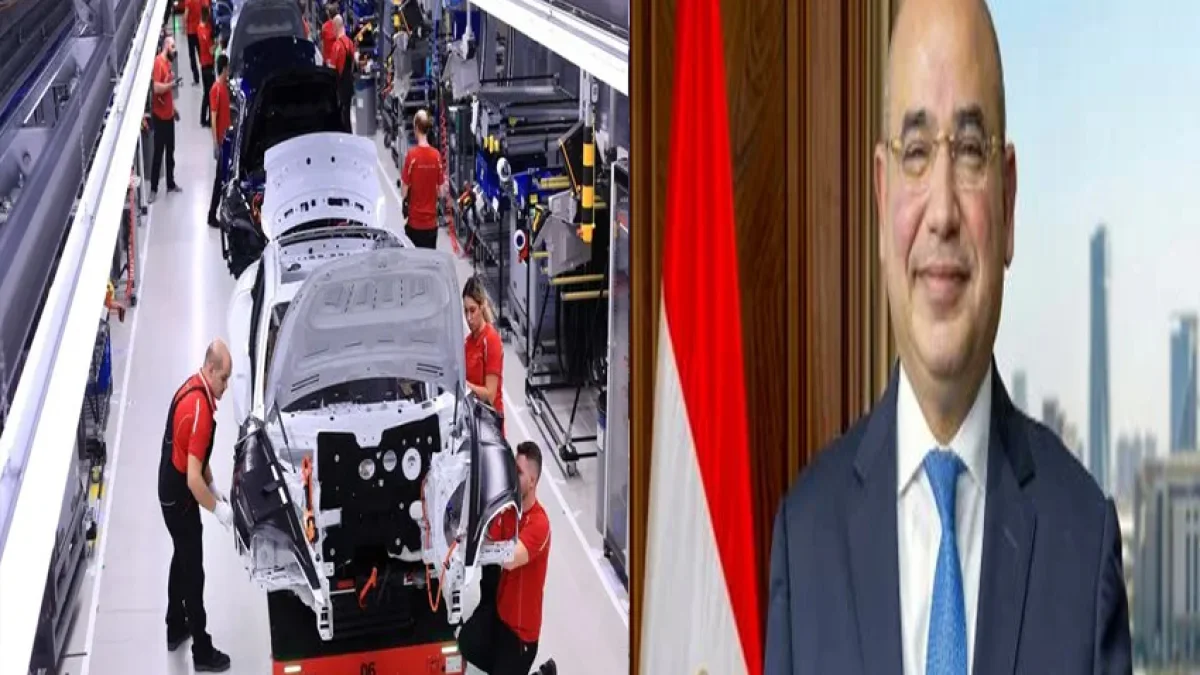
Car Factories Head to Ports: Can the Suez Canal Economic Zone Become a New Manufacturing Hub?
The Suez Canal Economic Zone is pushing to become a manufacturing and export hub by linking industrial zones directly to ports. In FY 2025/2026, the authority signed 117 projects with investments nearing $7.3 billion. Officials argue that the automotive industry requires strategic sites that allow fast component intake and quick export of finished vehicles. This integrated approach positions Egypt to attract both carmakers and suppliers simultaneously.
The equation for attracting automotive manufacturing has changed fundamentally. It's no longer just about finding land and suitable production costs — the real prize is a location that allows components to arrive, get assembled. Then ship out as finished vehicles to export markets with minimal time and expense. This is the equation the Suez Canal Economic Zone is betting on to strengthen its position on the regional manufacturing and export map.
Why Does the Automotive Industry Need Ports?
Building a car doesn't start and end inside the factory walls. Components and raw materials arrive from various suppliers, parts move between multiple production stages, then finished cars or assemblies need to reach target markets. SO locating industrial projects near ports adds critical value by cutting transport links between the factory and import-export points, giving companies stronger supply chain control.
That logistical advantage matters beyond any single plant. It extends to the feeder industries that rely on complex supply chains and continuous component flows. The Suez Canal Economic Zone is betting on combining production, logistics services. Export operations within one integrated system — a model with particular weight for the automotive sector. The logic is simple: a factory on the port means faster inbound parts and faster outbound vehicles.
$7.3 Billion Reveals the Scale of the Industrial Bet
This vision led the agenda for Waleid Gamal Eldin, Chairman of the General Authority for the Suez Canal Economic Zone, during his participation in the Egypt-Italy Business Forum, organized by the Ministry of Investment and Foreign Trade and the General Authority for Investment and Free Zones in cooperation with the Italian side. The figures he shared show how ambitious the plan truly is.
Car manufacturing remains one piece of a much larger investment picture inside the economic zone. During the fiscal year 2025/2026, the authority signed contracts for 117 projects with investments approaching $7.3 billion, according to its chairman. These numbers highlight the scale of expansion in attracting productive ventures.
The most critical step for the automotive industry lies in attracting manufacturers and suppliers together, so that no factory operates in isolation from the rest of the production chain. With industrial zones linked to a group of ports on both the Red Sea and the Mediterranean, the economic zone holds a strong competitive card — especially as global companies increasingly search for shorter, faster alternatives to traditional supply chains.
What Does This Mean for Manufacturing in Egypt?
The economic zone is leveraging this advantage by integrating industrial areas, ports. Logistics services into a single package. That makes it suitable for hosting projects targeting the domestic Egyptian market and, at the same time, using Egypt as an export base. An integrated model like this offers a genuinely rare competitive edge — global companies find a location that shortens both distance and time in one move.
Frequently Asked Questions
2 questions answered
Related News
View All News
Passenger Cars Drive Egyptian Market Growth in 2026.. Nissan Leads
Passenger car sales in Egypt rose 22% in the first eight months of 2026 to 101,492 units. Nissan led the market with 16,616 vehicles, followed by MG and Chery. Changan…
Local Assembly Drives Truck Sales in Egypt Up 22.7% in 8 Months
Truck sales in Egypt rose 22.7% in the first eight months of 2026 to 21,852 units. Locally assembled trucks grew 16.1% to 18,719 vehicles, while imported trucks surged 85.4% to…
King Long Leads Egypt Bus Sales with 29.6% Share in First 8 Months
King Long led Egypt's bus market with a 29.6% share and 3,581 vehicles in the first eight months of 2026. Toyota came second at 18.6% with 2,251 units, followed by…
Toyota HiAce Dominates Egypt's Tourist Minibus Sales with 85% Share in 8 Months
Toyota HiAce commanded 85% of Egypt's tourist minibus segment in the first eight months of 2026, selling 1,022 units. Foton CS2 placed second with 134 vehicles and an 11% share,…
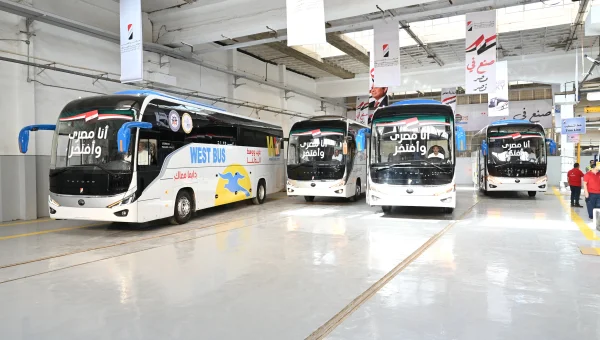
Local Assembly Drives Bus Sales in Egypt Up 78.5% Over 8 Months
Bus sales in Egypt reached 12,101 units in the first eight months of the year, up 78.5% from 6,781 vehicles last year. Locally assembled buses drove the growth, rising 73.5%…