

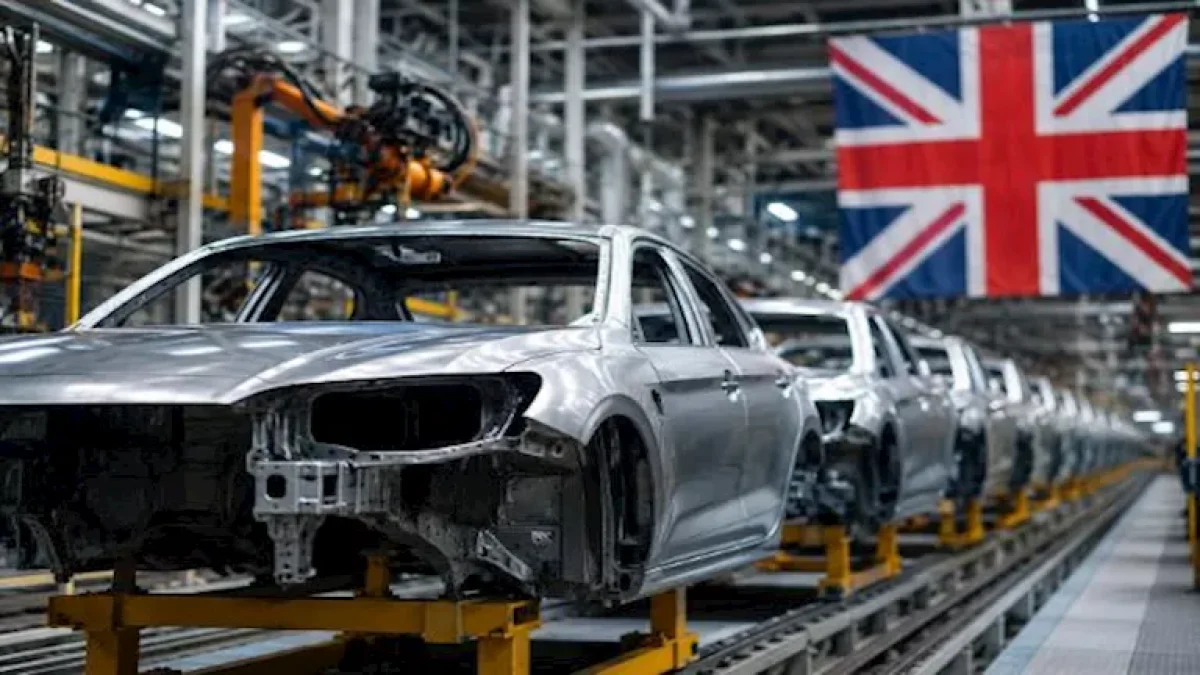
UK Car Production Falls 11.6% in July as Exports Lose Momentum
UK vehicle production fell 11.6% in July 2026 to 63.7 thousand units, driven by weaker exports and summer plant shutdowns. Passenger car output declined 10.6%, while commercial vehicles plunged 34.4%. Electric and hybrid production rose 6.8% to 25.7 thousand cars, marking the first monthly increase this year. Exports still represent 74.4% of total British vehicle output.
Car production in the United Kingdom fell 11.6% in July 2026, hit by weak export demand and scheduled summer maintenance shutdowns. Total vehicle output reached 63.7 thousand units, down from 72 thousand in the same month last year.
British Exports Under Pressure
Vehicle exports dropped 15.9% year-on-year to 47.4 thousand units, compared to 56.3 thousand in July 2025. Exports still account for 74.4% of total UK production, highlighting how heavily local factories rely on foreign demand.
Passenger car output stood at 61.8 thousand units, down 10.6%, with export-bound volumes falling 15.8% to 46.2 thousand cars. Yet domestic-market production rose 9.3% to 15.5 thousand units — a rare bright spot in an otherwise gloomy month.
Commercial Vehicles Hit Hardest
Commercial vehicle production took the biggest blow, plunging 34.4% to just 1,888 units in July. Volumes destined for the British market collapsed by 49.6%, while export-oriented production fell 18.5%, according to the Society of Motor Manufacturers and Traders.
But there is a glimmer of hope in the electric and hybrid vehicle segment, which grew 6.8% to 25.7 thousand cars in July. This marks the first monthly increase in electrified vehicle output since the start of 2026, pushing their share above 40% of all British passenger cars produced.
The numbers paint a complex picture for the UK's automotive industry. Domestic demand is growing while factories export less. The summer shutdown period exposed the fragile balance as foreign orders weaken. Whether the sector can recover this lost ground in coming months remains an open question, especially as the transition toward electric models continues to reshape production lines.
Frequently Asked Questions
3 questions answered
Related News
View All News
Yttrium Crisis Hits Global Supply Chains, Threatens Auto and Aviation Industries as Japan and US Face Rare Earth Test
The yttrium crisis is escalating after China's rare earth export restrictions, threatening Japan's stockpiles within months. Yttrium oxide prices have reached $1,150 per kilogram outside China versus just $9 inside…
BYD Ignites German Price War with 32% Discount, Challenging Volkswagen and Mercedes
BYD offered discounts of 27.5% and 31.8% on its plug-in hybrid models in Germany during August. The company captured 10.7% of the market in July, taking fourth place. Discounts exceeded…
Mercedes, BMW, Volkswagen, and Porsche Sales Collapse 40% in China
German automotive giants saw sales in China plunge between 30% and 40% during parts of this year, outpacing the overall market's 20% contraction. The development cycle gap — 18 months…
China Car Sales Set to Drop to 18.5 Million Units in 2026
Passenger car sales in China are projected to drop to 18.5 million units in 2026, down from 23.7 million in 2025. Forecasts point to a limited 2% recovery in 2027…
Hyundai Hydrogen Sales Surpass 50,000 Units in Korea
Hyundai Motor's cumulative hydrogen fuel cell vehicle sales in South Korea have exceeded 50,262 units as of the end of September. The Nexo SUV, launched in 2018, accounts for the…

