


Tarek Masoud: Africa Has a Historic Opportunity to Build a Global Auto Industry Hub
Tarek Masoud, President of the African Association of Automotive Manufacturers, called on governments and the private sector to accelerate concrete industrial projects rather than just policies. Speaking at the Africa Automotive Investment Forum 2026 in Alamein, he highlighted the agreement on 40% local content rules as a key step toward industrial integration. He outlined three main pillars: increasing local content, facilitating cross-border movement of components, and unifying technical regulations.
Tarek Masoud, President of the African Association of Automotive Manufacturers (AAAM), has called on governments, decision-makers. The private sector across the continent to move swiftly from policy frameworks to concrete industrial investments. Speaking at the high-level strategic dialogue during the Africa Automotive Investment Forum 2026 in Alamein City, Masoud delivered a keynote titled 'Unlocking Africa's Automotive Potential Under the AfCFTA'. He stressed that the agreement on 40% local content rules for vehicles marks a critical step toward industrial integration among African nations. The current phase, he argued, is no longer about whether Africa can build a fully integrated auto industry, but how to turn pledges and policies into factories, suppliers, jobs, and tangible trade flows.
Three Key Pillars for Developing Africa's Automotive Industry
Masoud outlined three main pillars for building an integrated and scalable manufacturing ecosystem, starting with increasing local content and developing regional value chains. He explained that creating a globally competitive auto industry requires integration between African markets, cross-border joint projects. Specialized programs to develop local suppliers. These efforts would enable small and medium-sized enterprises to participate in automotive component supply chains and connect with Tier 1 and Tier 2 suppliers according to international standards. He also stressed the importance of facilitating the cross-border movement of vehicle products and components, given ongoing challenges related to customs procedures and differing technical requirements between countries, calling for unified technical regulations, simplified customs procedures. More efficient logistics corridors.
From Pledges to Factories and Real Investments
Masoud noted that the future of Africa's automotive industry is now tied to a clear executive agenda. He emphasized that the agreement on 40% local content rules must translate into investments and production projects, including building factories and developing the local supplier base. The historic opportunity, he added, requires swift action from both governments and the private sector, with a focus on building local manufacturing capacity and stimulating investment in supply chains. He also pointed out that the success of Africa's automotive experiment depends on countries' ability to work together and remove obstacles to intra-African trade.
The Role of AfCFTA in Strengthening Industrial Integration
The African Continental Free Trade Area (AfCFTA) stands as the primary framework through which African countries can build an integrated auto industry by eliminating tariff and non-tariff barriers and unifying technical standards. Masoud believes that unifying technical regulations and simplifying customs procedures will help reduce production costs and boost the competitiveness of African products in global markets. He also called for investment in logistics infrastructure and trade corridors to ensure the smooth movement of automotive components between countries.
The Road Ahead: From Policy to Implementation
The core message from the Africa Automotive Investment Forum 2026 is clear: there is no time to wait. The continent possesses the resources, the market, and the workforce — what it lacks is execution. This push comes as countries like Egypt, Morocco. South Africa seek to strengthen their positions as regional manufacturing hubs. If these efforts succeed, the coming years could witness a radical shift in the global auto industry map, with Africa emerging as a key player in international supply chains.
Frequently Asked Questions
3 questions answered
Related News
View All News
Yttrium Crisis Hits Global Supply Chains, Threatens Auto and Aviation Industries as Japan and US Face Rare Earth Test
The yttrium crisis is escalating after China's rare earth export restrictions, threatening Japan's stockpiles within months. Yttrium oxide prices have reached $1,150 per kilogram outside China versus just $9 inside…

BYD Ignites German Price War with 32% Discount, Challenging Volkswagen and Mercedes
BYD offered discounts of 27.5% and 31.8% on its plug-in hybrid models in Germany during August. The company captured 10.7% of the market in July, taking fourth place. Discounts exceeded…
Mercedes, BMW, Volkswagen, and Porsche Sales Collapse 40% in China
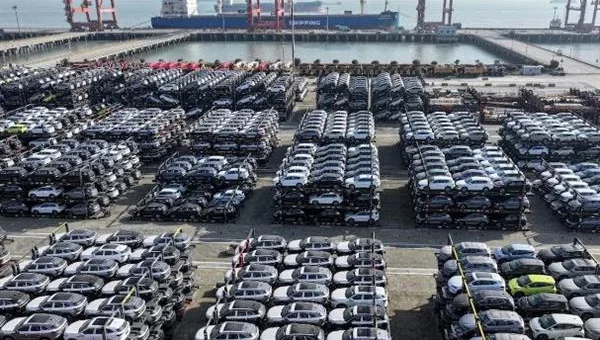
German automotive giants saw sales in China plunge between 30% and 40% during parts of this year, outpacing the overall market's 20% contraction. The development cycle gap — 18 months…
China Car Sales Set to Drop to 18.5 Million Units in 2026
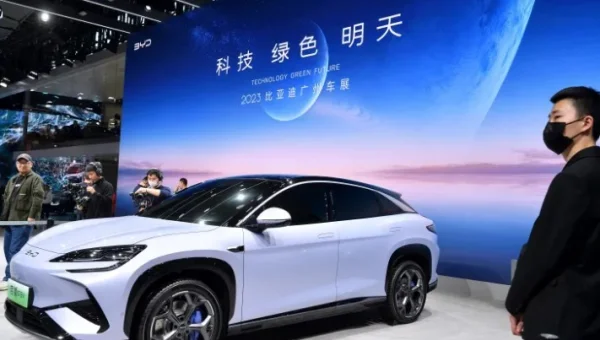
Passenger car sales in China are projected to drop to 18.5 million units in 2026, down from 23.7 million in 2025. Forecasts point to a limited 2% recovery in 2027…

Hyundai Hydrogen Sales Surpass 50,000 Units in Korea
Hyundai Motor's cumulative hydrogen fuel cell vehicle sales in South Korea have exceeded 50,262 units as of the end of September. The Nexo SUV, launched in 2018, accounts for the…

