

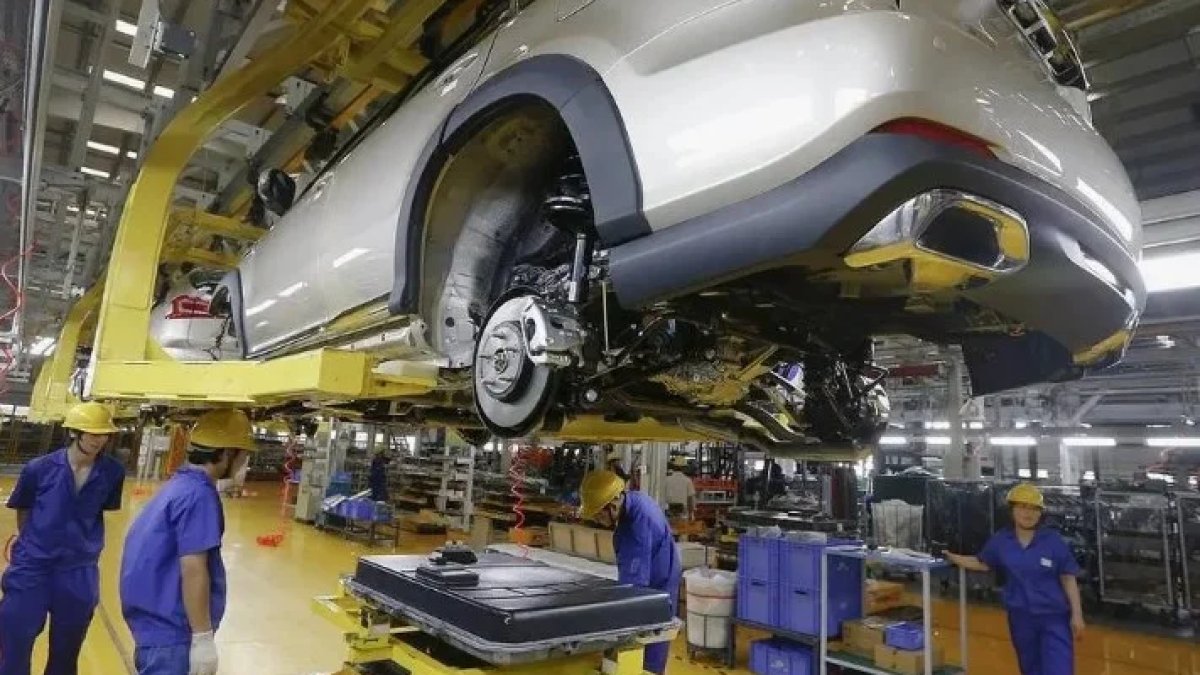
German Automotive Association Welcomes EU-US Trade Agreement, Calls for Urgent Ratification
The German Association of the Automotive Industry (VDA) has welcomed the European Parliament's approval of a trade agreement between the European Union and the United States, describing the move as an important step toward providing greater clarity for companies operating in the sector at a time when high tariffs continue to weigh heavily on the industry.
The association noted that the parliamentary approval represents progress in the agreement's pathway, but it still requires formal adoption by the European Council, which the VDA has called for as an urgent step to ensure a stable business environment for manufacturers.
Tariffs Remain a Major Challenge
Despite the positive political development, the VDA stressed that current U.S. import tariffs remain high and pose a significant challenge for German automakers. VDA President Hildegard Müller stated that stable operating conditions are of paramount importance for companies, pointing out that a 15% tariff on passenger cars and spare parts still represents a clear competitive burden.
Müller added that the commercial vehicle sector faces an even more difficult situation, with tariffs reaching 25% on trucks and an additional 10% on buses, describing this as having an existential impact on some companies.
Warning of Broader Repercussions on Investment and Supply Chains
The German automotive association warned that the continuation of these tariffs could lead to broader repercussions on investments and supply chains, not only in Europe but also within the United States. It indicated that these trade restrictions could increase costs along the entire value chain, reduce the competitiveness of companies, and potentially pass part of the burden on to consumers.
The Significance of the EU-US Agreement for the Industry
Germany's automotive sector views the trade agreement between Brussels and Washington as an important step toward reducing uncertainty in transatlantic trade, but it still needs to address the issue of high tariffs more comprehensively to ensure long-term stability for the industry.
The stance of the German automotive lobby reflects a state of anticipation within one of the most important sectors of the European economy, where the trade agreement with the United States is seen as a positive but insufficient step unless tariffs are reduced, as they continue to pressure profitability, supply chains, and investment in the sector.
Related News
View All News
Yttrium Crisis Hits Global Supply Chains, Threatens Auto and Aviation Industries as Japan and US Face Rare Earth Test
The yttrium crisis is escalating after China's rare earth export restrictions, threatening Japan's stockpiles within months. Yttrium oxide prices have reached $1,150 per kilogram outside China versus just $9 inside…
BYD Ignites German Price War with 32% Discount, Challenging Volkswagen and Mercedes
BYD offered discounts of 27.5% and 31.8% on its plug-in hybrid models in Germany during August. The company captured 10.7% of the market in July, taking fourth place. Discounts exceeded…
Mercedes, BMW, Volkswagen, and Porsche Sales Collapse 40% in China
German automotive giants saw sales in China plunge between 30% and 40% during parts of this year, outpacing the overall market's 20% contraction. The development cycle gap — 18 months…
China Car Sales Set to Drop to 18.5 Million Units in 2026
Passenger car sales in China are projected to drop to 18.5 million units in 2026, down from 23.7 million in 2025. Forecasts point to a limited 2% recovery in 2027…
Hyundai Hydrogen Sales Surpass 50,000 Units in Korea
Hyundai Motor's cumulative hydrogen fuel cell vehicle sales in South Korea have exceeded 50,262 units as of the end of September. The Nexo SUV, launched in 2018, accounts for the…

