

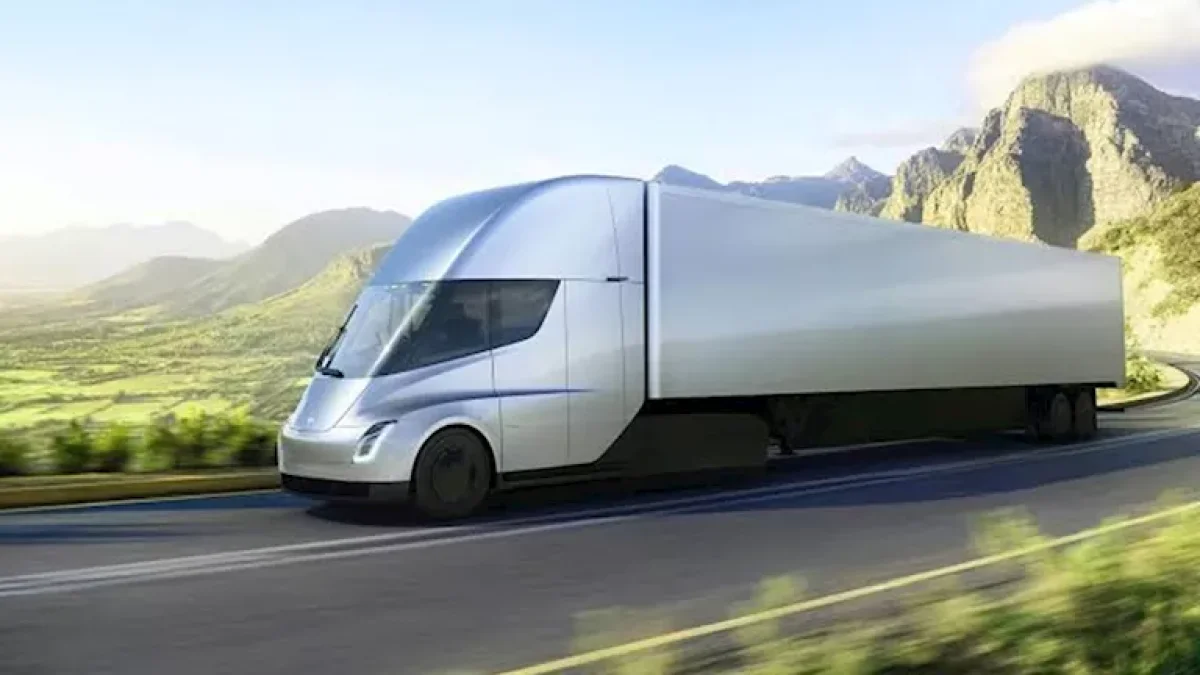
Diesel Price Surge May Boost Electric Truck Sales in Europe
A Transport & Environment analysis reveals that this year's diesel price surge linked to the Iran conflict has made electric trucks cheaper than diesel in six major European markets representing 46% of new truck sales. Savings reach 100,000 euros in the Netherlands, 85,000 euros in Germany, and 69,000 euros in Denmark over five years. European manufacturers are also bracing for Chinese competition with roughly 30% lower costs. However, the transition still faces infrastructure barriers.
A surprising twist in heavy transport economics. A new analysis by the Brussels-based Transport & Environment organization reveals that this year's sharp diesel price hike has made operating electric trucks cheaper than diesel counterparts across six major European markets — representing nearly half of all new truck sales in the EU. Savings reach 100,000 euros over five years in the Netherlands, 85,000 euros in Germany, and 69,000 euros in Denmark. That gap marks a fundamental shift in the total cost of ownership equation.
What Changed in the Cost Equation?
The cause is straightforward. Oil price spikes linked to tensions with Iran pushed diesel costs to record levels, while electricity prices remained relatively stable. The organization noted that operators can recover the upfront premium on an electric truck in roughly two years. This rapid shift in commercial viability wasn't expected at this pace just a year ago. As a result, purchasing decisions are no longer driven by environmental considerations alone.
The Six Markets Where the Math Changed
The report examined total cost of ownership across nine EU countries and found that electric trucks are now genuinely cheaper in the Netherlands, Germany, Denmark, Sweden, France, and Belgium. These six markets account for 46% of heavy truck registrations in the EU — a substantial weight that gives the findings clear significance. Meanwhile, other countries still face hurdles related to high purchase prices and insufficient charging infrastructure. Infrastructure remains the biggest obstacle to wider adoption.
Chinese Competition Heats Up the Market
On the other side, major European truck manufacturers like Daimler Truck, Volvo. Scania are bracing for a wave of low-cost Chinese competition. The organization estimated that a Chinese-made electric truck costs around 210,000 euros, compared to 265,000 euros for its European equivalent. In Germany alone, operators could save an additional 34,000 euros over five years by choosing a Chinese-built electric truck. The roughly 30% price gap puts European manufacturers under real pressure.
Obstacles That Remain
Despite these encouraging figures, the full transition hasn't materialized yet. Europe's shift to electric trucks has been slowed by high purchase prices and inadequate battery charging infrastructure on highways. Even with improved economic viability, the logistical challenge persists. Will these savings be enough to overcome the infrastructure barrier? The answer depends on the pace of investment in charging networks over the coming years.
Frequently Asked Questions
3 questions answered
Related News
View All News
Yttrium Crisis Hits Global Supply Chains, Threatens Auto and Aviation Industries as Japan and US Face Rare Earth Test
The yttrium crisis is escalating after China's rare earth export restrictions, threatening Japan's stockpiles within months. Yttrium oxide prices have reached $1,150 per kilogram outside China versus just $9 inside…
BYD Ignites German Price War with 32% Discount, Challenging Volkswagen and Mercedes
BYD offered discounts of 27.5% and 31.8% on its plug-in hybrid models in Germany during August. The company captured 10.7% of the market in July, taking fourth place. Discounts exceeded…
Mercedes, BMW, Volkswagen, and Porsche Sales Collapse 40% in China
German automotive giants saw sales in China plunge between 30% and 40% during parts of this year, outpacing the overall market's 20% contraction. The development cycle gap — 18 months…
China Car Sales Set to Drop to 18.5 Million Units in 2026
Passenger car sales in China are projected to drop to 18.5 million units in 2026, down from 23.7 million in 2025. Forecasts point to a limited 2% recovery in 2027…
Hyundai Hydrogen Sales Surpass 50,000 Units in Korea
Hyundai Motor's cumulative hydrogen fuel cell vehicle sales in South Korea have exceeded 50,262 units as of the end of September. The Nexo SUV, launched in 2018, accounts for the…

