

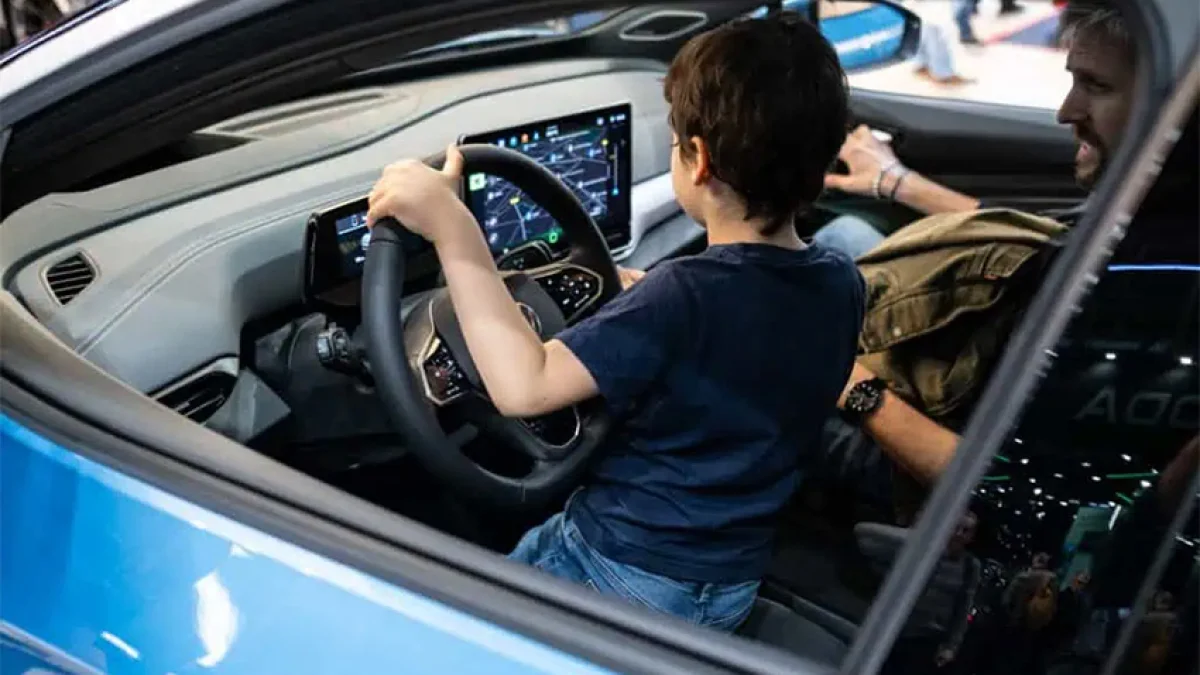
China No Longer a Guest in Europe: 'Alliances of Interest' Reshape Paris 2026 Auto Show
The Paris 2026 Auto Show marked a radical shift in the global auto industry, as Chinese brands are no longer mere guests but strategic partners for European automakers. The prime example is Leapmotor, which will be housed within the Stellantis pavilion, featuring the B03X EV starting at €23,400 with a 382 km range. These alliances could extend to new markets like Egypt, intensifying competition and driving prices down.
The question at the Paris 2026 Auto Show is no longer whether Chinese brands have arrived in Europe—it's how they became part of the game itself. The most striking example is Leapmotor, which won't be tucked away in a distant corner but will stand inside the massive Stellantis pavilion alongside Peugeot, Citroën, Fiat, Opel, Alfa Romeo, DS, and Lancia.
From Confrontation to Alliance: How the Game Changed
A few years ago, the appearance of any Chinese brand at a European show was a notable event. Today, the landscape has shifted entirely. Competition between Europe and China is no longer just a direct face-off but, in some cases, has turned into commercial and technical partnerships where each side seeks what the other lacks. The Chinese bring rapid development, competitive production costs, and advanced expertise in batteries and electric vehicles. European groups, But offer extensive distribution networks, established market presence. Long experience in branding and after-sales services. This equation echoes earlier alliances like MG's entry under SAIC, proving that cross-continental partnerships can reshape the balance of power.
Leapmotor B03X: A Practical Example of the New Equation
The number is startling. An electric crossover starting at €23,400, with a range of up to 382 kilometers. That's the Leapmotor B03X, offering a large screen, generous cargo space, and high electronic equipment. The equation here isn't just a 'cheap Chinese car'—it's an attempt to deliver a level of equipment and price that forces traditional European automakers to rethink their calculations. In a market like Egypt, where brands such as BYD and Chery compete for the electric vehicle segment, this model may seem distant, but it reflects a global trend that will inevitably arrive.
Beyond Europe: Where Are These Alliances Heading?
Crucially, this model may not remain confined to Europe. As these alliances expand, Chinese cars, platforms. Technologies could move into new markets under stronger distribution umbrellas. Imagine Leapmotor's platform reaching Middle Eastern markets under the Stellantis umbrella. That already has a well-established dealer network in Egypt to compete with brands like Volkswagen and Renault. This scenario is no longer fiction but part of the expansion strategies pursued by major groups. Even the Egyptian market, which already receives electric models from brands like Tesla, could find itself facing new options at competitive prices if Stellantis decides to manufacture or assemble these models locally.
What Does This Mean for European and Global Consumers?
The consumer is the biggest winner. With new players entering at lower prices and higher equipment levels, European brands will be forced to reconsider their pricing and equipment strategies. We may soon see European EVs priced closer to Chinese ones, or at least with more standard features. This competitive pressure will also positively impact emerging markets, where price is a decisive factor in purchase decisions. In Egypt, for instance, the arrival of affordable electric models could accelerate the shift toward clean energy, especially with increasing government support for charging infrastructure.
The Paris 2026 Auto Show doesn't just reflect the rise of Chinese cars; it reveals a new, more complex phase: China no longer stands only opposite Europe—sometimes it stands right beside it on the same pavilion. This strategic shift in the global auto industry will have far-reaching implications for regional markets, including Egypt, which anticipates more competitive electric models in the coming years.
Frequently Asked Questions
3 questions answered
Related News
View All News
Yttrium Crisis Hits Global Supply Chains, Threatens Auto and Aviation Industries as Japan and US Face Rare Earth Test
The yttrium crisis is escalating after China's rare earth export restrictions, threatening Japan's stockpiles within months. Yttrium oxide prices have reached $1,150 per kilogram outside China versus just $9 inside…
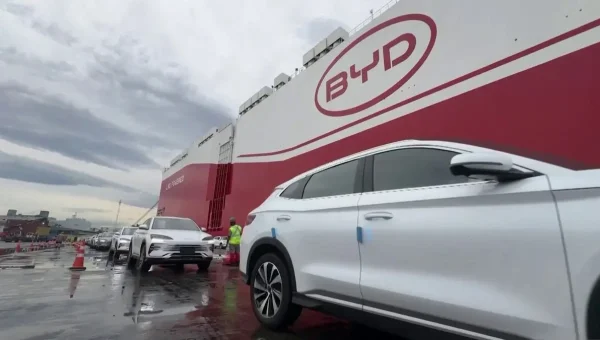
BYD Ignites German Price War with 32% Discount, Challenging Volkswagen and Mercedes
BYD offered discounts of 27.5% and 31.8% on its plug-in hybrid models in Germany during August. The company captured 10.7% of the market in July, taking fourth place. Discounts exceeded…
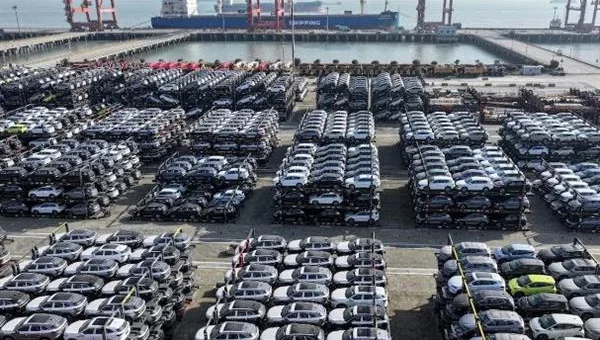
Mercedes, BMW, Volkswagen, and Porsche Sales Collapse 40% in China
German automotive giants saw sales in China plunge between 30% and 40% during parts of this year, outpacing the overall market's 20% contraction. The development cycle gap — 18 months…
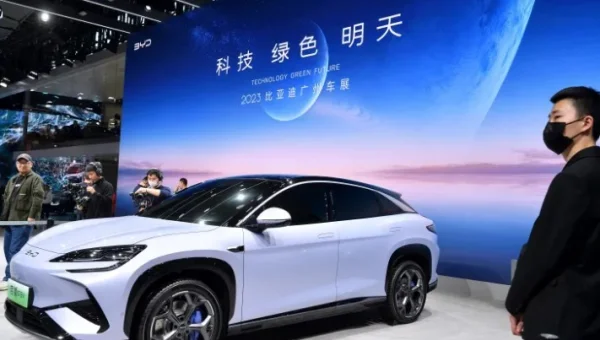
China Car Sales Set to Drop to 18.5 Million Units in 2026
Passenger car sales in China are projected to drop to 18.5 million units in 2026, down from 23.7 million in 2025. Forecasts point to a limited 2% recovery in 2027…
Hyundai Hydrogen Sales Surpass 50,000 Units in Korea
Hyundai Motor's cumulative hydrogen fuel cell vehicle sales in South Korea have exceeded 50,262 units as of the end of September. The Nexo SUV, launched in 2018, accounts for the…

