

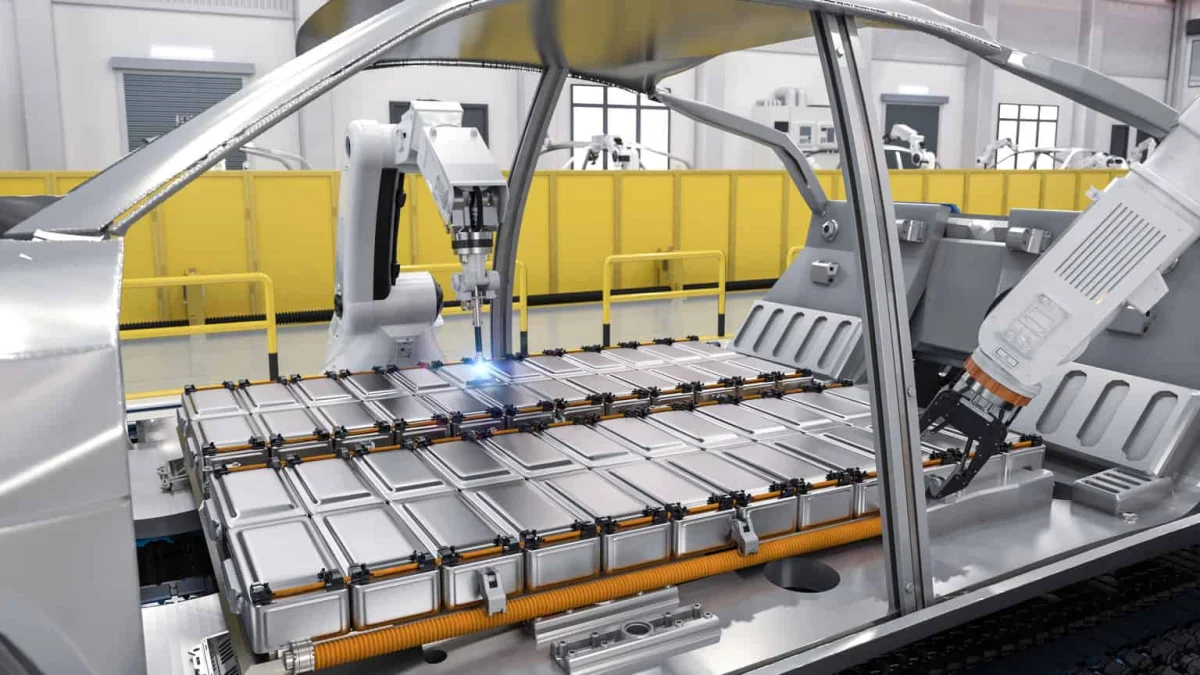
16.5 Million EVs: China Reveals the Huge Gap with Europe
China produced approximately 16.5 million electric vehicles in 2025 compared to just 1.3 million in Germany, the world's second-largest EV producer. Total Chinese vehicle output exceeded 30 million units, with the country controlling 75% of the global battery market. This production and technology advantage gives China a commanding lead in global competition, leaving Europe's automotive industry facing a growing challenge.
The numbers are stunning. China produced roughly 16.5 million electric vehicles in 2025, while Germany — the world's second-largest EV producer — managed just 1.3 million, according to automotive sales and marketing expert Rafat Masrouga. That's a gap of more than twelve times.
China Dominates Both Output and Components
Volume alone doesn't tell the full story. Masrouga noted that China's total vehicle output exceeded 30 million units in 2025, with electric models making up more than half. This massive capacity didn't appear overnight — it reflects years of accumulated investment in assembly lines and supply chains. Yet production scale is only one piece of the puzzle.
75% of the Global Battery Market
The battery is the heart of any EV. China controlled approximately 75% of the global battery market in 2025, leveraging its grip on core manufacturing components from cells to raw materials. That dominance gives Chinese manufacturers a clear cost advantage, while European producers pay more per kilowatt-hour. The equation is simple: whoever controls the battery controls the market.
What does this mean for European competitiveness? German and French automakers face a double squeeze — higher production costs and partial reliance on components imported from China itself. Catching up isn't impossible, but it demands years of investment in local battery and cell supply chains. Can Europe close the gap before it widens further?
Implications for the Egyptian Market
On Egyptian roads, the impact of China's EV dominance is already visible. Brands like BYD, MG. Chery offer competitively priced electric vehicles backed by enormous production capacity and localised components. Egyptian buyers benefit directly from this competition through cheaper options and longer range.
One thing remains clear: global demand for electric vehicle pricing keeps shifting, and China is leading by a margin that will be hard to close in the short term. Europe is searching for a foothold. China raises the bar every year.
Frequently Asked Questions
3 questions answered
Related News
View All News
Yttrium Crisis Hits Global Supply Chains, Threatens Auto and Aviation Industries as Japan and US Face Rare Earth Test
The yttrium crisis is escalating after China's rare earth export restrictions, threatening Japan's stockpiles within months. Yttrium oxide prices have reached $1,150 per kilogram outside China versus just $9 inside…
BYD Ignites German Price War with 32% Discount, Challenging Volkswagen and Mercedes
BYD offered discounts of 27.5% and 31.8% on its plug-in hybrid models in Germany during August. The company captured 10.7% of the market in July, taking fourth place. Discounts exceeded…
Mercedes, BMW, Volkswagen, and Porsche Sales Collapse 40% in China
German automotive giants saw sales in China plunge between 30% and 40% during parts of this year, outpacing the overall market's 20% contraction. The development cycle gap — 18 months…
China Car Sales Set to Drop to 18.5 Million Units in 2026
Passenger car sales in China are projected to drop to 18.5 million units in 2026, down from 23.7 million in 2025. Forecasts point to a limited 2% recovery in 2027…
Hyundai Hydrogen Sales Surpass 50,000 Units in Korea
Hyundai Motor's cumulative hydrogen fuel cell vehicle sales in South Korea have exceeded 50,262 units as of the end of September. The Nexo SUV, launched in 2018, accounts for the…

