

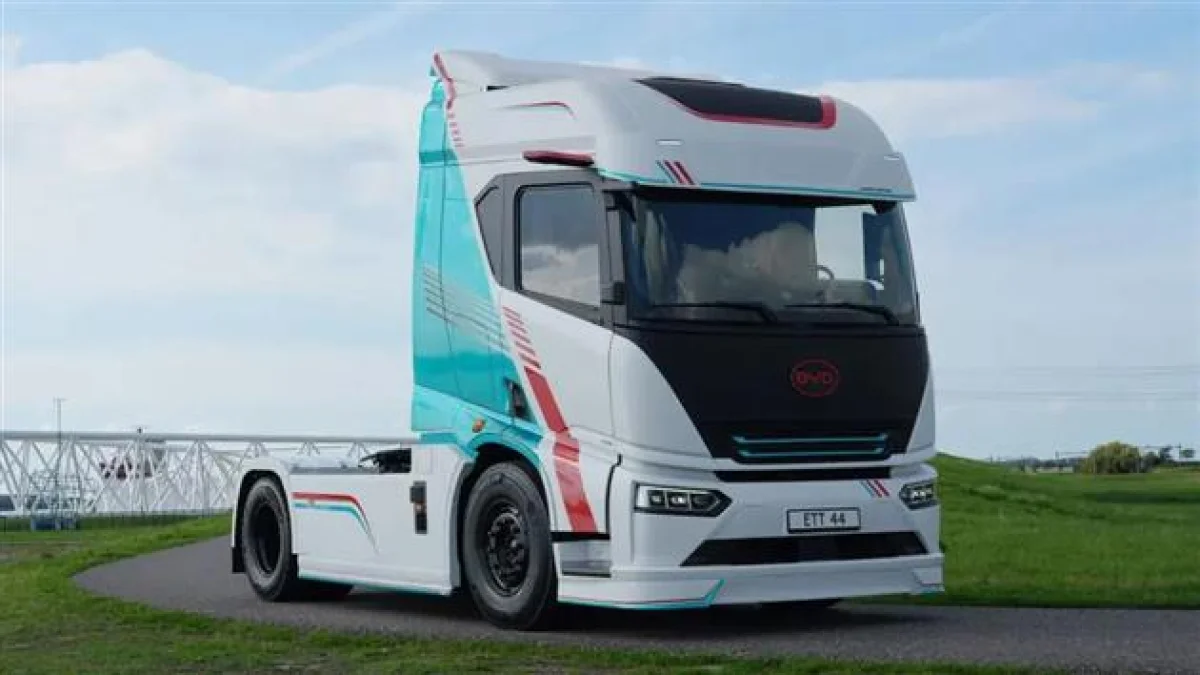
BYD Launches 600 km Electric Truck Assault on European Giants
BYD is preparing to launch its first heavy-duty truck in Europe with a range of up to 600 kilometers on a single charge, with battery charging from 20% to 80% in about 20 minutes. The Chinese company enters a market where Volvo and Mercedes together hold about a third of European sales in 2025. BYD aims to offer fleet operators a complete ecosystem including financing, solar charging infrastructure, and a workshop network. The next competition will be defined by battery development, charging speed, and cost reduction.
BYD is preparing to launch its first heavy-duty truck in Europe with a range of up to 600 kilometers on a single charge. The fast-charging claim is bold. The battery jumps from 20% to 80% in roughly 20 minutes.
Volvo and Mercedes Control a Third of Europe
The Chinese giant enters a market where Volvo and Mercedes together hold about a third of European sales in 2025. Those numbers aren't small. Yet BYD is betting on its deep experience in electric vehicles and batteries, an advantage built over years of expansion in passenger cars before turning to heavy trucks.
A Full Ecosystem, Not Just a Truck
Selling vehicles alone isn't the plan. BYD aims to offer fleet operators a complete package including financing, solar-powered charging infrastructure, a workshop network, and mobile roadside assistance. The ambition goes beyond metal and motors. The company is building an entire ecosystem around the vehicle, a strategy that differs sharply from how traditional European manufacturers operate.
Why This Battle Matters for Fleet Operators
This move reveals the widening scope of Chinese competition. That has moved from passenger cars to heavy trucks. Rapid advances in batteries, charging speed. Energy efficiency matter directly to transport companies looking to cut operating costs. Every minute saved at the charger is real money. Every extra kilometer of range opens new routes without stopping to recharge.
The Battery War, Not the Model War
As BYD pushes into heavy trucks, the next competition will be broader than new model launches. The real fight centers on each company's ability to develop batteries, accelerate charging, lower costs. Build a complete ecosystem around the vehicle. Whoever owns the better battery owns the road. Whoever builds the smarter system sets the rules.
Frequently Asked Questions
3 questions answered
Related News
View All News
Yttrium Crisis Hits Global Supply Chains, Threatens Auto and Aviation Industries as Japan and US Face Rare Earth Test
The yttrium crisis is escalating after China's rare earth export restrictions, threatening Japan's stockpiles within months. Yttrium oxide prices have reached $1,150 per kilogram outside China versus just $9 inside…
BYD Ignites German Price War with 32% Discount, Challenging Volkswagen and Mercedes
BYD offered discounts of 27.5% and 31.8% on its plug-in hybrid models in Germany during August. The company captured 10.7% of the market in July, taking fourth place. Discounts exceeded…
Mercedes, BMW, Volkswagen, and Porsche Sales Collapse 40% in China
German automotive giants saw sales in China plunge between 30% and 40% during parts of this year, outpacing the overall market's 20% contraction. The development cycle gap — 18 months…
China Car Sales Set to Drop to 18.5 Million Units in 2026
Passenger car sales in China are projected to drop to 18.5 million units in 2026, down from 23.7 million in 2025. Forecasts point to a limited 2% recovery in 2027…
Hyundai Hydrogen Sales Surpass 50,000 Units in Korea
Hyundai Motor's cumulative hydrogen fuel cell vehicle sales in South Korea have exceeded 50,262 units as of the end of September. The Nexo SUV, launched in 2018, accounts for the…

