


Egypt's Auto Industry Challenges: Widening Gap with Morocco and South Africa
A recent study by the Egyptian Center for Economic Studies has revealed a significant performance gap between Egypt's automotive industry and its counterparts in Morocco and South Africa. Egyptian car exports reached only $257.5 million in 2025, compared to Morocco's $6.4 billion and South Africa's $15 billion. These figures highlight the limited integration of the Egyptian industry into global value chains and its weak regional competitiveness.
Radical Shift in Industrial Philosophy
The study emphasizes that building a competitive automotive industry in Egypt requires a fundamental shift in industrial philosophy, moving from an assembly model focused on the local market to an export-oriented production model. It recommends attracting a major global manufacturer to establish Egypt as an export production base, while developing an integrated industrial ecosystem around it that includes local suppliers, training centers, and research and development facilities.
Electric Vehicles as a Historic Opportunity
According to the study, electric vehicles represent a historic opportunity for Egypt to enter new global value chains before the world production map stabilizes permanently. It also stresses the importance of attracting global companies operating in the feeder industries, and encouraging specialization in producing a limited number of models or components with a competitive advantage for easier export to regional and global markets.
Car Ownership Rates in Egypt
Despite Egypt's population exceeding 100 million, car ownership rates remain among the lowest in comparable countries, with only 64 cars per 1,000 citizens, compared to 112 cars in Morocco and 176 cars in South Africa. The study views this paradox as revealing a key structural imbalance in the sector, where the large population does not translate into effective demand in the car market, limiting companies' ability to expand and achieve the economies of scale necessary for the industry.
Fragmented Local Production
The study indicated that the local industry suffers from clear production fragmentation, with around 15 companies operating in car assembly in Egypt, a relatively high number compared to actual production volume. This fragmentation weakens companies' ability to achieve optimal resource utilization and invest in modern technology, hindering Egypt's transformation into a regional automotive hub despite years of discussions around localizing the industry and attracting global investments.
Related News
View All News
One Million Pounds: Petrol, Electric, or Hybrid? Your Buying Guide
Presenter Hesham El-Zeiny has raised the key question for buyers with a one-million-pound budget: petrol, electric, hybrid, or range-extender? On Radio Egypt's «Arabeyti» program, he stressed that the decision depends…
95 Octane for European Cars, 92 for Chinese: El-Hennawy Explains the Optimal Fuel Choice
Automotive maintenance expert Mohamed El-Hennawy revealed that modern European cars built to Euro 6 standards are best run on 95 octane fuel, while most Chinese cars in the Egyptian market…
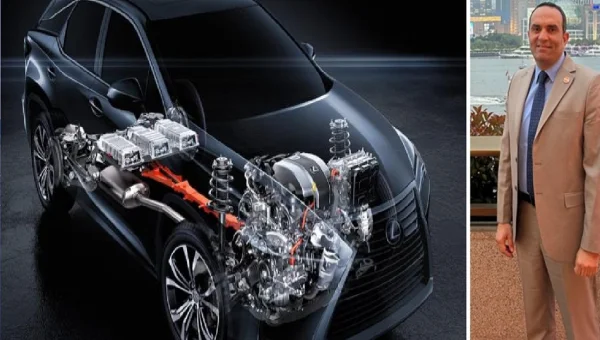
Why a Maintenance Expert Recommends Hybrids for One-Car Families
Car maintenance expert Mohamed El-Hennawy advised families owning a single vehicle to choose hybrid or plug-in hybrid models over full electric cars. These vehicles combine a petrol engine with an…

Egypt Offers New Billet Licenses to Boost Local Auto Components
Egypt's industry and investment ministers met with major steel producers including Ezz Steel, Beshay, and El-Masreyin to address billet availability challenges. The government announced new billet production licenses with price…
Mercedes Leads European Car Registrations in Egypt with 6,628 Units in 9 Months
Mercedes topped the list of European brands with the most vehicle registrations in Egypt during the first nine months of 2026, recording 6,628 units. Skoda came second with 6,227 vehicles,…

