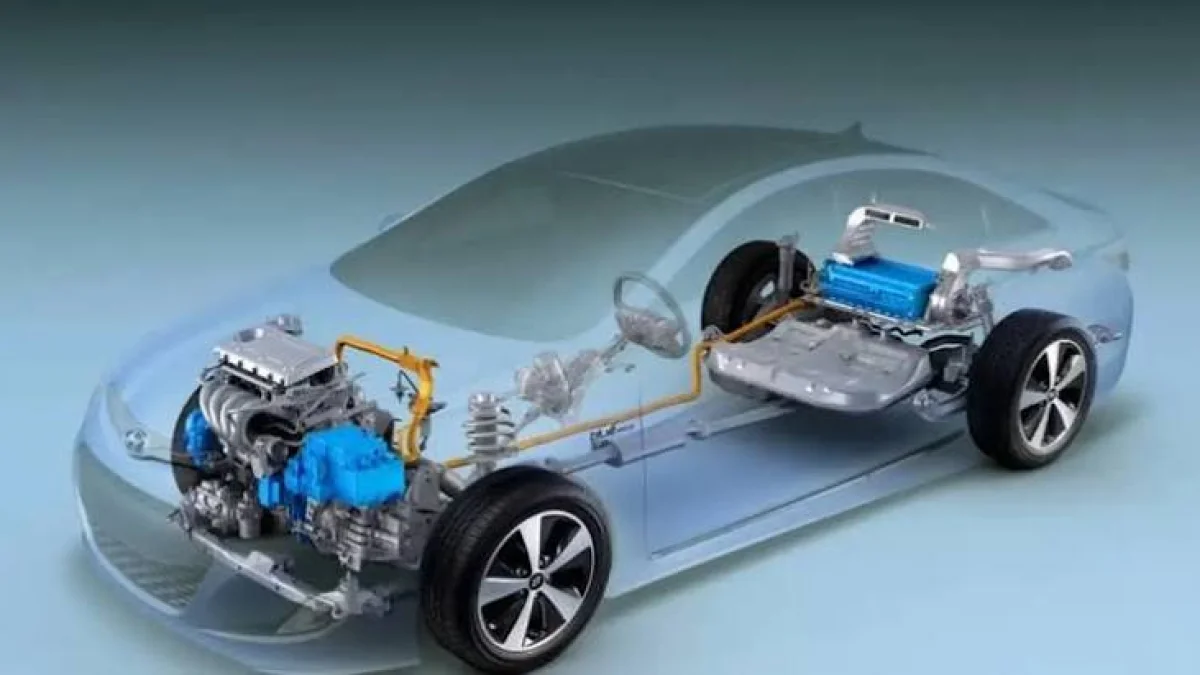
Hybrid Cars Surpass Electric Vehicles in the US with Record Growth
The US automotive market is witnessing a dramatic shift in consumer preferences, with hybrid vehicles emerging as the fastest-growing segment while electric vehicle sales experience a notable slowdown. This sudden change follows the cancellation of federal tax incentives that previously encouraged EV purchases, prompting thousands of buyers to reconsider their options and turn toward hybrid solutions that combine fuel efficiency with everyday flexibility.
Hybrid Sales Surge as EV Share Declines
According to US auto industry data, hybrid vehicle sales surged by more than 80% compared to 2023, capturing approximately 14% of the new car market. In contrast, the market share of fully electric vehicles dropped to around 5%. Analysts believe this shift reflects consumers' desire to reduce fuel consumption without altering their daily driving habits or worrying about charging station availability and range anxiety.
Tax Incentive Removal Reshapes the Market
Federal tax incentives of up to $7,500 for certain electric vehicles were a key driver of earlier EV adoption. However, after the US administration scrapped these incentives, the effective cost for buyers increased significantly, leading many to seek more economical alternatives. Hybrid vehicles positioned themselves as the ideal compromise, offering reduced fuel consumption without full reliance on batteries or external charging infrastructure, giving drivers greater freedom and peace of mind.
Automakers Rethink Their Strategies
This shift in consumer behavior has compelled major automakers to adjust their production plans. Toyota stands out as one of the biggest beneficiaries, with models like the Toyota Camry and Toyota RAV4 now offered exclusively in hybrid versions in the US market. Meanwhile, other brands are accelerating plans to convert some of their best-selling models to hybrid-only powertrains, responding to the growing demand for versatile and fuel-efficient vehicles.
Why Buyers Prefer Hybrid Vehicles
Industry experts believe hybrid cars represent the most balanced option for a broad range of consumers. They deliver better fuel economy without requiring changes to driving habits or constant searches for charging points. Additionally, their prices are typically lower than those of fully electric vehicles, making them an economically attractive choice. Rising fuel prices have further boosted interest in this segment, with opinion polls showing that more than half of car buyers have become increasingly focused on reducing fuel consumption in their daily vehicles.
As this momentum continues, hybrids appear to be more than just a transitional technology. They are shaping the near-term future of the automotive industry, especially as manufacturers adapt to new consumer preferences and restructure their production strategies to meet the surging demand for this vehicle category.
Related News
View All News
LUXEED Prepares for Global Launch on October 21 in Wuhu, China
LUXEED is preparing to hold its global launch event on October 21 in Wuhu, Anhui Province, China, under the theme 'Intelligence, Enlightened.' The event will feature the world premiere of…

Avatr CONCEPT T09 with 1000+ HP Challenges Maybach and Rolls-Royce at Paris Show
Avatr unveils the CONCEPT T09 at the 2026 Paris Motor Show, a large luxury SUV with over 1000 horsepower and massive dimensions (5285 mm length). It features a hybrid powertrain…

Morocco Produces 700,000 Cars Annually, Surpassing Italy with $16 Billion in Export Revenue
Morocco has solidified its position as an African manufacturing power, producing 700,000 vehicles annually and generating over $16 billion in automotive export revenue, outpacing Italy. Industrial activity spans 150 zones…

Opel CEO: Adam Small Car Out of Plans Until 2030 Due to EU Regulations
Opel CEO Florian Huettl has confirmed the Adam small car is not in the company's product plans until 2030 due to stringent European regulatory requirements. Speaking at the 2026 Paris…
Tesla Roadster Jumps Mid-Air with SpaceX-Inspired Rocket Technology
Tesla has revealed the next-generation Roadster in a Texas demonstration where the car jumped into the air and rotated before landing, using thrusters inspired by SpaceX rockets. The system relies…