China's New Energy Vehicle Sales Drop 13% – Global Markets Braced for Export Wave
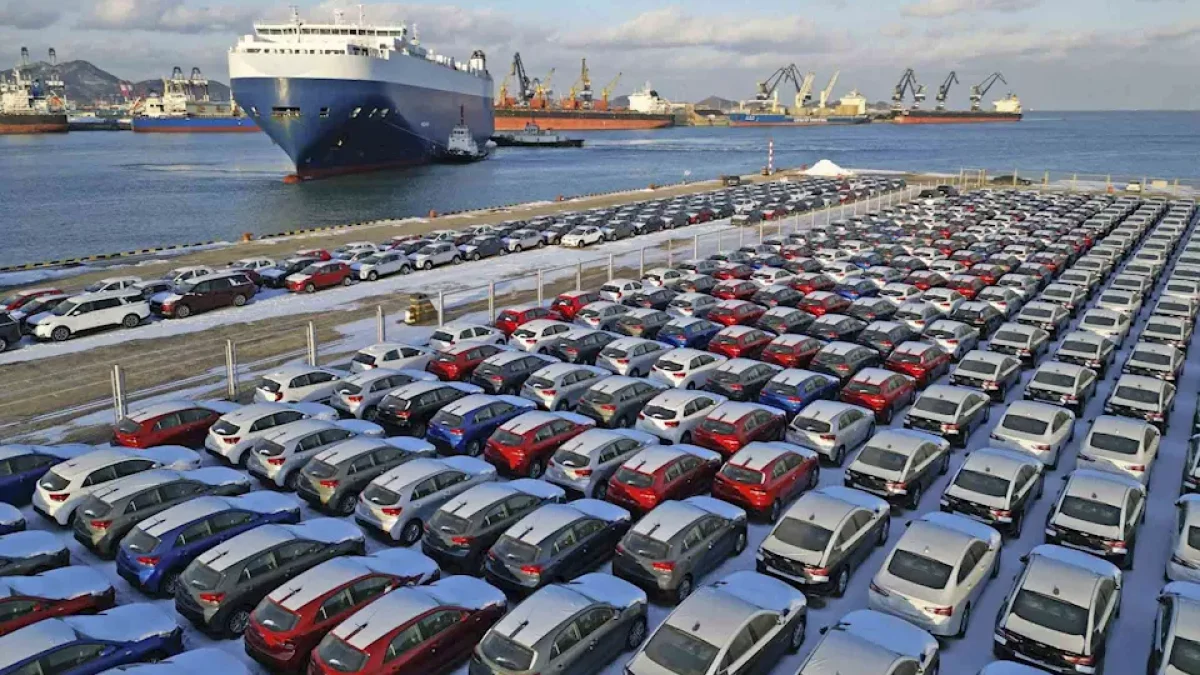
The world's largest market for electric and new energy vehicles is experiencing an unexpected downturn. Preliminary data from the China Passenger Car Association reveals a significant decline in sales, with overall figures dropping by 13% during the first half of the year compared to the same period in 2024. This market stagnation is forcing major domestic automakers to accelerate their export strategies, signaling a potential shake-up in global automotive markets.
Sales Figures from the Chinese Market
According to early data, total sales of hybrids and plug-in hybrids across China reached approximately 1.04 million units in June. While this number appears robust at first glance, it represents a mere 7% increase compared to June of the previous year. However, the figures are far more concerning for the entire first half of the year. Total sales fell by 13%, landing at just 4.73 million units—the lowest performance recorded in the past two years. This year-over-year decline highlights a cooling demand for electrified vehicles in a market that was once growing exponentially.
Key Factors Behind the Sales Decline
Several interlinked factors are contributing to this sharp downturn in sales of new energy vehicles (NEVs) in China. A major reason is the ongoing instability and uncertainty surrounding many domestic manufacturers. Furthermore, a significant number of potential buyers are adopting a wait-and-see approach, hoping for further price reductions in the coming months. The gradual reduction of state subsidies for the NEV sector is also playing a pivotal role in dampening consumer enthusiasm.
The Impact of Tax Incentive Changes
In a critical policy shift, it was officially confirmed earlier this month that annual tax exemptions for battery electric vehicles, plug-in hybrids, range-extended EVs, and hydrogen fuel-cell vehicles will be scaled back starting January 1, 2027. While these tax incentives are relatively modest in value—typically saving buyers between 360 yuan ($53) and 660 yuan ($97) annually—their removal adds another layer of uncertainty for cost-conscious consumers and could further cool market demand.
Implications for Global Export Expansion
Faced with mounting challenges at home, Chinese automakers are racing towards profitability. Current forecasts suggest that only three companies—BYD, Xiaomi, and Leapmotor—are currently generating profits. Analysts predict that only four other firms may reach the break-even point by 2030, while many weaker brands are expected to either collapse or be acquired by larger entities. As the domestic environment becomes increasingly difficult for generating margins, companies are looking outward. Analysts believe that Chinese brands could end 2026 having exported approximately 10 million vehicles, representing a staggering 41% increase year-over-year. This massive export surge is set to disrupt established automakers worldwide and reshape the global automotive landscape.
Related News
View All News
LUXEED Prepares for Global Launch on October 21 in Wuhu, China
LUXEED is preparing to hold its global launch event on October 21 in Wuhu, Anhui Province, China, under the theme 'Intelligence, Enlightened.' The event will feature the world premiere of…

Avatr CONCEPT T09 with 1000+ HP Challenges Maybach and Rolls-Royce at Paris Show
Avatr unveils the CONCEPT T09 at the 2026 Paris Motor Show, a large luxury SUV with over 1000 horsepower and massive dimensions (5285 mm length). It features a hybrid powertrain…

Morocco Produces 700,000 Cars Annually, Surpassing Italy with $16 Billion in Export Revenue
Morocco has solidified its position as an African manufacturing power, producing 700,000 vehicles annually and generating over $16 billion in automotive export revenue, outpacing Italy. Industrial activity spans 150 zones…

Opel CEO: Adam Small Car Out of Plans Until 2030 Due to EU Regulations
Opel CEO Florian Huettl has confirmed the Adam small car is not in the company's product plans until 2030 due to stringent European regulatory requirements. Speaking at the 2026 Paris…
Tesla Roadster Jumps Mid-Air with SpaceX-Inspired Rocket Technology
Tesla has revealed the next-generation Roadster in a Texas demonstration where the car jumped into the air and rotated before landing, using thrusters inspired by SpaceX rockets. The system relies…