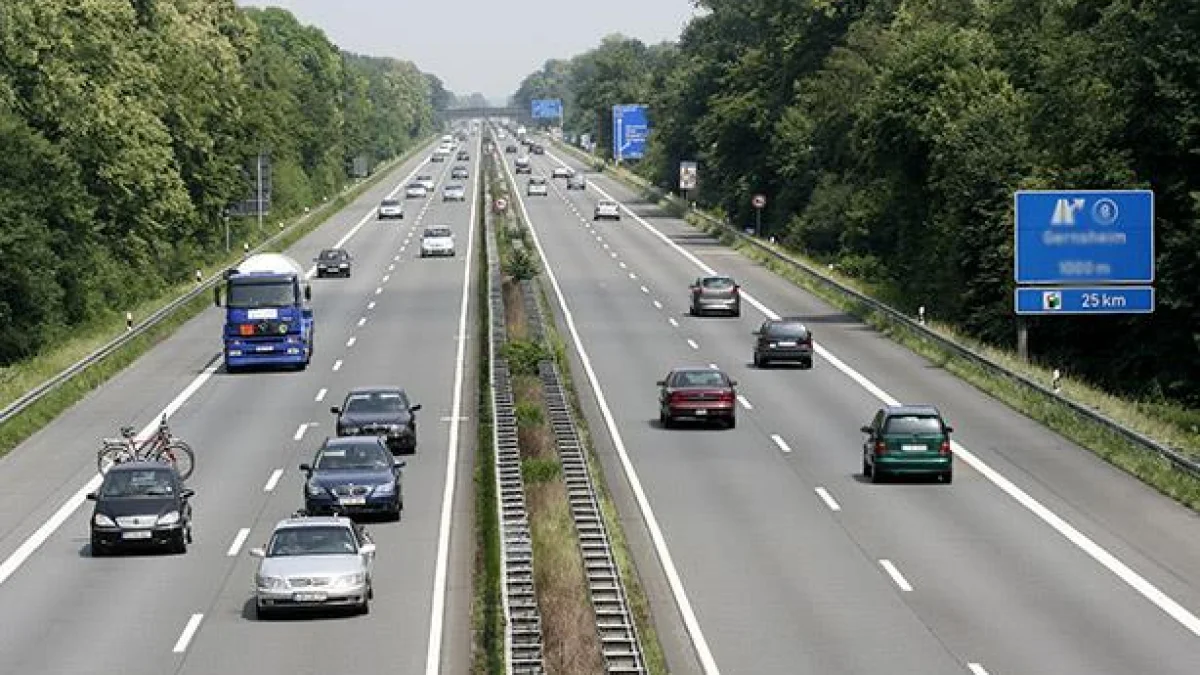
Study Reveals Rising Road Rage in Germany and Calls for Stricter Penalties
A recent study reveals surging aggressive driving behavior in Germany, with the share of drivers who tailgate rising to 47% in 2026 from 36% in 2023. One-third of drivers admitted to dangerously cutting off other vehicles, while cyclists also showed increased aggression. Accident researchers are calling for stricter police enforcement and harsher penalties to combat the trend, noting that current measures are rarely applied in practice.
A new long-term study reveals that aggressive driving behavior is escalating across Germany, with nearly all 23 measured indicators showing deterioration. The survey, conducted by the German Insurance Association, found that 47% of drivers occasionally tailgate other vehicles, a sharp jump from 36% in the previous study of 2023.
Alarming Numbers in Driver Conduct
The statistics paint a troubling picture. Beyond tailgating, about one-third of drivers admitted to cutting back into a lane too close to another vehicle, forcing the driver behind to brake suddenly. That figure stood at just under a quarter three years ago.
Kirstin Zeidler, head of accident research at the insurers' association, said "all values deteriorated again, some clearly," describing the trend as a real shift in driving culture. The findings suggest road rage is no longer an occasional outburst but a systematic problem on highways and city streets.
Cyclists Show the Same Pattern
The aggression isn't limited to car drivers. Survey data revealed that 43% of cyclists sometimes force others to yield to them, compared with just 28% in the 2023 poll. This rise in violations across all road user groups points to a broader issue in how people navigate increasingly congested traffic.
Accident researchers are now calling for stricter enforcement and harsher penalties, noting that many road users rarely encounter police checks in practice. They argue that current control measures are insufficient to deter offenders, and new concepts are needed to address aggressive behavior in denser traffic environments.
The online survey, conducted between March and April 2026, included more than two thousand people aged over 18 from across Germany. The results confirm that bullying on the road has become systemic, and existing solutions are failing amid rising stress and congestion levels.
Final recommendations urge traffic planners and traffic psychologists to collaborate on effective strategies before the problem worsens further. The message is clear — current laws no longer act as a deterrent, and penalties require a fundamental rethink.
Frequently Asked Questions
3 questions answered
Related News
View All News
Your Car Without a Fire Extinguisher or First Aid Kit: Can Traffic Police Still Fine You?
Egyptian traffic units began applying new licensing procedures on October 1 that remove the requirement to present a fire extinguisher, first aid kit, and reflective triangle when issuing or renewing…
Traffic Fines by Car Plate: How to Check Violations and File an Online Appeal
Egypt's electronic traffic services now allow drivers to check violations and fines by car plate from home. The process involves logging into the traffic services website, selecting inquiries, and entering…

Alexandria Customs Auction Offers Porsche, Mercedes, BMW in October 2026
Alexandria Customs will hold a public auction on October 7, 2026, at the Civilization Sports Club in Cairo, offering Porsche, Mercedes, BMW, Land Rover, Chrysler, Mitsubishi, and Chevrolet vehicles. Participation…

Media Professor: Consumer Protection Agency Is the Right Channel for Car Owners' Complaints, Not Social Media
Dr. Saeed Hamed, a media professor at Suez University, called on car owners to submit complaints through the Consumer Protection Agency rather than social media. He warned that some bloggers…

10 Used Cars Under EGP 1 Million in the Egyptian Market This October
Rising new car prices pushed buyers to the used market in Egypt, where 10 cars are available under EGP 1 million this October. A 2018 Renault Logan starts at EGP…