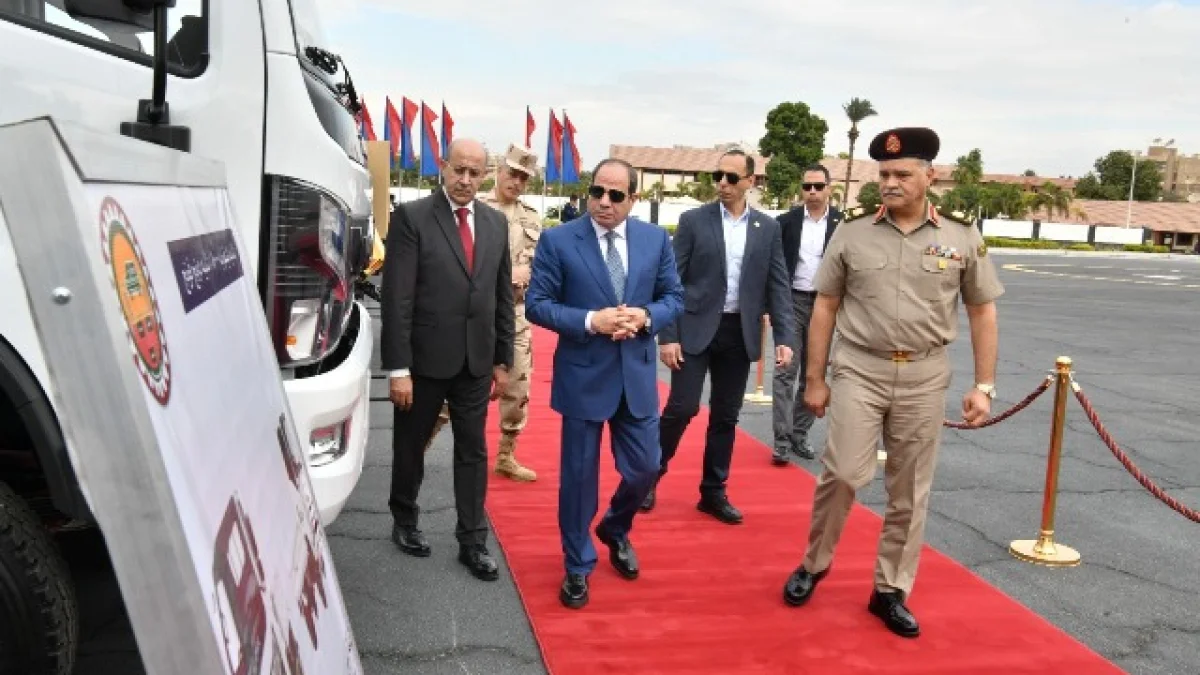
Sisi Inspects Locally Manufactured Trailers and Vehicles, Revealing Broader Localization and Export Plan
Egypt's President Abdel Fattah El-Sisi inspected models of trailers and vehicles fully manufactured inside Armed Forces factories, with a focus on achieving self-sufficiency in spare parts. The meeting revealed a broader plan that includes developing the technical security system and testing electric vehicle prototypes as part of the state's EV expansion. The ultimate goal is to move from local manufacturing to export.
Egypt's President Abdel Fattah El-Sisi inspected models of trailers and vehicles fully manufactured inside Armed Forces factories, a move that reveals a broader plan to localize vehicle manufacturing and eventually reach export markets. The inspection came during a meeting with the head of the Arab Organization for Industrialization and the director of the Armed Forces Vehicles Department, where design and manufacturing stages were reviewed alongside testing of electric vehicle prototypes under the state's EV expansion plan. This isn't a routine showcase.
Technical Security Trailers: Full Local Manufacturing, Not Assembly
The trailers on display were entirely manufactured domestically using the latest design and production systems, with multi-purpose use and maximized capabilities for each trailer. They serve technical security operations and aren't merely assembled from ready-made components — they are the product of a design and development process tied to actual needs before production begins. This level of integration signals genuine industrial capability, not just a finished product presentation. New vehicles built with this depth of localization strengthen confidence in domestic manufacturing.
From Vehicle to Integrated Technical Security System
The President linked vehicle manufacturing with the development of the technical security system, stressing the need to upgrade it and keep pace with the latest technological systems in manufacturing and developing technical equipment and vehicles for both military and civilian sectors. This directive broadens the meaning of local manufacturing, because a vehicle doesn't operate in isolation from a system that includes maintenance, equipment, spare parts, and supporting tools. The goal doesn't stop at the vehicle rolling off the production line — it extends to the ability to operate, maintain, and supply it locally.
Spare Parts: The Heart of the Self-Sufficiency Plan
The President's directive to achieve self-sufficiency in various spare parts was one of the meeting's most prominent points. This item is the cornerstone of any real automotive industry, because reliance on imported parts remains a major weakness even if the vehicle itself is manufactured locally. Spare parts prices in the Egyptian market are heavily affected by import fluctuations, making localization a strategic step to ease pressure on consumers.
Electric Vehicles Within the State Plan
Testing electric vehicle prototypes during the meeting indicates the expansion plan isn't limited to conventional vehicles. The state is moving toward local EV production in cooperation with the Arab Organization for Industrialization, a direction that aligns with the global shift toward electric mobility and brands like BYD. Local EV manufacturing will help reduce costs and create new job opportunities.
The plan doesn't stop at the domestic market. Export is a stated goal. Reaching it requires an integrated industrial system covering design, development, spare parts, and manufacturing. The vehicles and trailers inspected by the President represent the first step on this long road. Egypt's economy needs a real automotive industry, and the starting point is now clear.
Frequently Asked Questions
3 questions answered
Related News
View All News
El-Leithy: Price Fluctuations and Brand Proliferation Behind Egypt's Auto Sales Slump
Mohamed El-Leithy, chairman of El-Leithy Automotive, said Egypt's car market is witnessing relative calm due to price fluctuations and brand proliferation. The company offers flexible financing programs and is expanding…
Khaled Saad: Chinese Cars Capture 40% of Egypt's Vehicle Sales
Khaled Saad, secretary-general of Egypt's Automobile Manufacturers Association, confirmed that Chinese vehicles represent 40% of local market sales and 35% globally. He noted that major Chinese firms are seeking assembly…

Egypt Suspends Government Car Auctions Indefinitely in Surprise Decision
Egypt's General Authority for Government Services has suspended all government car auctions indefinitely starting November 16, with no official reason given. The decision has raised questions about the fate of…
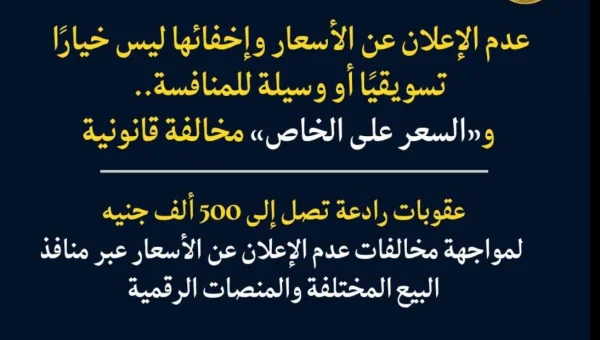
Egypt's Consumer Protection Authority: Hiding Car Prices Behind 'Price on Request' Now Carries a Fine Up to EGP 500,000
Egypt's Consumer Protection Authority has declared that failing to disclose car prices clearly — and using 'price on request' instead — is a legal violation. Fines can reach EGP 500,000…

Egypt Car Dealers Association Demands Delay of Showroom Relocation Decision to 2030 After 250 Showrooms Sealed
Osama Abou El-Magd, head of Egypt's Car Dealers Association, has urged the government to postpone the relocation of car showrooms until 2030 after more than 250 were sealed shut. He…