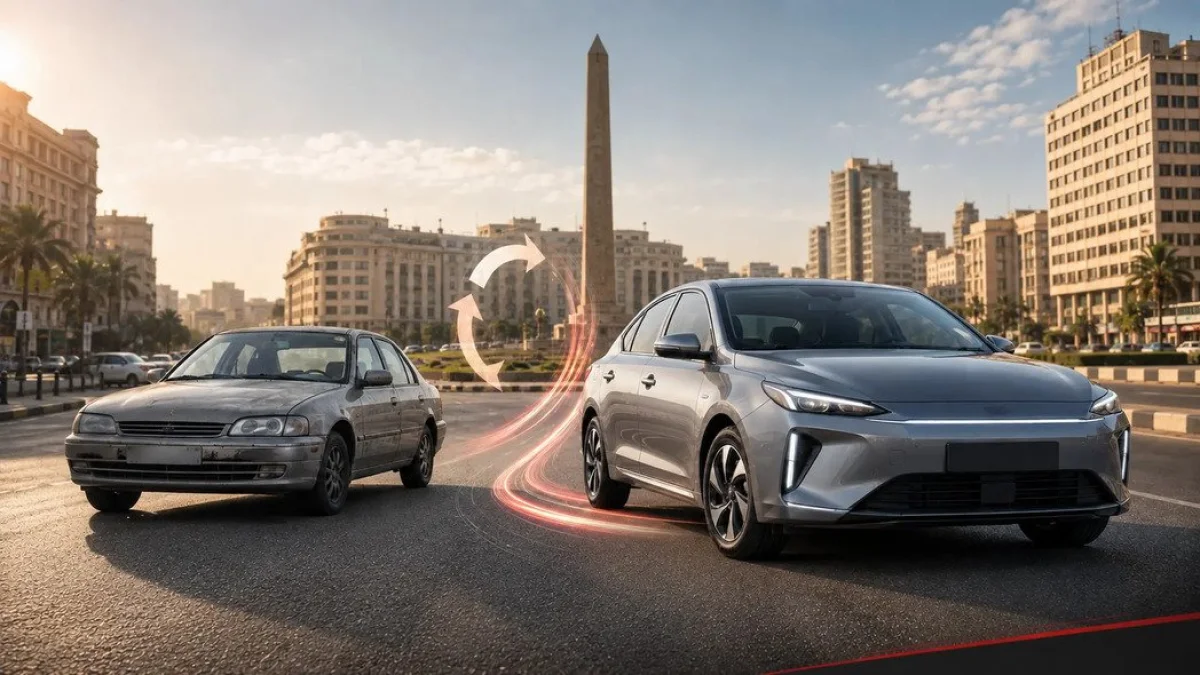
Egypt's Old Car Replacement Initiative Returns in 2026 — Details and Launch Timeline
Not what anyone expected. The Egyptian government is gearing up for a fresh phase of the old car replacement program, and the implications stretch far beyond simply swapping aging vehicles for new ones. This is an ambitious plan touching industry, environment, and the entire automotive market at once. The upcoming phase brings new details — and expectations have never been higher.
What Has the Minister of Industry Announced So Far?
Engineer Khaled Hashem, Minister of Industry, announced the government's readiness to launch a new phase of the old car replacement program, coordinated between the Ministry of Industry and the Ministry of Finance. The stated goal is clear — encouraging citizens to replace their old vehicles with newer, more efficient. Environmentally friendlier models while boosting locally manufactured car sales and increasing the local component ratio. Hashem confirmed that work is currently underway to prepare the program and develop a package of facilities and incentives designed to encourage citizens to hand over their old cars and acquire new ones. Full details have yet to emerge, and the anticipation seems justified.
The new phase targets multiple economic and industrial returns on a national scale. According to the State Information Service statement, the program will increase demand for cars produced locally and provide quantities of scrap from scrapped vehicles for reuse in local industries, particularly iron and steel plants, helping reduce reliance on imported scrap. Work is progressing rapidly to prepare an incentive package that includes unprecedented financing facilities.
Available Cars in the Old Car Replacement Initiative
But what about the vehicles that will be available to citizens? The plan reviewed by the Cabinet in April 2026 included studying the launch of an economically viable initiative to replace outdated private and taxi cars with new electric vehicles, with implementation linked to the readiness of car companies. The plan also included studying the introduction of hybrid vehicles within the national program for developing the automotive industry, within the framework of incentives related to environmental compliance, according to the Cabinet statement from that meeting. No announcement has been made yet regarding the types and models of cars available in the initiative.
The gap between the two phases is massive. The first phase launched in 2021, targeting vehicles that were 20 years old or more, in exchange for a new locally assembled car running on gasoline and natural gas. Now, the shift toward electric and hybrid reflects a completely different vision — one that places the environment at the heart of the equation while keeping local industry as a top priority.
Previous Phase Benefits — What Was Offered?
The previous phase offered a package of financial incentives that attracted thousands of citizens. A green incentive for private cars equivalent to 10% of the new car price, with a maximum of EGP 22,000. An incentive for taxi cars equivalent to 20% of the price, with a maximum of EGP 45,000. An incentive for microbuses equivalent to 25% of the price, with a maximum of EGP 65,000. These figures reflect a clear direction toward supporting the most affected categories and the heaviest road users.
the program included car financing at a flat interest rate of just 3%, with repayment periods extending up to 7 or 10 years, along with additional benefits that included discounts on car insurance policies and life insurance. The question now arises: will the incentives in the new phase be even more attractive? The wait won't be long, and the government confirms its readiness. All signs point to a significant difference this time around.
Related News
View All News
10 Used Cars Under EGP 1 Million in the Egyptian Market This October
Rising new car prices pushed buyers to the used market in Egypt, where 10 cars are available under EGP 1 million this October. A 2018 Renault Logan starts at EGP…
Egypt Cancels Fire Extinguisher and Triangle Requirement for Car Licensing — How Much You Save?
Egyptian traffic units eliminated the requirement to present a fire extinguisher, reflective triangle, and first aid kit when issuing or renewing vehicle licenses. Car owners save between 1,300 and 1,425…
Auto Ahram: A Trusted Platform for New and Used Car Prices in Egypt
Auto Ahram is a specialized website for new and used car prices in Egypt. It provides comprehensive coverage of prices for all makes and models. It is an essential reference…
New Presidential Directives to Ease Vehicle License Renewal, Saving Hundreds of Pounds
Media figure Hisham El-Ziny praised new presidential directives aimed at easing vehicle licensing procedures for cars and motorcycles in Egypt. Executive steps by the Ministry of Interior include simplifying procedures…
Safety Expert: Fire Extinguisher, Triangle, and First-Aid Kit Won't Be Mandatory in Licensing if Valid
Major General Dr. Ayman El-Dabaa, a traffic safety expert, stated that fire extinguishers, reflective triangles, and first-aid kits will not become mandatory under Egypt's updated licensing procedures as long as…