Industry Minister Unveils Plan to Transform Egypt from Car Assembly to Full Manufacturing
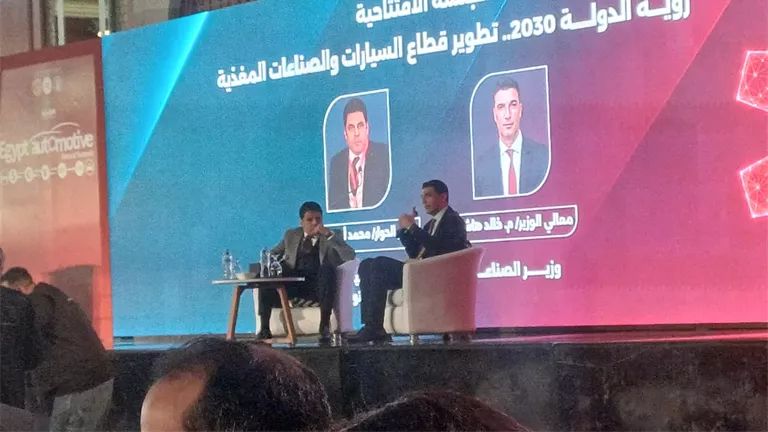
Egypt's Industry Minister Khaled Hashem announced a national plan to transform the country from car assembly to full-scale manufacturing at the 11th Egypt Automotive Summit. The strategy focuses on deepening local production, developing feeder industries, and connecting factories with domestic suppliers. The goal is to position Egypt as a regional production and export hub while boosting the global competitiveness of Egyptian-made products.
Egypt's Industry Minister Khaled Hashem announced a national plan to shift the country from car assembly to full-scale manufacturing during the opening session of the 11th Egypt Automotive Summit. The plan aims to deepen local manufacturing and build a supplier base capable of meeting automotive factory demands to global quality standards.
What Does Moving Beyond Assembly Actually Mean?
The difference is fundamental. Assembly means importing parts and bolting them together locally. Manufacturing means producing components inside Egypt and linking factories to a local supplier network. Hashem said the ministry is developing the capabilities of feeder-industry companies, supporting technology transfer, and raising production efficiency to reduce reliance on imported parts and boost local value-added.
Strategic Goals That Go Beyond the Domestic Market
The automotive sector sits at the heart of Egypt's industrial strategy. Hashem said it offers opportunities to attract foreign investment, increase local output, create jobs. Sharpen the competitiveness of Egyptian products in global markets. The endgame is positioning Egypt as a regional production and export hub — not just a consumer market for imported models. The push comes as Hyundai, Kia, and Nissan continue expanding their local assembly operations.
Feeder Industries Are the Backbone
Building an integrated industrial base takes more than assembly plants. The ministry plans to connect car factories with local suppliers and upgrade their technical capabilities — a move that could influence vehicle pricing in the Egyptian market over the medium term. The biggest challenge remains technology transfer and lifting local production efficiency to globally competitive levels.
The summit runs under the theme 'Egypt Vision 2030: Developing the Automotive and Feeder Industries Sector,' with officials, company representatives, and investors in attendance. This isn't a theoretical roadmap — it's an execution plan designed to reshape Egypt's position on the regional automotive manufacturing map in the years ahead.
Frequently Asked Questions
3 questions answered
Related News
View All News
Traffic: Cairo Ring Road, Mariouteya and October Bridge Congested Due to Maintenance Works
Cairo and Giza's main traffic arteries saw scattered congestion this morning during peak hours, with traffic services deployed across the capital. Congestion focused on October Bridge, Salah Salem Axis, and…
The 'Balloon' on Your Tire: A Dangerous Sign of Sudden Blowout While Driving
Emad El-Feki, manager of a tire maintenance center, warns that sidewall 'balloons' and cracks in tires can lead to a sudden blowout while driving. Even new tires may have fatal…

Egypt's Automotive Exports Surpass $1 Billion as Engineering Sector Hits $5.07 Billion
Egypt's automotive and auto-components exports exceeded $1 billion for the first time in 2025, per the Engineering Export Council. Total engineering exports reached $5.07 billion in the first nine months…

Al Ahly Stars' Cars: A Luxury Mix of European and Chinese Models
Al Ahly footballers own a diverse collection of luxury cars, mixing European premium brands with Chinese models. Emam Ashour drives a 2025 Range Rover Velar and a Mercedes GLC 300.…

Chevrolet Groove Enters Egyptian Production: Official Launch in Hours
General Motors is launching the locally assembled Chevrolet Groove in Egypt at a Wednesday press conference at its 6th of October plant. The car runs a 1.5-liter turbo engine producing…