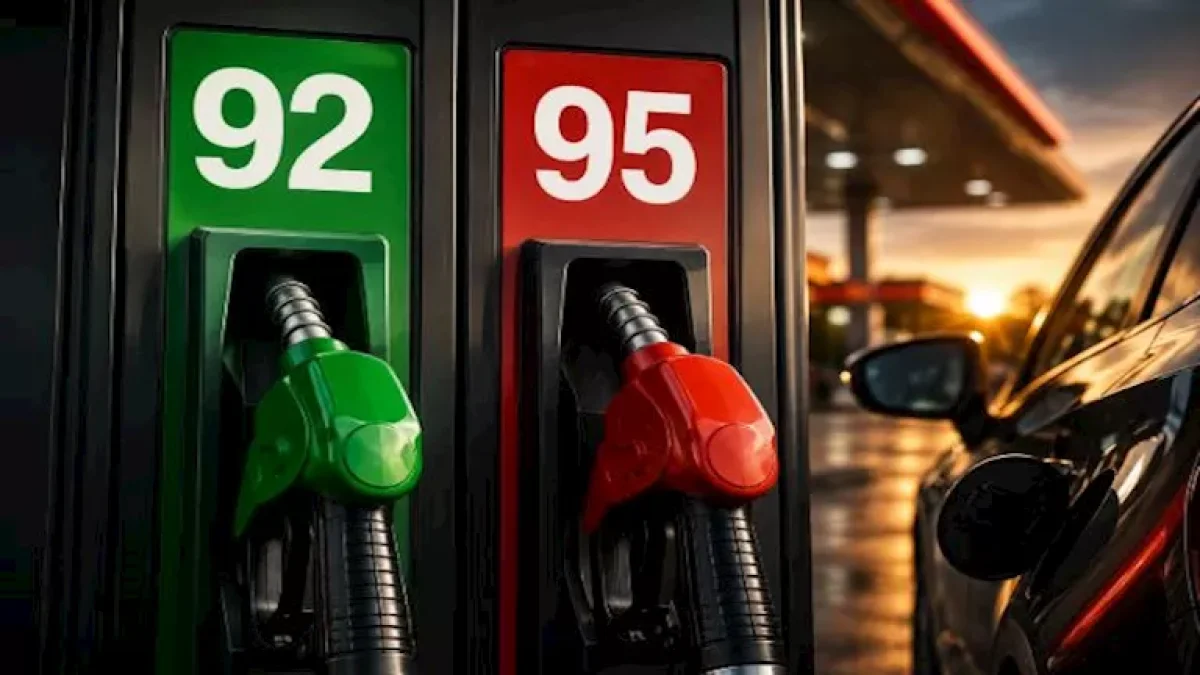
Does Using 92 Octane Instead of 95 Shorten Your Engine's Life?
Using 92 octane instead of 95 can damage engines that manufacturers specify for high-octane fuel, particularly under heavy loads and high temperatures. The difference lies in the octane rating and resistance to knock, not energy content. Low-compression engines may run safely on 92 if the manual permits it, but the manufacturer's recommendation remains the decisive factor in protecting engine life and avoiding costly repairs.
Running 92 octane fuel in an engine that demands 95 can cause real harm, particularly under heavy loads, high speeds, and soaring temperatures. The choice isn't as straightforward as saving a few pounds at the pump. The difference between the two fuels comes down to octane rating, compression ratios. Ignition timing — factors that determine whether low-octane fuel is safe or damaging for a given engine.
What separates 92 octane from 95?
The number on the pump reflects resistance to premature combustion inside the cylinders. Higher octane doesn't mean more energy. It simply means the fuel can withstand greater pressure before self-igniting — a phenomenon known as knock or pinging. Turbocharged engines and high-compression designs need that resistance. Simpler engines may never benefit from it.
Fuel selection isn't governed by octane alone; it hinges on the operating requirements each manufacturer specifies for every model. Mismatched fuel degrades combustion efficiency. Over time, that leads to operational issues. Always consult the owner's manual before making a cost-driven decision — the handbook holds the answer.
Does engine life actually suffer?
Yes, in specific scenarios. Engines engineered for 95 octane can experience knock when fed 92 — especially in hot weather, on steep inclines, or during high-speed driving. Irregular combustion generates unwanted vibrations and pressure spikes. The damage isn't instant. It accumulates over thousands of kilometres.
Many modern vehicles have knock sensors that automatically retard ignition timing when detonation is detected. That protects the engine. But it also reduces performance and fuel efficiency — meaning the savings at the pump may partly evaporate through higher consumption. The trade-off doesn't always favor the driver's wallet.
When is 92 octane a safe choice?
If the owner's manual explicitly permits 92 or lower, there's no harm. Some naturally aspirated engines with low compression ratios run perfectly fine on 92. The key condition is sticking to the manufacturer's recommendation — not personal experimentation or advice from friends. That's the dividing line between saving money and risking costly repairs.
For drivers of used cars like the Hyundai Elantra or Kia Cerato, checking the fuel spec in the manual should be the first step before considering any switch. The price gap between 92 and 95 can be tempting. But the cost of repairing a knock-damaged engine dwarfs any short-term saving. Do the math carefully.
The rule is simple: follow the manufacturer's guidance. If 95 is specified, running 92 is an uncalculated risk. If the engine was designed for lower-octane fuel, paying extra for 95 delivers no measurable benefit. The right fuel is the one the engine was built for — nothing more, nothing less.
Frequently Asked Questions
3 questions answered
Related News
View All News
El-Leithy: Price Fluctuations and Brand Proliferation Behind Egypt's Auto Sales Slump
Mohamed El-Leithy, chairman of El-Leithy Automotive, said Egypt's car market is witnessing relative calm due to price fluctuations and brand proliferation. The company offers flexible financing programs and is expanding…
Khaled Saad: Chinese Cars Capture 40% of Egypt's Vehicle Sales
Khaled Saad, secretary-general of Egypt's Automobile Manufacturers Association, confirmed that Chinese vehicles represent 40% of local market sales and 35% globally. He noted that major Chinese firms are seeking assembly…

Egypt Suspends Government Car Auctions Indefinitely in Surprise Decision
Egypt's General Authority for Government Services has suspended all government car auctions indefinitely starting November 16, with no official reason given. The decision has raised questions about the fate of…

Egypt's Consumer Protection Authority: Hiding Car Prices Behind 'Price on Request' Now Carries a Fine Up to EGP 500,000
Egypt's Consumer Protection Authority has declared that failing to disclose car prices clearly — and using 'price on request' instead — is a legal violation. Fines can reach EGP 500,000…

Egypt Car Dealers Association Demands Delay of Showroom Relocation Decision to 2030 After 250 Showrooms Sealed
Osama Abou El-Magd, head of Egypt's Car Dealers Association, has urged the government to postpone the relocation of car showrooms until 2030 after more than 250 were sealed shut. He…