Can Governments Remotely Stop Your Car in 2027? The Reality Isn't What You Think
Rumors about a government system to remotely stop cars in 2027 are spreading, but the truth is linked to a US law aimed at preventing drunk driving. The required technology is not ready yet, according to a February 2026 NHTSA report. The main goal is to stop drunk drivers, not to give governments control over vehicles.
Will any government be able to remotely stop your car by 2027? The short answer is no, and definitely not in the way viral social media posts claim. The story stems from a real American law targeting drunk driving, but it has morphed into a massive rumor about a mandatory kill switch in every new vehicle.
Where Did the Remote Shutdown Rumor Start?
The roots trace back to the HALT Drunk Driving Act in the United States, signed on November 15, 2021, and sponsored by Mothers Against Drunk Driving. The law calls for technology that prevents a person from driving if it detects intoxication, without requiring the driver to blow into a device, relying instead on breath, touch sensors, or cameras to monitor the driver's condition.
The original deadline was 2024, but that year passed with no mandatory system applied to new cars. Then the year 2027 emerged in circulating posts, derived from Section 24220 of the U.S. Infrastructure Investment and Jobs Act, which allows a three-year extension for implementing the requirements.
What Does the Latest NHTSA Report Say?
The agency responsible for implementing this technology is the National Highway Traffic Safety Administration (NHTSA), and it has not approved the system yet. In its latest report from February 2026, NHTSA confirmed that the Driver Alcohol Detection System for Safety still can't reliably measure blood alcohol levels above the 0.08% threshold, making it impossible to mandate across all new vehicles at this time.
The real objective is saving lives, not handing governments a tool to control citizens' mobility, but the lack of official clarification leaves room for exaggeration. Even if the technology is applied in the future, it would only activate upon detecting intoxication, not for any other reason. Keep an eye on the safety tech from Toyota, Hyundai. Kia; driving safety remains a top priority for Nissan, Chevrolet, and Mercedes.
Frequently Asked Questions
3 questions answered
Related News
View All News
Egypt Ready to Partner with African Nations on Joint Auto Manufacturing Projects
Egypt's Minister of Investment and Foreign Trade, Mohamed Farid Saleh, announced at the Africa Automotive Investment Forum in El Alamein that Egypt is ready to cooperate with African nations on…
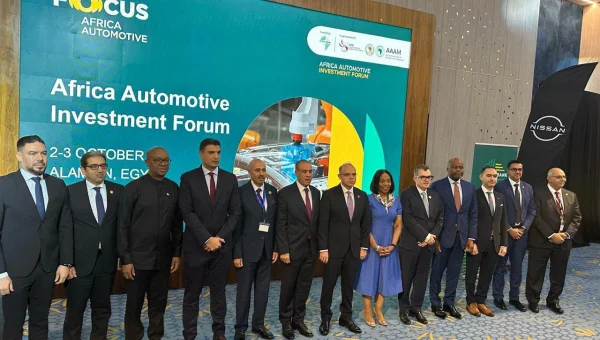
From Assembly to Export: Egypt Redraws Africa's Automotive Map
The Alamein-Africa Business Forum 2026 concluded with a clear message: Egypt's automotive sector is transitioning from assembly to full manufacturing and export. The Ministry of Industry's strategy under Engineer Khaled…
Report reveals: The turbo engines most prone to failure after 80,000 km
Recent fleet data shows that several turbocharged engines in Egypt begin showing costly failures at just 80,000 kilometers, while others last much longer. The main cause isn't design alone but…
Unqualified Influencers Threaten Egypt's Economy and Corporate Reputation
Dr. Said Hamed, a media professor at Suez University, warned that content from unqualified influencers on social media can damage Egypt's national economy and the reputation of state institutions. He…

Beyond the Headlines: What Really Drives Engagement on Egyptian Auto Sites?
The report examines competition among auto sites in Egypt, noting that superiority depends on understanding local buyer needs for content combining price and running costs. Analyses show over 60% of…