Egypt's Industry Minister Drops a Bombshell: 'I Want Technology, Not Money'
Egypt's Minister of Industry, Khaled Hashem, made headlines with a direct appeal to investors, urging them to bring technology to Egypt rather than just money, with a strong focus on small enterprises across all governorates. The minister's vision draws heavily on the German model, which relied on technical education and small businesses to rebuild the country after the war. The strategy has sparked widespread positive reactions from Egyptians who see it as a genuine shift toward building a competitive industrial base. Moving forward, the success of this vision depends on converting these ambitious statements into concrete executive actions.
Egypt's Minister of Industry, Khaled Hashem, made a bold statement during his latest interview, directly challenging investors: "Come and invest. I want technology, not money. Transfer your technology to the workers in small projects across the country." The message is unmistakable. This isn't about attracting capital for its own sake, but about building an industrial base through genuine knowledge transfer and technical expertise for the Egyptian workforce. Social media reactions to the minister's words have been overwhelmingly positive, with many praising the shift in economic thinking.
Why Small Enterprises Are the Real Engine of Industrial Growth
The minister's plan centers on developing small and medium enterprises across different regions, a strategy that could create a wide industrial base capable of competing regionally and globally. In Germany — long considered the gold standard of global manufacturing — the real strength lies not in giant corporations alone, but in the vast network of small and medium businesses forming the backbone of the economy. Hashem seems to understand that injecting modern technology into these enterprises will create a multiplier effect across the entire national economy.
Small doesn't mean weak. Actually, quite the opposite. The German experience proves that small enterprises were the cornerstone in rebuilding a country completely devastated by war, transforming from modest workshops into global industrial giants within a few decades. The minister's focus on this sector reflects a genuine understanding that durable economies are built from the ground up, not the top down.
Lessons from the German Reconstruction and Technical Education
On my first visit to Germany, I was fascinated by the German craftsman and his precision, and I searched for the secrets behind this nation's progress, finding them in three essential elements: small enterprises, technical education, and investing in youth. After World War II, 90% of German cities lay in ruins, with men either dead or captured — and it was German women who stepped into the streets to clear rubble, rebuild homes, run factories, and manage the country.
The numbers tell an exceptional success story in German technical education. Roughly 50% of German secondary school students choose vocational training over university, with around 500,000 new trainees entering the system every year and a post-graduation employment rate of 90% — most are hired immediately by the very companies where they trained. This integrated system is what separates fundamentally strong economies from fragile ones dependent on rent.
Egyptians Embrace the Vision and Demand Action
Comments on the minister's interview video caught my attention, reflecting strong public engagement with his sincere and down-to-earth words. The Egyptian people always seek credibility and clarity in official discourse. The minister's recognition that developing Egyptian industry starts with small projects and technical education demonstrates a comprehensive vision grounded in proven international experience.
Investing in technical education and training Egyptian youth, alongside transferring modern technology, is the real investment that will pay dividends over the long term. Egypt possesses the human resources and natural potential to replicate the German success story, but this requires genuine will and a clear strategy like the one the minister proposed. The journey toward building a strong Egyptian industry begins with bold statements like these — and now needs the executive follow-through to turn words into tangible reality on the ground.
Frequently Asked Questions
2 questions answered
Related News
View All News
Skoda Tops European Car Registrations in Egypt for September with 655 Vehicles
Skoda led European car registrations in Egypt for September with 655 vehicles, according to the Egyptian Compulsory Vehicle Insurance Pool report. Mercedes followed closely in second with 642 cars, just…
Your Tires Could Wear Out Early — 6 Daily Driving Habits That Shorten Tire Life
Tire lifespan depends directly on driver behavior and maintenance habits, not just manufacturing quality. The main culprits are incorrect air pressure, misaligned wheel angles, ignored wheel balancing, and aggressive acceleration…
Autumn Reveals Summer's Hidden Car Problems: 8 Essential Checks Before the Weather Turns
As temperatures drop in autumn, car problems concealed by summer heat begin to surface, especially battery, tire, wiper, and fluid issues. Experts from AAA and NHTSA recommend simple checks covering…
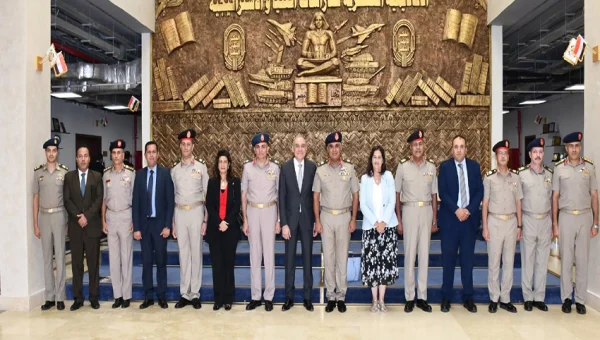
Egypt's State Information Service and Military Academy Sign Strategic Cooperation Protocol
Egypt's State Information Service, headed by Ambassador Alaa Youssef, signed a strategic cooperation protocol with the Military Academy for Higher and Strategic Studies, led by Major General Mohamed Mahmoud Awad.…
Pseudo-Experts in Egypt's Auto Market: How Paid Content Threatens Awareness and the Economy
A troubling phenomenon has emerged in Egypt's automotive market: self-proclaimed experts who use social media to spread inaccurate information for financial gain. These individuals receive cars from dealerships to park…