Decision 2286 of 2026 Reshapes Egypt's Industrial Support Strategy: Local Value Added Replaces Fixed Component Ratio
Egypt's Ministry of Industry has redefined its industrial preference policy to base government procurement advantages on local value added rather than component percentage alone. Engineer Khaled Hashem leads the new committee formed under Decision 2286 of 2026 to implement Law No. 5 of 2015. The reform targets reduced import dependence and enhanced automotive component localization. A unified electronic database will connect industrial facilities with the government contracting system.
The Egyptian Ministry of Industry has approved a fundamental shift in its local product preference policy, linking government procurement advantages to the volume of local value added rather than just the local component ratio. Decision No. 2286 of 2026 places the Egyptian automotive industry at the threshold of a completely new competitive and localization phase.
Pivotal Meeting Restructures the Egyptian Product Preference Committee
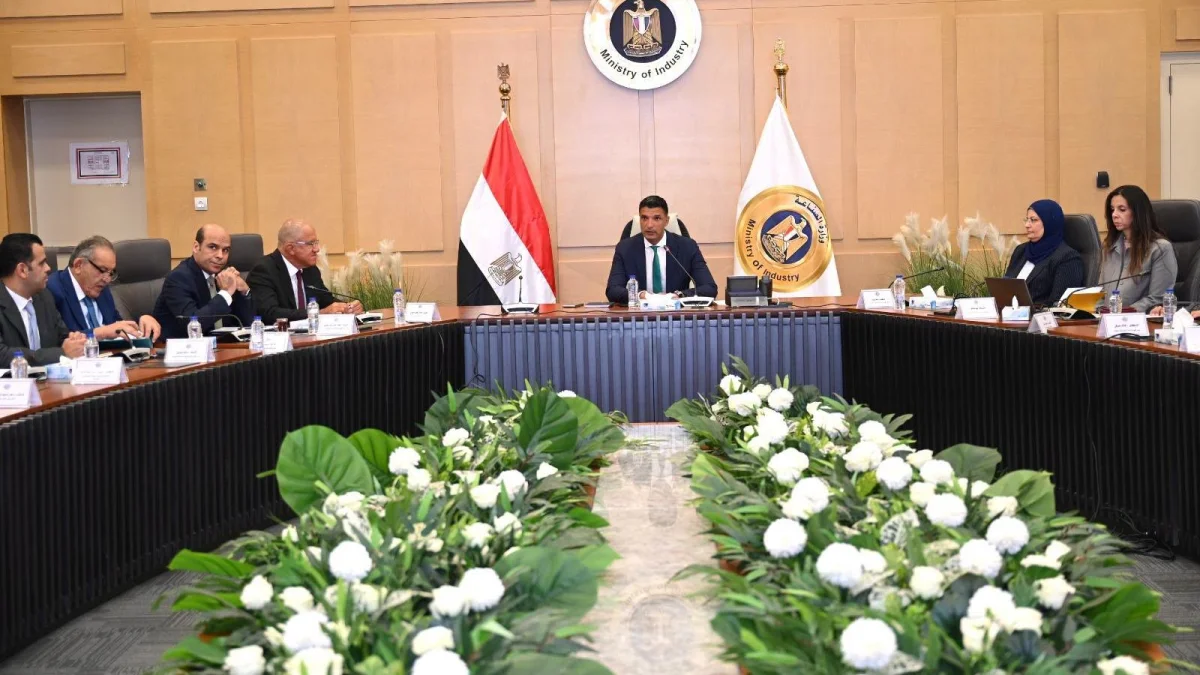
Engineer Khaled Hashem, Minister of Industry, chaired the first meeting of the Egyptian Industrial Product Preference Committee after its reconstitution under Prime Minister's Decision No. 2286 of 2026. The meeting represents a concrete executive step toward activating the provisions of Law No. 5 of 2015 concerning the preference for Egyptian products in government contracts.
The minister did not stop at activation. He went further to stress that the next phase aims to rebuild an integrated system that's clearer, more effective, and more measurable. The strategic objective is evident: deepening local manufacturing, increasing value added. Boosting the competitiveness of national industry in a market witnessing fierce competition from imports.
Local Component: From a Fixed Calculation to Real Economic Value
Years of practical experience have exposed fundamental challenges in implementing the law. The most prominent of these is the local content measurement mechanism and the obvious weakness in connecting relevant authorities with the government procurement system. These gaps yielded results below expectations.
The new approach focuses on calculating the real value industrial facilities add to the Egyptian economy. It's no longer about a static number. The measurement now reflects each factory's level of manufacturing, technology, and development. This transformation directly targets the automotive sector and its components because it relies critically on local supply chains capable of delivering parts to required quality specifications.
Unified Electronic Database Links Industry and Government
The ministry is currently building an integrated information system to electronically connect all relevant authorities through a unified, updated database. This database will cover products, industrial facilities, and local component certificates, with full linkage to the government procurement system.
The expected outcome? Reduced reliance on imports and higher local manufacturing ratios in automotive supply chains. Car manufacturers and local component suppliers now have a stronger incentive to invest in technology and development. The company that adds greater economic value will secure a clear preference in government contracts.
Frequently Asked Questions
2 questions answered
Related News
View All News
Skoda Tops European Car Registrations in Egypt for September with 655 Vehicles
Skoda led European car registrations in Egypt for September with 655 vehicles, according to the Egyptian Compulsory Vehicle Insurance Pool report. Mercedes followed closely in second with 642 cars, just…
Your Tires Could Wear Out Early — 6 Daily Driving Habits That Shorten Tire Life
Tire lifespan depends directly on driver behavior and maintenance habits, not just manufacturing quality. The main culprits are incorrect air pressure, misaligned wheel angles, ignored wheel balancing, and aggressive acceleration…
Autumn Reveals Summer's Hidden Car Problems: 8 Essential Checks Before the Weather Turns
As temperatures drop in autumn, car problems concealed by summer heat begin to surface, especially battery, tire, wiper, and fluid issues. Experts from AAA and NHTSA recommend simple checks covering…

Egypt's State Information Service and Military Academy Sign Strategic Cooperation Protocol
Egypt's State Information Service, headed by Ambassador Alaa Youssef, signed a strategic cooperation protocol with the Military Academy for Higher and Strategic Studies, led by Major General Mohamed Mahmoud Awad.…
Pseudo-Experts in Egypt's Auto Market: How Paid Content Threatens Awareness and the Economy
A troubling phenomenon has emerged in Egypt's automotive market: self-proclaimed experts who use social media to spread inaccurate information for financial gain. These individuals receive cars from dealerships to park…