Car Seat Evolution: From Windshield-Mounted Seats to Modern ISOFIX Systems
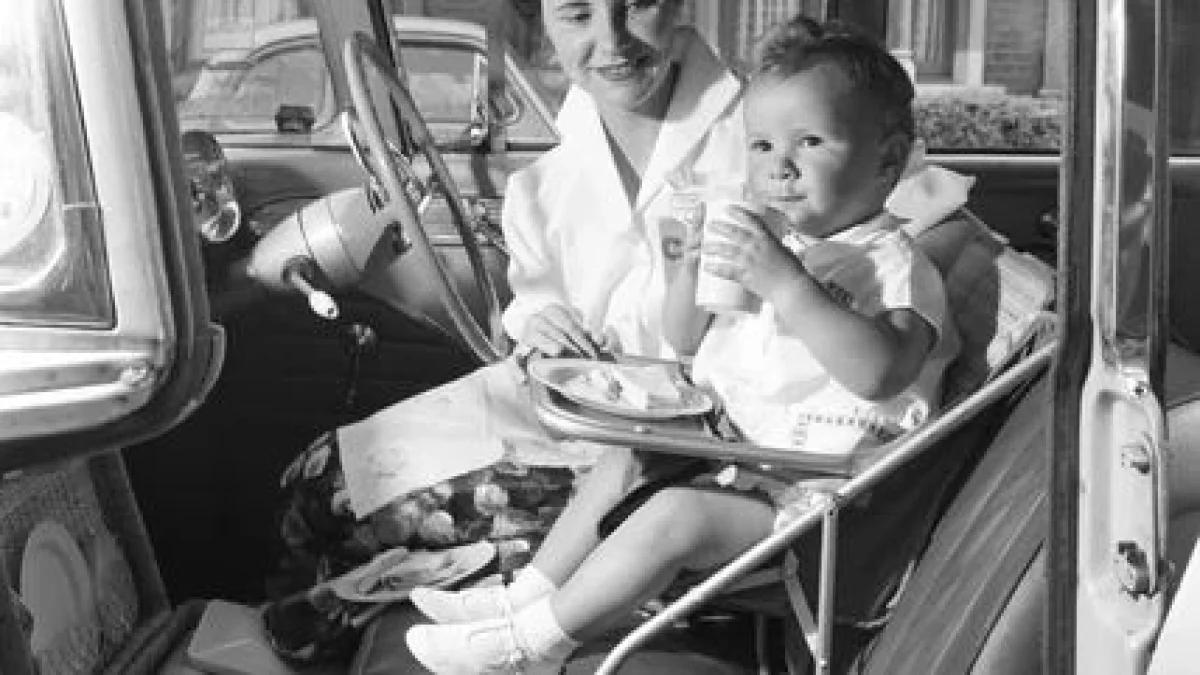
This article traces the evolution of child car seats from the early 20th century when seats mounted in front of the front wheels were considered normal, through hanging hammocks and unsecured cribs that failed crash tests. It highlights medical criticism and safety testing that gradually exposed these dangerous designs. The story concludes with modern ISOFIX anchoring systems as the global standard for securing child seats directly to car bodies. A remarkable transformation from unthinkable danger to rigorous engineering in automotive safety.
A child's safest place in a 1904 car was mounted directly in front of the front wheels, right alongside the steering arm. Waltham Manufacturing sold this bizarre standalone seat for the Orient Motor Buckboard at just $25, positioning the child in the most dangerous possible spot during any collision. Modern parents would find this design absolutely terrifying.
Hanging Hammocks and Motorized Cribs
The Lull-A-Baby Car Hammock concept took a different approach — suspend a small hammock above the rear seat and market it as a safe, comfortable solution for just $6.95. Dr. Michael Henderson, a safety advocate, publicly criticized this product in 1970 after explaining that the swinging motion could slam a child's head into the car's roof. The physics alone should have disqualified it from ever reaching production.
Then came the Gordon Motor Crib, essentially a small bed for infants placed inside the vehicle, with advertisements touting it as 'the safest method' according to doctors. A 30-mph crash test revealed a shocking reality — the test dummy nearly launched out of the crib entirely. Dr. Henderson did acknowledge that with proper strapping and secure mounting, this crib might theoretically outperform the hanging hammock design.
Hook-Mounted Seats and Stand-Up Concepts
The 1930s introduced seats that attached to the top of the original bench using simple hooks, with no genuine connection to the car's frame whatsoever. Bunny Bear manufactured a particularly dangerous version featuring a toy steering wheel so children could pretend to drive, while the entire seat remained essentially unsecured inside the vehicle. A sharp corner could send both seat and child sliding across the cabin.
Mid-1960s brought the Tiny World Deluxe Sit-N-Stand from Montgomery Ward, designed to allow children to stand while the vehicle was in motion, despite being equipped with a restraint belt. Standing completely negated the purpose of that belt — it became nothing more than floating fabric around the child's body. Today, ISOFIX anchors directly into the car chassis as the global gold standard. Regulations worldwide prohibit children in front seats altogether. The new car market in Egypt now includes abundant new cars equipped with standard child-seat anchoring systems.
This journey toward the used car market shows how far safety engineering has progressed from those terrifying experiments. Testing protocols, real-world crash data, and medical expertise have transformed child safety into an exact science. The shift from unsecured hammocks to rigid ISOFIX mounts redefines what automakers prioritize when designing cabins for families.
Frequently Asked Questions
3 questions answered
Related News
View All News
Burning Too Much Fuel? 6 Practical Steps to Cut Your Gas Bill Now
High fuel consumption can be reduced through simple, practical steps that require no expensive modifications. Setting tire pressure to manufacturer recommendations cuts rolling resistance and improves fuel efficiency. Calm driving…
From Sketches to Assembly Lines: How a New Car Is Born
Every new car goes through a long journey starting with target segment definition and initial exterior and interior design concepts. These concepts become 3D digital models, and prototypes are built…

Egypt's Vehicle Imports Drop 13.3% in July
Egypt's passenger car imports declined to $285.2 million in July, a 13.3% drop. Auto parts fell 22.2%, tractors 7.8%, and goods vehicles 9.9%. Meanwhile, bus and minibus imports rose 72.2%…

Which Cars Does Uber Accept? Surprising Requirements and Excluded Models
Uber enforces strict requirements for vehicles on its platform, including a maximum age of 15 years, four working doors, and seatbelts for five people. Commercial ads and modifications to seats…
Skoda Tops European Car Registrations in Egypt for September with 655 Vehicles
Skoda led European car registrations in Egypt for September with 655 vehicles, according to the Egyptian Compulsory Vehicle Insurance Pool report. Mercedes followed closely in second with 642 cars, just…